

Bacterium Responsible for Deaths of Critically Endangered Species
With wild populations decimated, Lister’s gecko and the blue-tailed skink only exist in captivity. University of Sydney researchers have discovered a bacterium, which could cause their potential extinction.
Native reptile populations on Christmas Island have been in severe decline with two species, Lister’s gecko and the blue-tailed skink, entirely disappearing from the wild. While previously the main driver for this decline is likely predation by invasive species and habitat destruction, a silent killer is now threatening to wipe the species out entirely.
Those bred in captivity on the Australian Territory in the Indian Ocean have also been mysteriously dying, leaving the two species – which number only around 1000 each – in danger of extinction. Veterinary scientists from the University of Sydney, the Australian Registry of Wildlife Health and the Taronga Conservation Society Australia have now discovered the cause of these deaths: a bacterium, Enterococcus lacertideformus (E. lacertideformus).
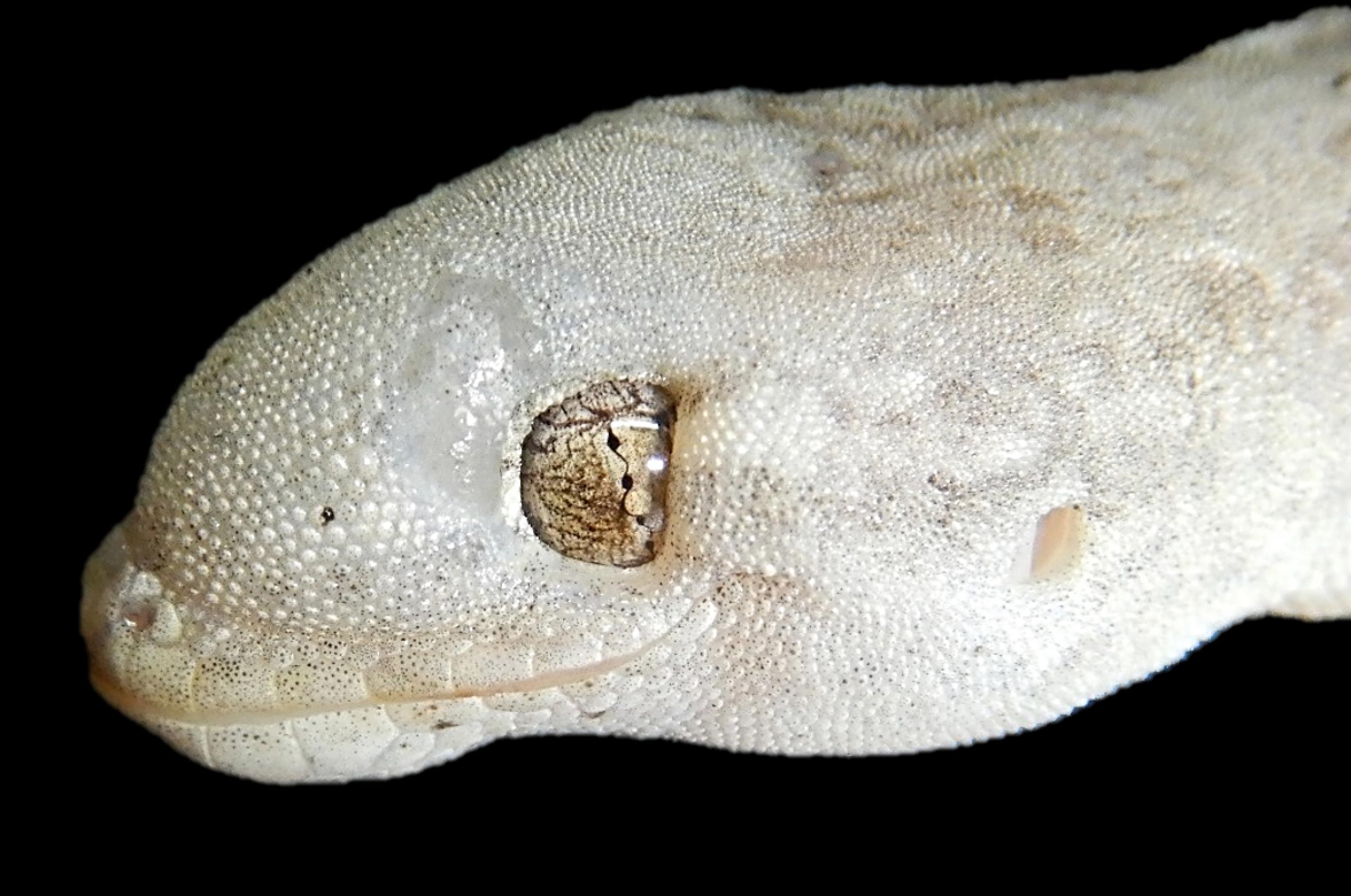
The bacterium was discovered in 2014 after captive reptiles presented with facial deformities and lethargy, and some even died. Samples were collected and analyzed using microscopy and genetic testing. The researchers’ findings, published in Frontiers in Microbiology, will inform antibiotic trials on the reptiles to see if the infection can be treated.
How the Infection Spreads Among Reptiles
The bacterium grows in the animal’s head, then in its internal organs, before eventually causing death. It can be spread by direct contact – including through reptiles’ mouths, or via reptiles biting one another – often during breeding season fights.
“This means that healthy captive animals need to be kept apart from infected ones and should also be kept away from areas where infected animals have been,” said Jessica Agius, co-lead researcher and PhD candidate in the Sydney School of Veterinary Science.

Ms. Agius and the research team not only identified the bacterium, they decoded its genetic structure using whole genome sequencing.
Specific genes were identified that are likely to be associated with the bacterium’s ability to infect its host, invade its tissues, and avoid the immune system.
Biofilm Formation Adds to the Threat
“We also found that the bacterium can surround itself with a biofilm – a ‘community of bacteria’ that can help it survive,” Ms. Agius said.
“Understanding how E. lacertideformus produces and maintains the biofilm may provide insights on how to treat other species of biofilm-forming bacteria.”
The search of the genetic code suggested that the killer bacterium was susceptible to most antibiotics.
Professor David Phalen, research co-lead and Ms. Agius’ PhD supervisor, said: “This suggests that infected animals might be successfully treated. That’s what we need to determine now.”
In another effort to protect the endangered reptiles on Christmas Island, a population of blue-tailed skinks has been established on the Cocos Islands. Ms. Agius played a critical role in the translocation, testing reptiles on the Cocos Islands to make sure that they were free of E. lacertideformus.
“It’s critical we act now to ensure these native reptiles survive,” Ms. Agius said.
Reference: “Genomic Insights Into the Pathogenicity of a Novel Biofilm-Forming Enterococcus sp. Bacteria (Enterococcus lacertideformus) Identified in Reptiles” by Jessica Esther Agius, David Norton Phalen, Karrie Rose and John-Sebastian Eden, 2 March 2021, Frontiers in Microbiology.
DOI: 10.3389/fmicb.2021.635208
Declaration: The authors thank the Westmead Institute for Medical Research, Sydney School of Veterinary Science – University of Sydney, Australian Registry of Wildlife Health – Taronga Conservation Society Australia, and Christmas Island National Park – Parks Australia for their logistical and financial support.
Never miss a breakthrough: Join the SciTechDaily newsletter.
Follow us on Google and Google News.