
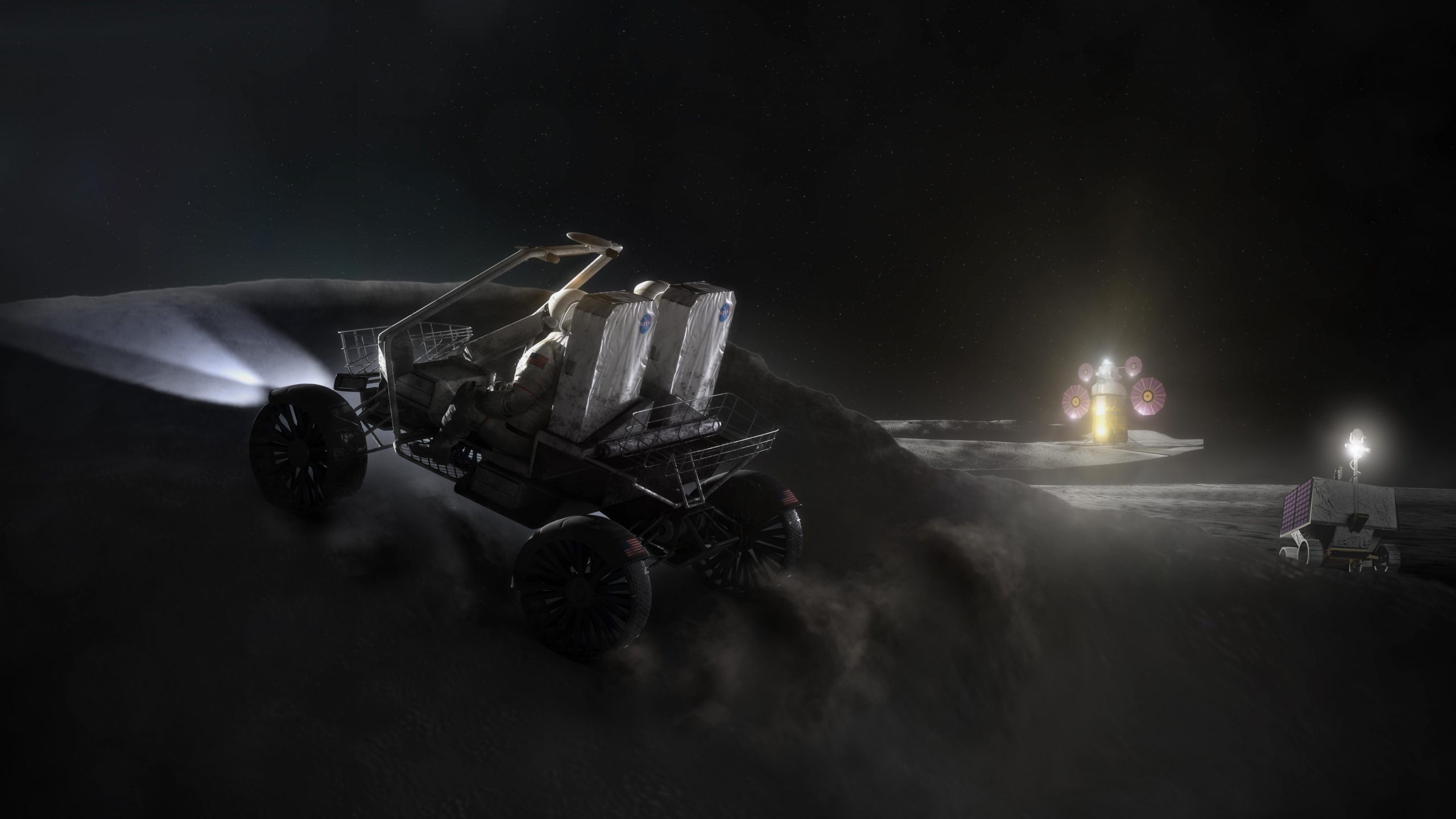
NASA is asking American companies to contribute ideas for a next-generation Lunar Terrain Vehicle (LTV) that astronauts will use to explore the Moon’s South Pole during Artemis missions.
NASA is asking American companies for additional input on approaches and solutions for a vehicle to transport Artemis astronauts around the lunar South Pole later this decade.
The lunar terrain vehicle (LTV), an unenclosed rover that astronauts can drive on the Moon while wearing their spacesuits, will need to last at least 10 years, spanning multiple Artemis missions.
Through a request for information, NASA is addressing challenges associated with the LTV’s lifetime, including surviving the long, cold lunar night and options to transport the vehicle to the lunar surface. Responses to the RFI are due October 1.
“Most people do a lot of research before buying a car,” said Nathan Howard, project manager for the LTV at NASA’s Johnson Space Center. “We’re doing extensive research for a modern space vehicle that will be provided by industry. As we plan for long-term exploration of the Moon, the LTV won’t be your grandfather’s Moon Buggy used during the Apollo missions.”
NASA is asking if American companies are interested in providing the LTV as a commercial service, or as a product NASA would purchase and own. Working with industry to inform the LTV design for Artemis is part of an expansion of commercial partnerships from low-Earth orbit to the Moon. The agency successfully uses commercial partnership model today for crew and cargo transportation services in low-Earth orbit and similarly plans to buy astronaut transportation services for Artemis surface missions.
The next-generation LTV will greatly expand human reach and scientific activity on the Moon for future surface missions – even farther than Apollo. The LTV RFI invites industry to provide information to help shape the evolution of the Artemis mobility plans and ultimately achieve the greatest scientific and exploration value across at least a decade of missions.
Pushing the Limits: Tech Innovations for Lunar Rovers
“We are trying to encourage advances in electric vehicle capabilities that could result in the most capable rover ever built,” said Howard. “The Artemis LTV will be the ultimate terrain vehicle, with advanced power management, autonomous driving, and extreme environment technologies.” The LTV could also be teleoperated to transport cargo or science payloads between crew missions, enabling significant science returns by combining the best of human and robotic exploration.
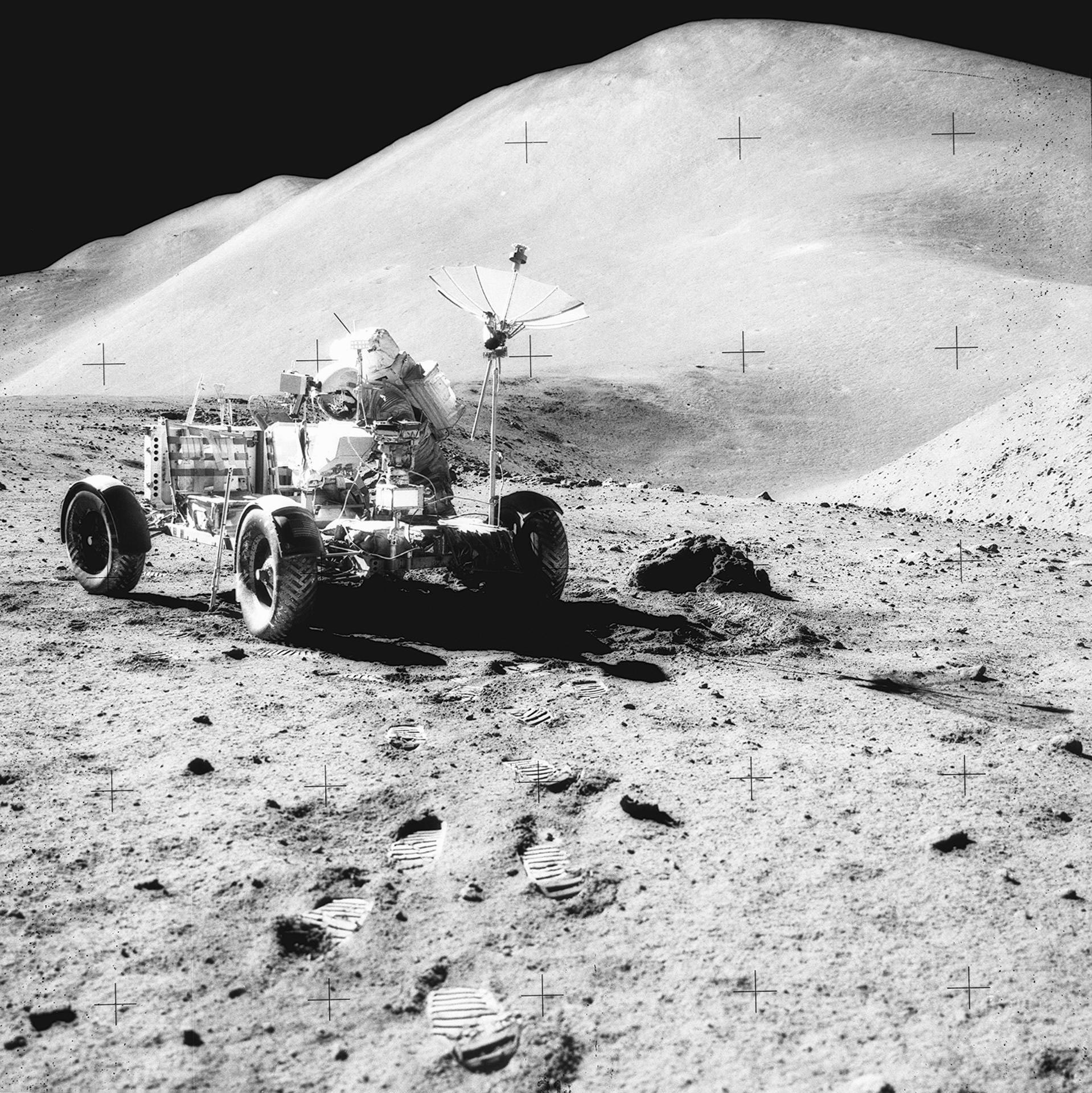
The original lunar roving vehicle (LRV), or more commonly called a Moon Buggy, was introduced on the Apollo 15 mission. The LRV allowed astronauts to explore miles of diverse geological features, increasing the scientific return of each new mission, and collecting more than 10 times the number of samples on Apollo 17 than on foot during Apollo 11.
NASA previously sought industry input in early 2020, encouraging companies to identify the latest innovations in electric vehicles that could be applied or developed for LTV. The feedback from both RFIs will inform the agency’s future commercial solicitation strategy for the LTV.
The LTV is part of the agency’s lunar surface sustainability concept, which calls for building an Artemis Base Camp at the lunar South Pole and includes other infrastructure to support long-term exploration of the Moon with astronauts including a surface habitat, pressurized rover, power, and much more.
Laying the Groundwork for Mars Exploration
NASA’s Artemis missions include landing the first woman and first person of color on the lunar surface, sending a suite of new science instruments and technology demonstrations to study the Moon, and establishing a long-term presence. The agency will leverage its Artemis experience and technologies to prepare for humanity’s next giant leap – sending astronauts to Mars.
Never miss a breakthrough: Join the SciTechDaily newsletter.
Follow us on Google and Google News.