
Close Menu
    Facebook X (Twitter) Instagram
    SciTechDaily
    • Biology
    • Chemistry
    • Earth
    • Health
    • Physics
    • Science
    • Space
    • Technology
    Facebook X (Twitter) Pinterest YouTube RSS
    SciTechDaily
    Home»Space»Firefly’s Blue Ghost Just Entered Lunar Orbit and Snapped an Incredible Photo
    Space

    Firefly’s Blue Ghost Just Entered Lunar Orbit and Snapped an Incredible Photo

    By NASAFebruary 17, 20252 Comments2 Mins Read
    Facebook Twitter Pinterest Telegram LinkedIn WhatsApp Email Reddit
    Share
    Facebook Twitter LinkedIn Pinterest Telegram Email Reddit
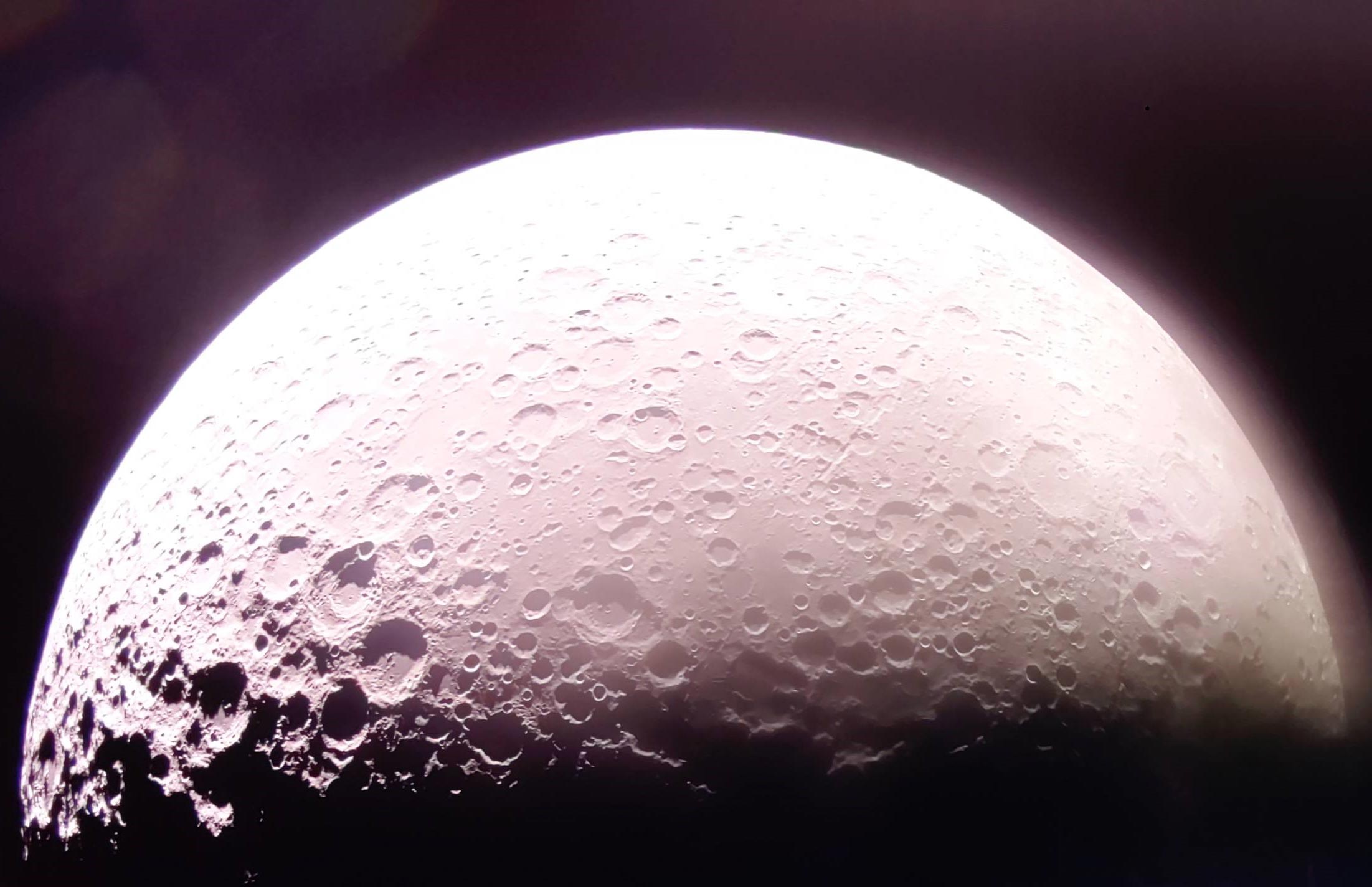
    Blue Ghost Moon South Pole
    Blue Ghost captured a bright image of the Moon’s South Pole on the far left through its cameras on the top deck, as it travels to the Moon as part of NASA’s CLPS (Commercial Lunar Payload Services) initiative and Artemis a campaign. Credit: Firefly Aerospace

    After a month-long journey, Firefly’s Blue Ghost lunar lander has successfully entered orbit around the Moon.

    After nearly a month traveling through space, Firefly’s Blue Ghost lunar lander successfully completed a crucial four-minute lunar orbit insertion burn on February 13. This maneuver, the longest and most complex burn the lander has performed so far, relied on its main engine and reaction control thrusters to adjust its course.

    Now in lunar orbit, Blue Ghost will spend the next 16 days gradually shifting from an elliptical path to a circular orbit around the Moon. The mission remains on track for a targeted landing on Sunday, March 2, at 3:45 a.m. EST. During the insertion burn, the lander also captured an image of the Moon’s South Pole, offering a glimpse of its future landing site.

    LEXI Aboard Blue Ghost Mission 1
    In this visualization, the LEXI instrument is shown onboard Firefly Aerospace’s Blue Ghost Mission 1, which will deliver 10 Commercial Lunar Payload Services (CLPS) payloads to the Moon. Credit: Firefly Aerospace

    Blue Ghost is Firefly Aerospace’s lunar lander, designed to deliver scientific payloads and commercial cargo to the Moon. Named after a rare, bioluminescent firefly species, the lander is part of NASA’s Commercial Lunar Payload Services (CLPS) initiative, supporting the Artemis program and future lunar exploration.

    Mission 1, Blue Ghost’s first mission, aims to land near the Moon’s South Pole and deploy a variety of instruments for NASA and private partners. The lander features advanced propulsion systems, precision navigation, and thermal control to operate in the harsh lunar environment. Its success could pave the way for future missions focused on resource utilization, technology demonstration, and deep-space exploration.

    Never miss a breakthrough: Join the SciTechDaily newsletter.
    Follow us on Google and Google News.

    ARTEMIS Mission Blue Ghost Firefly Aerospace Moon NASA
    Share. Facebook Twitter Pinterest LinkedIn Email Reddit

    Related Articles

    Touchdown! Blue Ghost Lands on the Moon, Ushering in a New Era of Exploration

    Firefly’s Blue Ghost Snaps a Breathtaking Earth Selfie on Its Way to the Moon

    Blue Ghost Conducts First Main Engine Burn and Captures Breathtaking Eclipse on Journey to the Moon

    Journey to the Moon: NASA’s Blue Ghost Mission Revolutionizes Lunar Exploration

    2028 Moon Mission: NASA Teams Up With Firefly Aerospace To Explore Ancient Lunar Volcanoes

    NASA’s LEXI Will Unveil Earth’s Magnetic Shield With Lunar X-Ray Vision

    NASA and Firefly’s Bold Lunar Mission: Exploring the Moon’s Gruithuisen Domes

    Firefly Aerospace selected by NASA for Robotic Delivery to Far Side of Moon

    Firefly Aerospace Selected by NASA for Artemis Commercial Moon Delivery in 2023

    2 Comments

    1. Doctoray staronomy kesiri on February 18, 2025 8:43 am

      Humans had sent satellites into the space around the earth tens of millions of years ago, but they never managed to send a manned spacecraft to the moon

      Reply
    2. Doctoray staronomy kesiri on February 18, 2025 11:50 am

      Hi, I’m saying that NASA scientists still haven’t noticed my discovery that stars and very small planets in the Milky Way arm collide with solar bodies and the Sun every 60 million years? The effects of these collisions are visible on the surface of the moon, but on the surface of the earth, 60 million years of rain has destroyed all the traces of meteorite collisions and hard elements that were on the surface of the earth after the disintegration of the planetary core and the collapse of the earth. A galactic year is the time when the arm of the Milky Way collides with the solar bodies and the sun, more than ten stars and their planets reach the solar bodies and the sun, and several stars and planets from this large arm of the galaxy collide with the solar bodies and the sun, but half of these planets become the moons of Neptune, Uranus, and Jupiter. There are clock hands, the rotation of the stars that revolve around the galaxy is anti-clockwise, and when they collide with the gas planets, they cause these four gas planets to rotate faster than Mars and Earth, the reason is that the planets do not rotate clockwise, although these four gas planets are far from the sun, but what is the reason for these four gas planets? They rotate faster than the four rocky planets. Share on this page or pages related to the Moon and the Earth and publish in leading journals the discoveries that Dr. Kathiri has shared on this site about the impact of the large arm of the galaxy. Thank you astronomy enthusiasts. I say that the movement of the moon around the earth has plowed the earth’s crust and destroyed the impacts of meteorites and hard elements of the planets

      Reply
    Leave A Reply Cancel Reply

    • Facebook
    • Twitter
    • Pinterest
    • YouTube

    Don't Miss a Discovery

    Subscribe for the Latest in Science & Tech!

    Trending News

    Popular Sugar-Free Sweetener Linked to Liver Disease, Study Warns

    What Is Hantavirus? The Deadly Disease Raising Alarm Worldwide

    Scientists Just Discovered How the Universe Builds Monster Black Holes

    Scientists Unveil New Treatment Strategy That Could Outsmart Cancer

    A Simple Vitamin May Hold the Key to Treating Rare Genetic Diseases

    Scientists Think the Real Fountain of Youth May Be Hiding in Your Gut

    Ravens Don’t Follow Wolves, They Predict Them

    This Common Knee Surgery May Be Doing More Harm Than Good

    Follow SciTechDaily
    • Facebook
    • Twitter
    • YouTube
    • Pinterest
    • Newsletter
    • RSS
    SciTech News
    • Biology News
    • Chemistry News
    • Earth News
    • Health News
    • Physics News
    • Science News
    • Space News
    • Technology News
    Recent Posts
    • Why Are So Many New Fathers Dying? Scientists Say the U.S. Has a Dangerous Blind Spot
    • Scientists Identify Simple Supplement That Greatly Reduces Alzheimer’s Damage
    • You May Have a Dangerous Type of Cholesterol Even if Your Tests Look Normal
    • Study Reveals Dangerous Flaw in AI Symptom Checkers
    • New MRI Breakthrough Captures Stunningly Clear Images of the Eye and Brain
    Copyright © 1998 - 2026 SciTechDaily. All Rights Reserved.
    • Science News
    • About
    • Contact
    • Editorial Board
    • Privacy Policy
    • Terms of Use

    Type above and press Enter to search. Press Esc to cancel.