
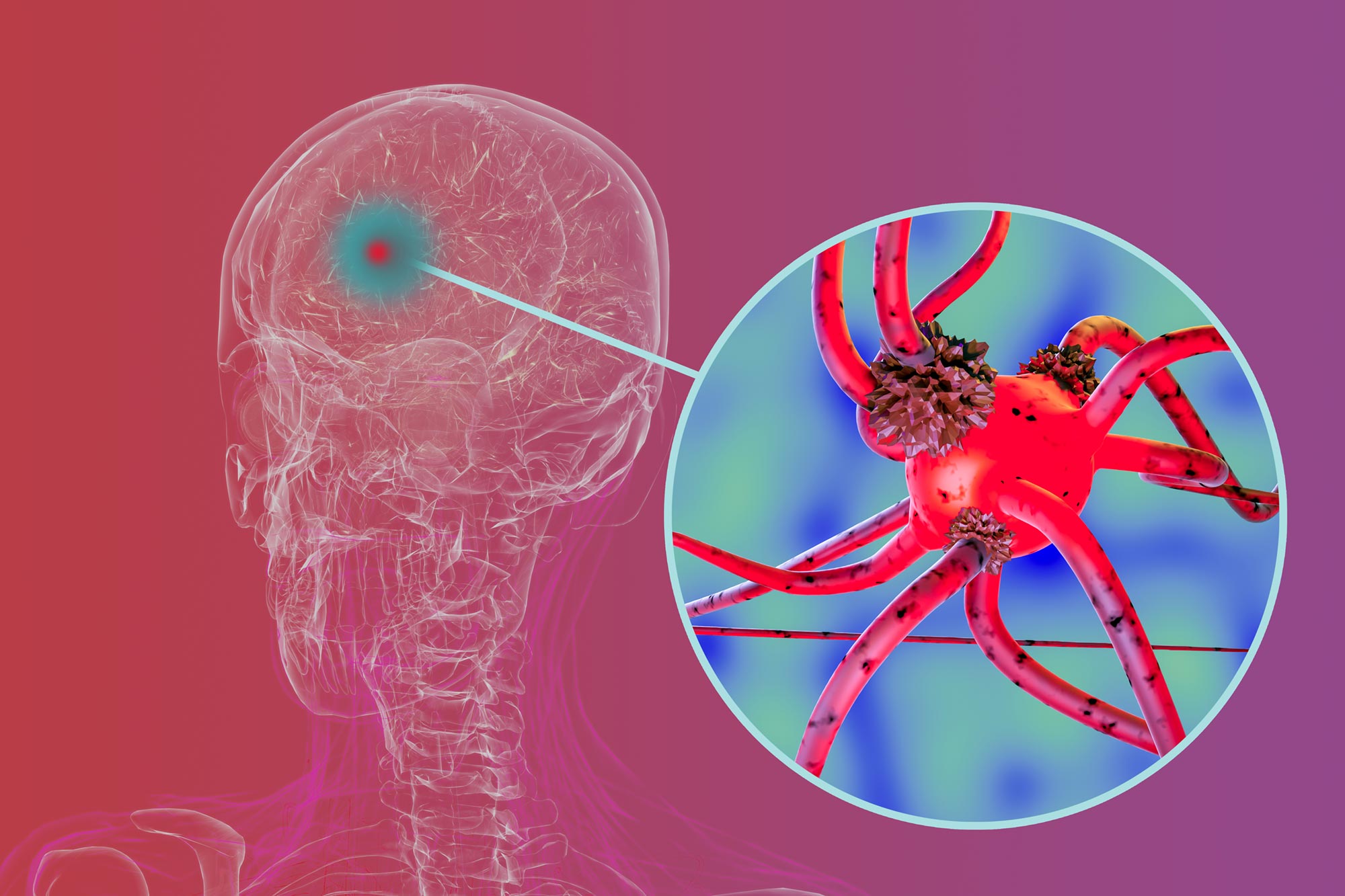
A newly identified immune-related protein may help drive the spread of Parkinson’s disease in the brain.
A protein tied to the brain’s immune system may be helping Parkinson’s disease spread from cell to cell, and scientists believe stopping it could open a new path toward slowing the disease itself.
In a new study published in Neuron, researchers at the Perelman School of Medicine at the University of Pennsylvania reported that monoclonal antibodies were able to block the activity of a protein called glycoprotein nonmetastatic melanoma B (GPNMB), preventing the spread of harmful Parkinson’s-related protein clumps in laboratory experiments.
“Many patients with Parkinson’s disease are diagnosed in the early stages, when symptoms are relatively mild, but there is currently no treatment that slows the progression,” said lead author, Alice Chen‑Plotkin, MD, Parker Family Professor of Neurology. “These early results are a promising step towards developing this type of treatment.”
Understanding Parkinson’s Disease Progression
More than one million people in the United States are living with PD, and about 90,000 new cases are diagnosed each year. Although researchers still do not fully understand what causes the disease, scientists know it spreads through the brain over time.
The process is linked to abnormal buildups of alpha-synuclein, a protein found in neurons. These protein clumps collect inside brain cells, damaging and eventually killing them. The abnormal proteins can then move into nearby healthy neurons, allowing the disease to spread into additional brain regions. As this progression continues, symptoms such as tremors and trouble walking or swallowing become more severe.
Current treatments can help manage symptoms, including medications such as levodopa and procedures like deep-brain stimulation using implanted electrodes. However, none of these approaches can stop or slow the underlying progression of Parkinson’s disease.
GPNMB Emerges as a Therapeutic Target
In earlier research published in 2022, Chen-Plotkin and her colleagues identified GPNMB as an important factor involved in the spread of alpha-synuclein between neurons. That discovery pointed to the protein as a possible therapeutic target.
In the new study, the researchers found that microglia, the immune cells that help protect the brain, produce large amounts of GPNMB in Parkinson’s disease. When these cells encounter injured or dying neurons, GPNMB production increases. Enzymes then cut the protein from the cell surface, allowing it to move between cells.
Experiments using cultured neurons showed that antibodies designed to block GPNMB reduced the spread of alpha-synuclein pathology from one cell to another.
“These results suggest Parkinson’s disease may be driven by a self-reinforcing cycle—alpha-synuclein accumulates in neurons, damaging the neurons. The injury to the neurons initiates the release of GPNMB, which accelerates the spread of alpha-synuclein, leading to further damage,” Chen-Plotkin said. “Interrupting this cycle would hopefully slow, or even stop, the spread of alpha-synuclein through the brain and the neurodegeneration that follows.”
Evidence From Human Brain Tissue
To see whether the findings also applied to humans, the researchers examined tissue from 1,675 brains stored in the Penn Brain Bank. People with genetic variants linked to increased GPNMB production also showed more widespread alpha-synuclein pathology, strengthening evidence that the protein plays a major role in disease progression.
The team also found that higher GPNMB levels were not associated with markers tied to other neurodegenerative disorders such as Alzheimer’s disease.
“These results are promising for laboratory models and human brain tissue analysis, but we still have a lot of work to do before we can translate this therapy into humans,” said Chen-Plotkin. “That being said, these results are encouraging as we continue to work towards a novel treatment for PD.”
Reference: “Secreted GPNMB enhances uptake of fibrillar alpha-synuclein in a non-cell-autonomous process that can be blocked by anti-GPNMB antibodies” by Marc Carceles-Cordon, Eliza M. Brody, Masen L. Boucher, Michael D. Gallagher, Robert T. Skrinak, Travis L. Unger, Cooper K. Penner, Adama J. Berndt, Sromona Das, Katie Lam, Rudolf Jaenisch, Vivianna Van Deerlin, Edward B. Lee, Kurt Brunden, Kelvin C. Luk and Alice S. Chen-Plotkin, 12 May 2026, Neuron.
DOI: 10.1016/j.neuron.2026.04.033
This study was supported by the National Institutes of Health (R37 NS115139, P30 AG010124, U19 AG062418, P01 AG084497), SPARK‑NS, the Parker Family Chair, and the Lipman Family Fund.
Never miss a breakthrough: Join the SciTechDaily newsletter.
Follow us on Google and Google News.
18 Comments
What is the name of the medication?
Is there any treatment for dementia? I need it for my wife, please.
Please give the name of the medication.
I have had inflammation for years. And they don’t know where it’s coming from, i also have a crust on my eyelashes every morning.
Maybe this would help your eye lash crust… FDA-approved drug specifically for eye mites (Demodex blepharitis) is XDEMVY (lotilaner ophthalmic solution 0.25%). It directly targets and eradicates the mites by paralyzing and killing them.
XDEMVY® (lotilaner ophthalmic solution) 0.25%
Yes let us know we need it yesterday ! Parkinsons guy here needs help!
about time
Yeh my dad has it find a cure quick or a new treatment please
In the meantime, use medical keto.
what is medical keto? do you mean Ketamine? thank you Carol.
We’re is he
finally some hope
If you have parkensens desiese then you need to remove the dark matter out of the brain and mind and string between it, use a anchor which has equilibriums in side that blow up in another space that takes out the dark matter, through repentance
Are there any current studies that someone could get in for this, and/or other, Parkinson’s-related issues?
Why does a strick gluten free diet help to eliminate Parkinson disease, because a true GF diet is free of pesticides.
Simply try the dietary supplement Arginine, orange flavoured if you like, one sachet at the same time every day. I is sold in Pharmacies as Arginaid. Very safe and life saving. It also stops Dementia, and Alzheimers Disease in its tracks!!!
Please send info for Parkinson
Please send info for Parkinson to [email protected]
Please send info for Parkinson to [email protected]