
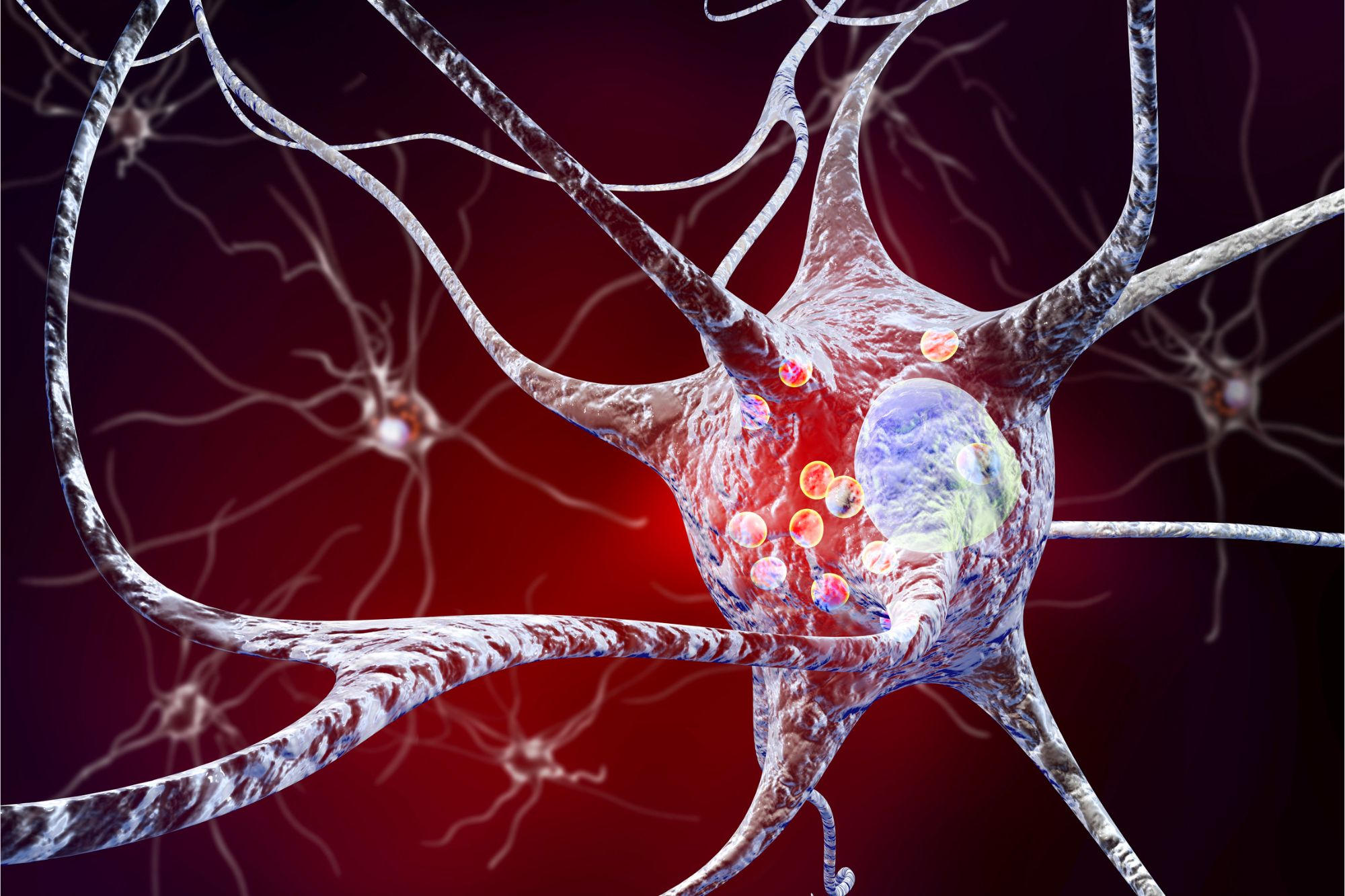
Scientists propose a new model for classifying Parkinson’s.
The complexity of Parkinson’s disease poses significant challenges in developing effective treatments. This complexity stems from various causes, including genetics and environmental factors, coupled with the broad spectrum of symptoms that patients may experience, which can vary greatly in severity. Additionally, the diagnosis of Parkinson’s often occurs late, sometimes a decade or more after the disease has begun to affect the brain.
In a paper published in The Lancet Neurology, a group of scientists argue that this complexity demands a new way of classifying the disease for research purposes, one based not on clinical diagnosis but biology. The authors have called their biological model “SynNeurGe.”
The Components of SynNeurGe
The “Syn” stands for alpha-synuclein, a protein that in most Parkinson’s patients causes abnormal deposits called Lewy bodies. Abnormalities in synuclein identify and probably cause degenerative changes in the brain that can impact movement, thinking, behavior, and mood.
“Neur” stands for neurodegeneration. This is the breakdown of the function of neurons in the brain. In doctor’s offices, specific neurons in the dopamine system are the way that Parkinson’s is diagnosed. In the SynNeurGe model, however, neurodegeneration in all areas of the brain are included in the classification.
The “Ge” stands for genetics. The role of genetics in Parkinson’s is complex. Mutations in many different genes have been found to predispose someone to the disease. The likelihood of developing Parkinson’s disease depends on the gene involved, the specific mutation within the gene, and environmental exposures.
Advancing Research and Treatment
The authors argue that for research purposes, patients should be classified by the presence or absence of these three factors. This would allow the identification of Parkinson’s patients before symptoms appear, and aid the development of treatments tailored to patients’ unique biology. Right now, patients are diagnosed based on symptoms and signs, even though the disease may have been present in their brains for many years. By shifting classification criteria, researchers can identify disease earlier (even before people may experience symptoms), and target specific patient groups that have more in common with each other biologically, giving drug development a higher chance of success.
“Although this is still for research purposes, this is a major shift in thinking,” says Dr. Ron Postuma, a clinician-scientist at The Neuro (Montreal Neurological Institute-Hospital) of McGill University and one of the study’s authors. “If you think of it, it’s quite unusual that we’ve had to wait until Parkinson’s patients have important symptoms before we could make a diagnosis. We don’t wait for someone to feel pain from cancer before we diagnose it. Instead, we detect and diagnose it, hopefully, before someone is aware of any symptoms. This research classification is a critical step towards bringing our thinking about Parkinson’s into the 21st century.”
Reference: “A biological classification of Parkinson’s disease: the SynNeurGe research diagnostic criteria” by Günter U Höglinger, Charles H Adler, Daniela Berg, Christine Klein, Tiago F Outeiro, Werner Poewe, Ronald Postuma, A Jon Stoessl and Anthony E Lang, February 2024, The Lancet Neurology.
DOI: 10.1016/S1474-4422(23)00404-0
The study was funded by the Canada Foundation for Innovation, the Michael J. Fox Foundation for Parkinson’s Research, the Canadian Institutes of Health Research, Fonds de Recherche du Quebec–Santé, the Weston-Garfield Foundation, the Parkinson Society of Canada, the Webster Foundation, and the National Institute of Health.
Never miss a breakthrough: Join the SciTechDaily newsletter.
Follow us on Google and Google News.
2 Comments
I come from central WA state where orchard agriculture is the predominant product. I personally know 6 people who have been diagnosed with Parkinson’s. It seems like a lot of people and I bet it is not average. We have several factors that may contribute to more Parkinson’s in our area. Number one being orchard sprays. I know from working in the industry that sprays make the volume of edible fruit crops much larger. The other thing we talk about is being down winders from the Hanford facility where they are trying to contain waste products from nuclear energy production. Has anyone studied these two factors when talking about Parkinson’s?
Thanks for that post. It inspired me to google the health effects of pesticides.