
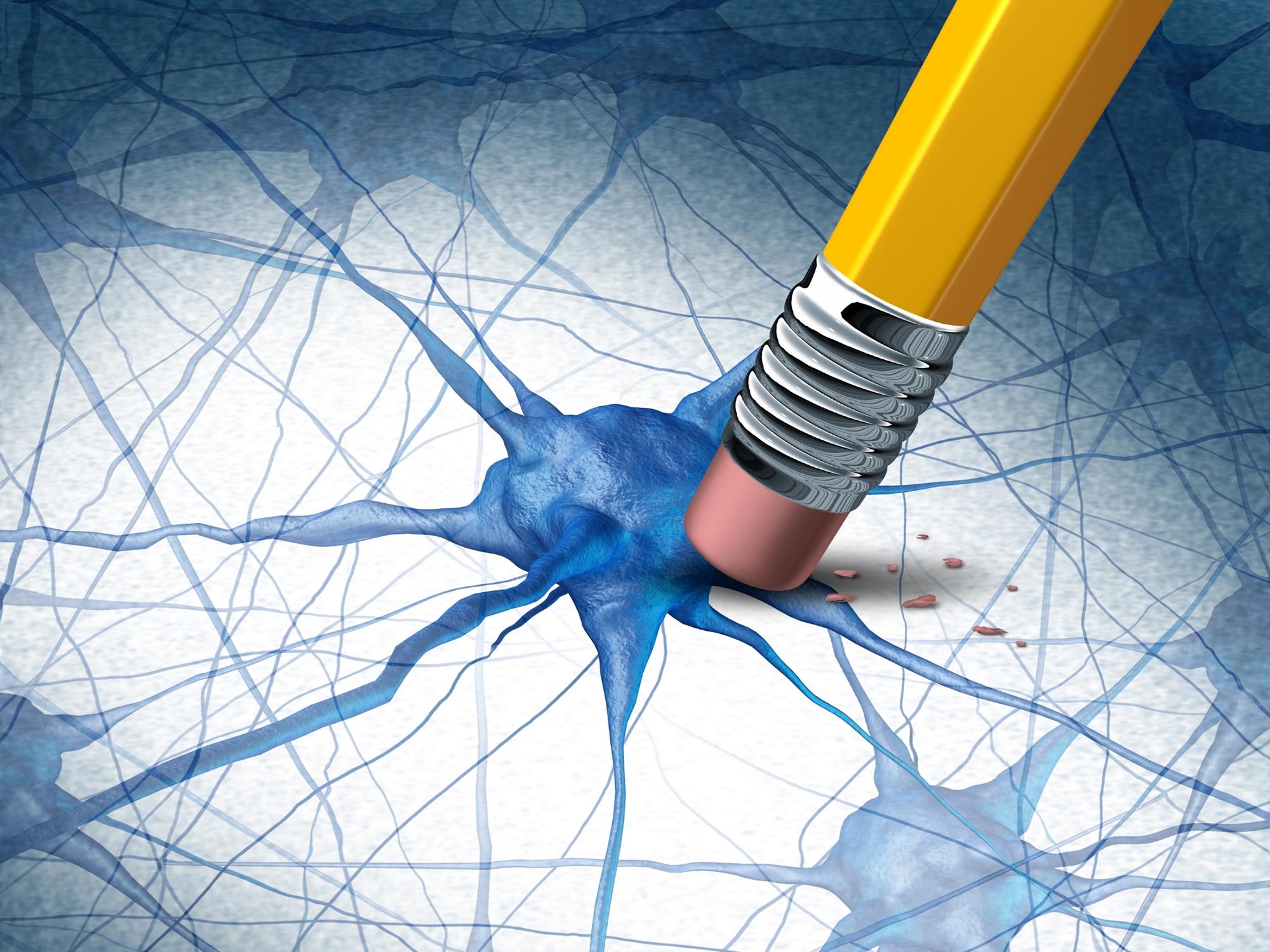
Scientists discovered a link between copper regulation and neurodegeneration, using the worm gene swip-10. Their findings suggest that restoring copper balance could offer new treatments for disorders like Parkinson’s and Alzheimer’s disease.
Research on simple organisms frequently paves the way for new therapeutic breakthroughs. A notable example is the 2020 Nobel Prize in Chemistry, awarded to Emmanuelle Charpentier, Ph.D., and Jennifer Doudna, Ph.D., for their discovery of CRISPR-based DNA editing. This groundbreaking work, which originated from studies using bacteria just a decade earlier, has since led to CRISPR therapies being approved for multiple disorders, with more treatments on the horizon.
Recognizing the translational potential of studies in simpler animal models, a team of scientists led by Randy D. Blakely, Ph.D., at Florida Atlantic University’s Schmidt College of Medicine and FAU Stiles-Nicholson Brain Institute, have taken an important step that may lead to treatments for human neurodegenerative disorders. Their work begins with a tiny, inauspicious roundworm.
The Role of Caenorhabditis elegans in Neuroscience Research
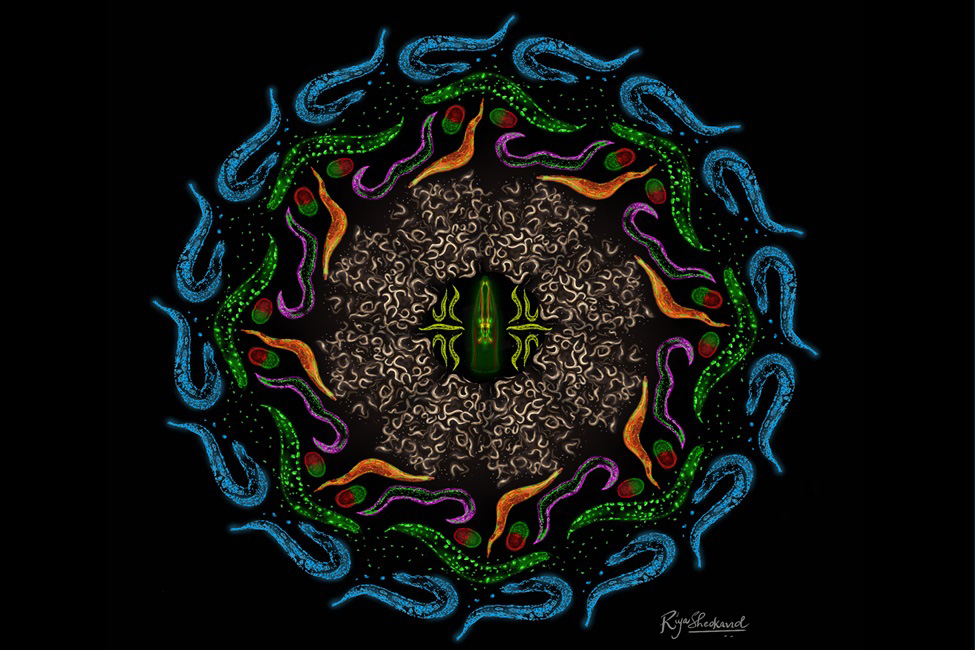
Formally known as Caenorhabditis elegans, the nematode is a favorite of neuroscientists seeking to identify and manipulate genes that impact neural signaling and health.
In a new study, published in the Proceedings of the National Academy of Sciences, Blakely and colleagues link the function of the worm gene swip-10 to the control of copper. While known for its use in electrical wiring, pots, pans and jewelry, copper also is a vital micronutrient that plays several essential roles in all cells, including those of the human brain.
“Copper is required for the function of mitochondria, the powerhouse of cells, and its production of the energy-storing molecule ATP, which fuels hundreds of vital body functions such as muscle contraction, digestion and heart function as well as the signaling of brain neurons that allows us to think and feel,” said Blakely, senior author, and David J.S. Nicholson Distinguished Professor in Neuroscience at FAU. “Copper also helps protect cells from harmful molecules termed reactive oxygen species, or ROS, which in excess can damage proteins and DNA, ultimately driving cell death, including neurons that die in Parkinson’s and Alzheimer’s disease.”
Copper’s Role in Cellular Health and the swip-10 Gene
Copper exists mainly in two forms: cuprous copper (termed Cu(I)) and cupric copper (termed Cu(II)). These two forms are managed by different proteins in the body and can be converted from one to the other to support various chemical reactions vital to human health. Scientists are still studying how the body maintains the right balance between these two copper forms, which is important, as too much or too little of either can wreak havoc on cells, particularly neurons. This is where swip-10 enters the picture.
Blakely’s worm team, led by former member Andrew Hardaway, Ph.D., reported the identification of the swip-10 gene in 2015, following a screen for molecules needed to control the activity of worm dopamine neurons, specifically those that control their ability to swim.
“Worms with a damaging mutation in swip-10 initially swim normally, but unlike normal worms whose swimming continues for 30 minutes or more, in less than a minute, the mutants display swimming-induced paralysis or Swip,” said Blakely. “We tracked the paralysis to an excess activity of their dopamine neurons and published what we thought was a fairly complete story.”
But further studies by another past graduate student in the Blakely lab, Chelsea Gibson, Ph.D., showed that the overactive dopamine neurons in swip-10 mutants exhibit degeneration much earlier in life than normal worms, as seen in Parkinson’s disease (PD). Other types of neurons in swip-10 mutant worms besides those making dopamine also demonstrate degeneration, suggesting to Blakely’s team that links to brain disease might mirror other neurodegenerative disorders besides PD.
Copper, Histones, and Neuronal Health
A clue to such disorders came with the decoding of the swip-10 gene sequence where Blakely’s team found that humans possess a gene highly related to swip-10, termed MBLAC1. Then, in 2019, geneticist Iris Broce, Ph.D., at the University of California, San Francisco, fingered MBLAC1 as a risk factor for a particular form of Alzheimer’s disease (AD), one accompanied by cardiovascular disease (AD-CDV). Importantly, they also found a significant reduction in MBLAC1 expression in the frontal cortex of humans with AD-CDV, suggesting a role for MBLAC1 in supporting the health of both the brain and peripheral organs such as the heart. So where is the copper link?
“It turns out that MBLAC1 encodes an enzyme key to the production of another class of proteins, termed histones, well known to compact long strands of DNA so they can form chromosomes,” said Blakely.
But certain histones possess an additional, surprising activity, the ability to convert Cu(II) to Cu(I), and when mutations in these proteins were generated by Narsis Attar, M.D., Ph.D., at the University of California, Los Angeles, these cells show much lower production of Cu(I), higher amounts of ROS, their mitochondria function poorly, and they fail to thrive.
The Impact of swip-10 on Copper and Neuron Health
Connecting the dots across the years, Peter Rodriguez Jr., a current graduate student and lead scientist on the study in the Blakely lab, reasoned that swip-10 mutants also would fail to produce the requisite histones, leading to a loss of Cu(I), mitochondrial dysfunction, and an elevation of ROS, which could be a major reason the worm’s dopamine neuron die. In the new study, Rodriguez Jr., and collaborators show that this is indeed the case, and moreover, find that they can rescue ATP production, reduce ROS, and promote survival of dopamine neurons by supplementing their diet with Cu(I) or by exposing them to a drug known to increase Cu(I) levels in cells.
“Surprisingly, the impact of loss of swip-10 on Cu(I), worm bioenergetics, and oxidative stress is not just an impact felt by dopamine neurons,” said Rodriguez Jr. “Rather, Cu(I) levels, and these good things that Cu(I) does, are greatly diminished body-wide. Another striking finding is that though changes occur with Cu(I) and its actions across the body, these deficits arise from the loss of swip-10 from a small number of cells in the head of the animal known as glia, which make up only 5% of the cells in the animal’s body.”
Glial cells are well known to support the signaling and health of neurons in many organisms. Indeed, in the worm, Rodriguez Jr. could restore the health of worms, as well as whole body Cu(I) levels, by expressing a normal copy of the swip-10 gene only in glial cells.
“The powerful control of Cu(I) exerted by swip-10 points to a novel opportunity to sustain neuronal health,” said Blakely.
Interestingly, the antibiotic ceftriaxone, which the Blakely lab found to bind MBLAC1 protein, has been reported by multiple groups to be neuroprotective in vitro and in animal models, though its mechanism of action is currently unclear. Blakely’s team believes ceftriaxone’s action relates to modulating copper homeostasis.
“Ceftriaxone isn’t a particularly powerful drug, doesn’t get into the brain very well compared to other medications, and can cause antibiotic resistance and other side-effects. So it’s not surprising that it hasn’t proved useful in the clinic,” said Blakely. “Perhaps now that we have a better idea as to what swip-10 and MBLAC1 do, we think that we may be able to design a truly useful medication to treat neurodegenerative disease.”
Reference: “Glial swip-10 controls systemic mitochondrial function, oxidative stress, and neuronal viability via copper ion homeostasis” by Peter Rodriguez, Vrinda Kalia, Cristina Fenollar-Ferrer, Chelsea L. Gibson, Zayna Gichi, Andre Rajoo, Carson D. Matier, Aidan T. Pezacki, Tong Xiao, Lucia Carvelli, Christopher J. Chang, Gary W. Miller, Andy V. Khamoui, Jana Boerner and Randy D. Blakely, 17 September 2024, Proceedings of the National Academy of Sciences.
DOI: 10.1073/pnas.2320611121
The research was supported by Steven and Deborah Schmidt, the Florida Department of Health, and a pilot award from the FAU Mangurian Center for Brain Health (awarded to Blakely), and the National Institutes of Health (awarded to Miller, Kalia and Chang).
Never miss a breakthrough: Join the SciTechDaily newsletter.
Follow us on Google and Google News.
1 Comment
Now eighty years of age and first diagnosed with mostly asymptomatic gout in early 1981, I doubt the findings in the article will correlate well with human beings. Not that they’re not relevant, it’s just that it’s a lot more complicated for humans. Stimulated by the article to again investigate the role of copper in human health, I now think this article: https://www.mdpi.com/2072-6643/10/11/1815 may have finally provided missing links that forty-three years and counting of mostly mild chronic diseases with repetitious medical errors failed to. Oddly, I already began increasing my copper (minimally) intake yesterday, by resuming supplementation with a formula I quit taking some time ago, but now don’t recall just when or why?
As to the “complications,” there is a (my) kind of nearly subclinical non-IgE-mediated food (minimally) allergy reactions to factor-in. Identified and reported on by 1935 (Dr. Arthur F. Coca, “The Pulse Test,” 1956), mainstream medicine still fails to recognize and research them as true allergies. Through at-home experimentation and online research I discovered long ago that inflammation of any kind can result in the release of xanthine oxidase which reduces to uric acid and ROS (free radicals), which, apparently (now), in the absence of adequate dietary supplies of copper can switch mitochondria from glycolysis (glucose to energy) to glycogenesis (glucose to fat). And, my kind of food allergies cause inflammation.
Another complication to factor-in is FDA approved food poisoning; common allergen soy since the late 1960s and added artificially cultured “free” (can cross the blood-brain barrier; unlike natural “protein-bound”) monosodium glutamate (MSG), which agonizes or aggravates my practically harmless individual single substance allergy reactions to turn them chronic and deadly dangerous, long-term (months to decades, highly individual, many individual variables), minimally. Then, too, there are those pesky excessive “medical errors” which I doubt the worms have to deal with, at all. Thank you all for publishing your studies and, hopefully, adding the final pieces to complete a decades old puzzle of at-first mysterious, serious chronic illness.