

Scientists have identified a compound that promotes weight loss without the bone damage seen in restrictive diets.
A diet that cuts certain amino acids can drive rapid fat loss and even extend lifespan in animals. But it comes with a major downside: weaker bones. New research suggests that the trade-off may not be unavoidable.
In a study published in Aging, scientists led by Naidu B. Ommi at the Orentreich Foundation for the Advancement of Science explored whether they could separate weight loss from bone damage. Their focus was on cysteine, a sulfur-containing amino acid, and glutathione (GSH), a key molecule involved in cellular defense and metabolism.
The problem with a powerful diet
Sulfur amino acid restriction (SAAR), which lowers methionine and removes cysteine, has striking metabolic effects. Mice on this diet lose fat quickly, even on high-fat food, and previous studies have linked it to longer lifespan.
However, the same diet weakens bones. It reduces bone mineral density, lowers the number of bone-forming cells, and increases fat inside bone marrow. Because bone and fat cells develop from the same precursors, this shift can directly undermine bone strength.
Pinpointing the cause
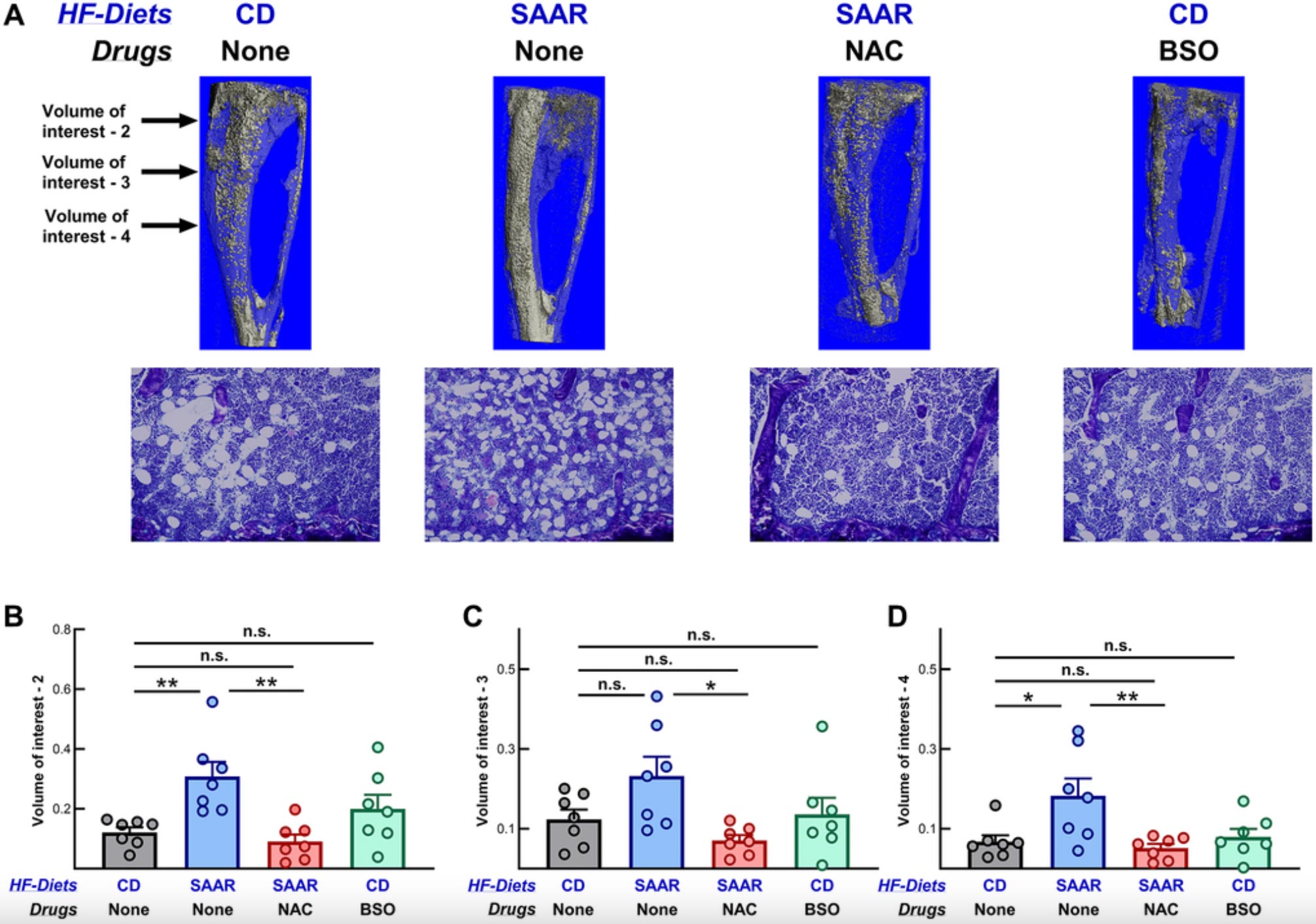
The researchers tested whether cysteine restriction, rather than methionine, drives these effects. They compared obese mice on four regimens: a normal diet, a SAAR diet, SAAR plus N-acetylcysteine (NAC), and a normal diet plus D, L-buthionine-(S, R)-sulfoximine (BSO), a compound that lowers glutathione.
NAC restores cysteine and glutathione levels. BSO lowers glutathione without changing the diet.
A surprising split
SAAR mice became lean but showed clear bone damage, including lower density, fewer osteoblasts, and weaker bones. Bone marrow fat also increased.
Adding NAC reversed these problems, showing that cysteine and glutathione depletion drive the damage.
BSO, however, produced a leaner body without harming bone. Bone density, strength, and cell activity remained normal, and marrow fat did not increase.
“Despite its anti-obesity effects, BSO did not exert any detrimental effects on bones,” the authors stated.
Why it matters
These findings suggest that fat loss and bone loss can be uncoupled. Lowering glutathione appears to drive weight loss, but how it is reduced matters. Dietary restriction disrupts multiple systems, while BSO may act in a more targeted, tissue-specific way.
Future treatments might mimic the benefits of restrictive diets without their downsides, especially since diets like SAAR are difficult to follow in real life.
However, the researchers say more work is needed to understand how BSO protects bone, how effects differ by sex and age, and whether long-term use is safe.
Reference: “D, L-Buthionine-(S, R)-sulfoximine recapitulates the anti-obesity effects of sulfur amino acid restriction without the associated deleterious effects on bone in male mice” by Naidu B. Ommi, Dwight A. L. Mattocks, Mark C. Horowitz and Sailendra N. Nichenametla, 2 March 2026, Aging.
DOI: 10.18632/aging.206358
Never miss a breakthrough: Join the SciTechDaily newsletter.
Follow us on Google and Google News.
2 Comments
Vegetarian eating organic no fried food… I am skinny. The Chinese say the secret to life is “” Discipline “‘.. All diseases enters through the mouth and nose.
Interesting. Most collagen types lack cysteine. So I wonder if taking collagen supplements would reduce bone density and/or promote weight loss. Or need supplemental NAC with it. Or just additional complete protein.