

A dermatologist says there are safer alternatives to biotin for treating hair loss related to cancer.
Hair loss is one of the most visible and emotionally difficult side effects of cancer treatment. For many patients, it affects identity, confidence, and a sense of normalcy. In search of solutions, some turn to biotin supplements, often promoted online as a simple way to restore hair and strengthen nails.
But doctors warn that this popular approach may do more harm than good.
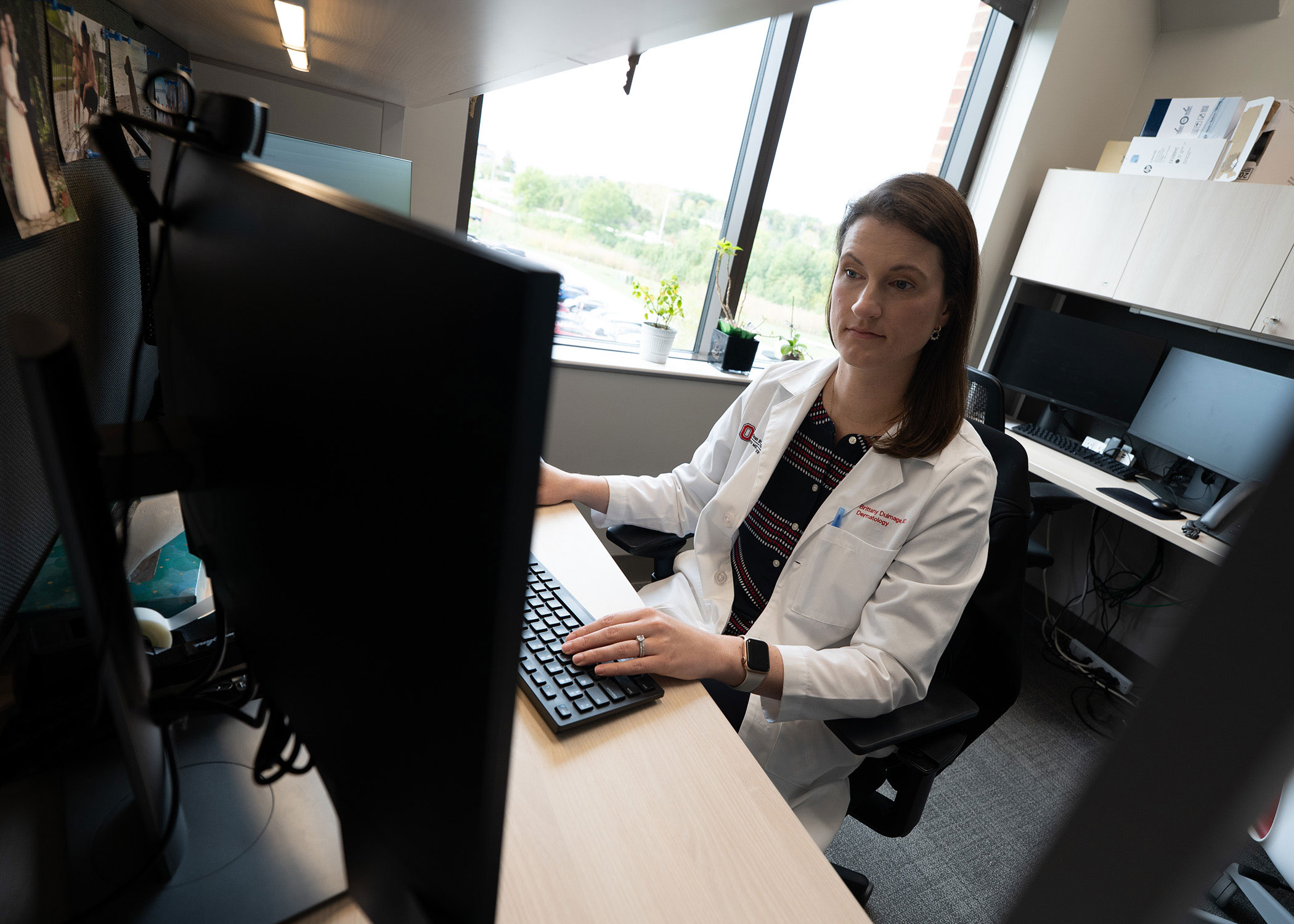
Brittany Dulmage, MD, an oncodermatologist at The Ohio State University Comprehensive Cancer Center – Arthur G. James Cancer Hospital and Richard J. Solove Research Institute, says there is little evidence that oral biotin helps people regrow hair during or after cancer therapy. More concerning, she explains, is its potential to disrupt critical lab tests.
Biotin, also called vitamin B7, plays a role in helping the body produce keratin, a protein essential for hair, skin, and nails. However, true deficiencies are rare because the vitamin is widely available in everyday foods such as eggs, meat, dairy, fruits, and vegetables. For most people, extra supplementation does not translate into better hair growth.
“People have the misconception that biotin supplements are harmless and there’s no reason not to take them. The reality is that the supplements may cause inaccurate lab results, resulting in a delay or change in patients’ treatment plans,” she said.
Dulmage serves as associate director of dermatology at The Ohio State University College of Medicine and leads the Oncodermatology Clinic, which focuses on managing hair, skin, and nail side effects related to cancer treatments such as chemotherapy, immunotherapy, and targeted therapy.

“More than half the patients who come to see me with a problem related to hair loss are on a supplement that they’ve started on their own after learning about it online, by word of mouth, and sometimes even at the advice of their doctor,” she said.
To highlight these risks, Dulmage is the senior author of a study published in JCO Oncology Practice. The paper encourages oncologists to discuss hair loss openly with patients and explain how biotin supplements may affect diagnostic testing.
Biotin supplements can affect blood work for some cancers
Biotin can interfere with lab tests used to monitor several cancers, including prostate, thyroid, ovarian, and breast cancer. Some of these tests rely on chemical reactions that involve biotin, meaning that supplement use can produce results that appear falsely high or low.

“Biotin does not actually change the levels of hormones in the body, but it interferes with the way those levels could be checked when blood work is done,” she said. “For some of the hormones, such as prostate-specific antigen, PSA, or thyroid-stimulating hormone, TSH, it may falsely suppress or lower those levels, potentially masking cancer recurrence in cancer survivors. For reproductive hormones, including estrogen and testosterone, it may falsely elevate levels, resulting in delayed therapy.”
Anna Malagoli of Columbus experienced this issue firsthand while undergoing treatment for breast cancer. Like many patients, she was concerned about hair loss.
“Your hair is very much a part of you. One of the first things you ask is ‘Am I going to lose my hair?’ It’s such an important thing for people – not everybody looks good with no hair,” she said.
After her cancer entered remission, she focused on regrowing her long, curly hair and began taking biotin supplements based on information she found online.
“The amount of information on the Internet can lead you in different directions. I was taking so much biotin it’s not even funny,” she said. “Nobody mentioned one word that biotin vitamins or minerals or supplements could interfere with your treatment or your testing.”
Credit: The Ohio State University Comprehensive Cancer Center
Patient had inconsistent lab results while taking biotin supplements
Malagoli first became aware of the issue during an appointment with Dulmage. Looking back, she realized the connection between her supplement use and her test results.
“My lab results were inconsistent. They just didn’t balance out with what I was feeling so that was a red flag. I think it had to do with the supplements I was taking,” she said.
For patients who still choose to take biotin, Dulmage advises stopping the supplement at least 72 hours before scheduled blood tests.
“The challenge is that not all blood work is planned so you may not be able to hold your biotin. Biotin can also impact the levels of troponin, which is a marker of whether or not someone is having a heart attack,” she said. “Obviously, you’re not planning to have a heart attack so you can’t hold biotin before troponin levels are checked. This is why I recommend to patients—think about not taking it at all, especially since very few people are biotin deficient.”
FDA-approved minoxidil is a safe, effective alternative to biotin supplements
As a safer alternative for managing hair loss, Dulmage recommends minoxidil instead of biotin supplements. She noted that it is both effective and generally safe, except for those who are pregnant or breastfeeding. Over-the-counter minoxidil is FDA-approved and available in topical forms such as lotions and foams.
“If you have been trying minoxidil for several months and not seeing any improvement, or want to know about other options, see a dermatologist. There are many other types of treatments that may be an option,” she said.
Malagoli has used both treatments and found minoxidil more effective over time.
“I don’t know if my body just doesn’t assimilate the supplements as well, but minoxidil is definitely more effective long-term,” she said. “I would say it’s super important to listen to your doctors and not just do your thing.”
Reference: “Biotin Supplements for Hair and Nail Regrowth: A Caution for Oncologists” by Layna Mager, Olivia Ueltschi, Lucy Rose, Brittany Dulmage, 15 September 2025, JCO Oncology Practice.
DOI: 10.1200/OP-25-00693
Never miss a breakthrough: Join the SciTechDaily newsletter.
Follow us on Google and Google News.