
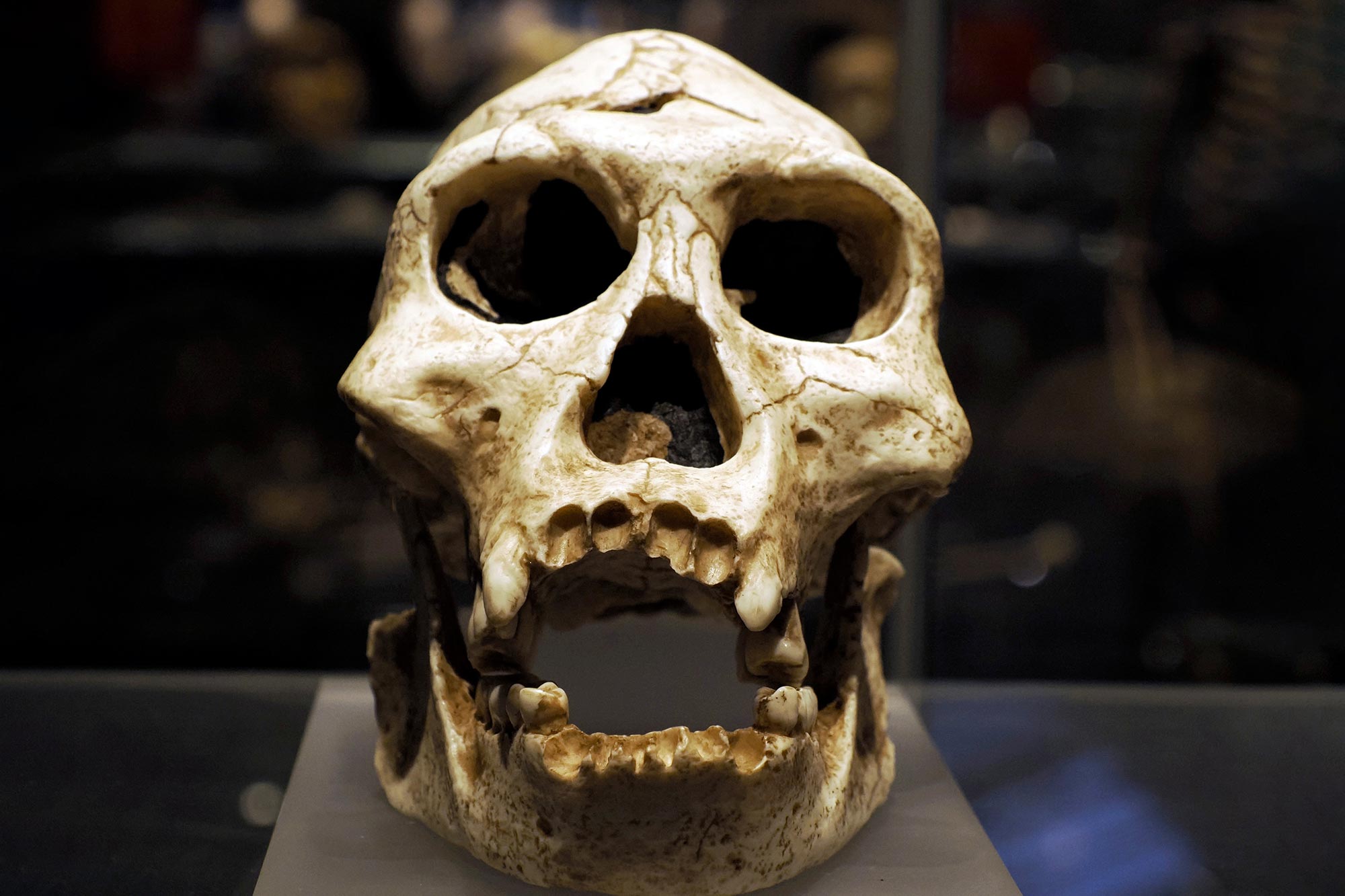
A new genetic analysis of Neanderthal remains from Stajnia Cave offers an unusually detailed glimpse into a small group that lived together roughly 100,000 years ago.
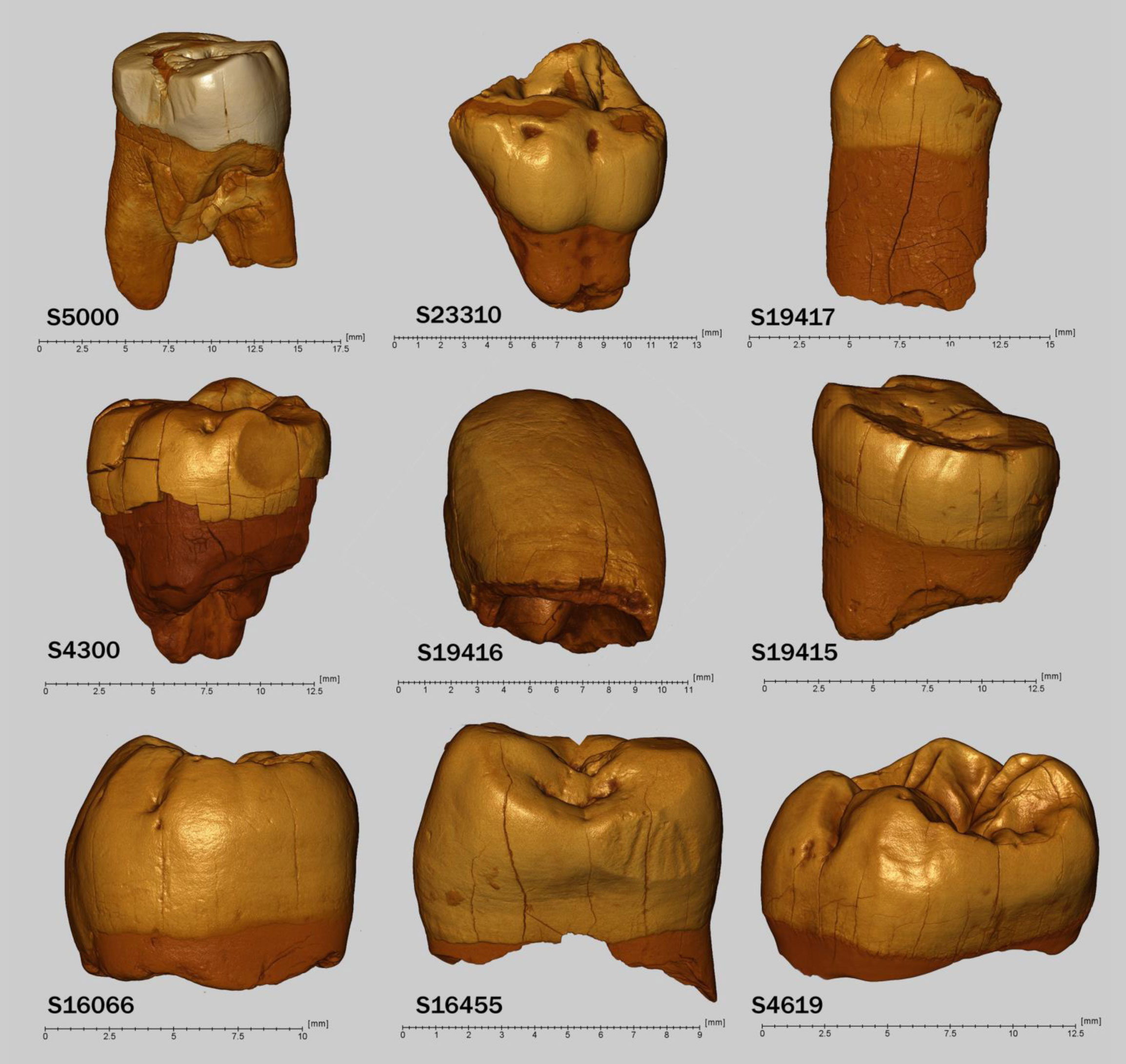
An international team has analyzed ancient mitochondrial DNA from eight Neanderthal teeth recovered in Stajnia Cave in Poland. The study, published in Current Biology, offers something rarely possible in Neanderthal research: a genetic look at multiple individuals from the same place and the same broad time period.
The teeth belonged to at least seven Neanderthals who lived about 100,000 years ago, north of the Carpathian Mountains.
“This is an extraordinary result because, for the first time, we are able to observe a small group of at least seven Neanderthals from Central-Eastern Europe who lived around 100,000 years ago,” says Andrea Picin, professor at the University of Bologna and coordinator of the research. “In most cases, Neanderthal genetic data come from single fossils or from remains scattered across different sites and periods. At Stajnia, by contrast, it has been possible to reconstruct a small group of individuals, providing for the first time a coherent genetic picture of Neanderthals in this part of Europe.”
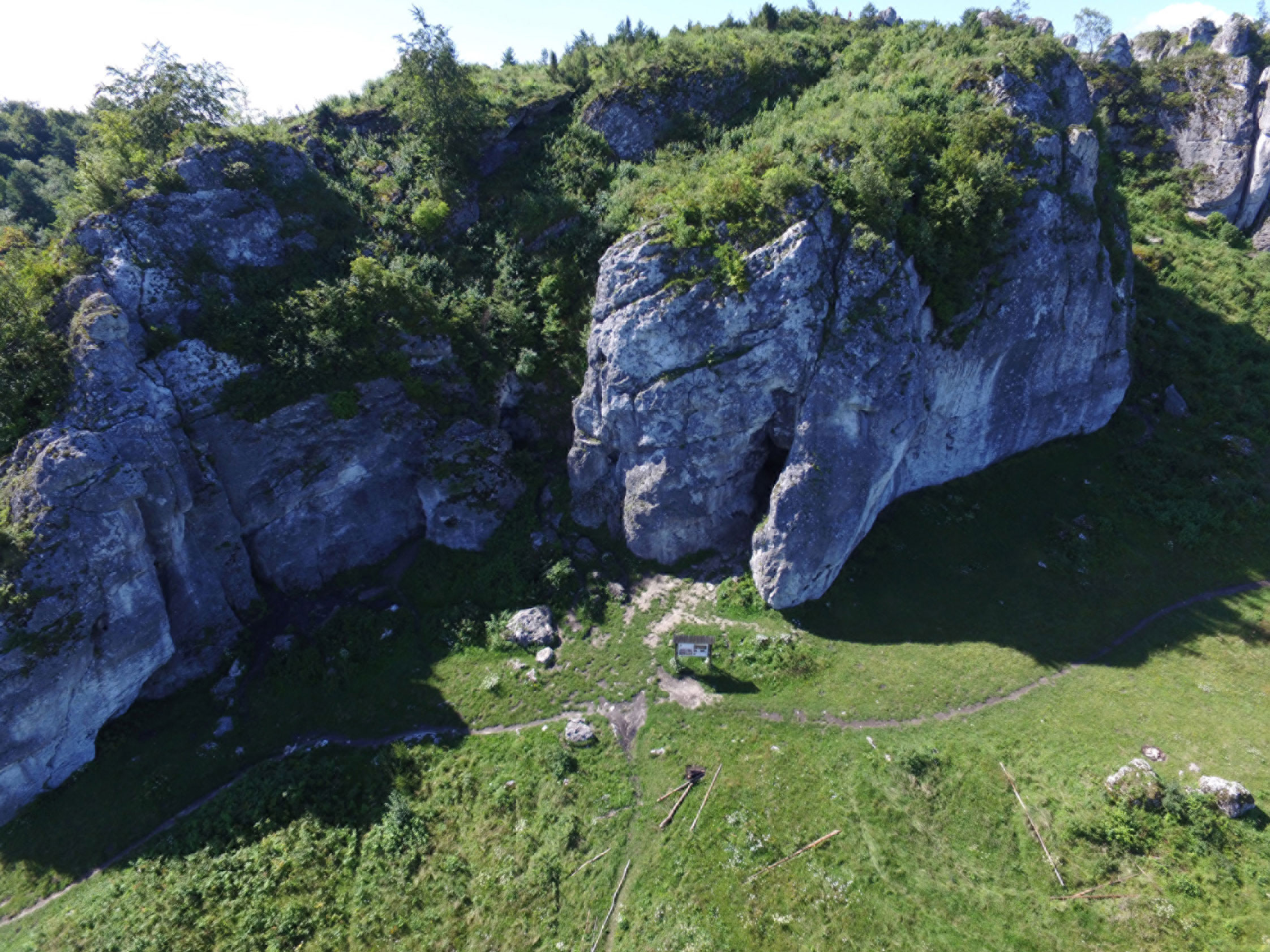
A Rare and Cohesive Genetic Snapshot
“We had known for some time that Stajnia Cave preserved exceptional evidence, but these results exceeded our expectations,” say Wioletta Nowaczewska of the University of Wrocław and Adam Nadachowski of the Institute of Systematics and Evolution of Animals of the Polish Academy of Sciences, co-authors of the study. “Being able to identify such an ancient small group of Neanderthals in such a complex site is an important achievement for Polish research and for the study of Neanderthals in Europe.”
The findings also shed light on how a specific Neanderthal maternal lineage spread across western Eurasia. The mitochondrial DNA from the Stajnia individuals belongs to the same branch identified in Neanderthals from the Iberian Peninsula, southeastern France, and the northern Caucasus.
This pattern suggests that the lineage was once widespread before later being replaced by genetic lines seen in more recent Neanderthals.
Clues of Family Ties
“A particularly fascinating aspect is that two teeth belonging to juvenile individuals and one belonging to an adult share the same mitochondrial DNA,” adds Mateja Hajdinjak, co-author of the article and researcher at the Max Planck Institute for Evolutionary Anthropology. “This suggests that these individuals might be closely related to each other.”
The study also compares these remains with the Neanderthal fossil known as Thorin, discovered in Mandrin Cave in France. Thorin carries a mitochondrial genome similar to the Stajnia group and has been dated to about 50,000 years ago.
“Our study is a reminder that the oldest chronologies must be treated with great caution,” explains Sahra Talamo, professor at the University of Bologna and co-coordinator of the study. “When radiocarbon values approach the limit of calibration, it is essential not to assign more precision than the data can actually support. In such cases, the comparison between archaeology, radiocarbon dating, and genetics becomes crucial.”
From an archaeological perspective, the findings support the idea that Central Eastern Europe played an important role in Neanderthal history rather than serving as a peripheral region. Stajnia Cave and southern Poland offer a valuable setting for exploring how Neanderthals moved, interacted, and shared technologies across large parts of Europe.
Reference: “First multi-individual Neanderthal mitogenomes from north of the Carpathians” by Andrea Picin, Mateja Hajdinjak, Wioletta Nowaczewska, Maarten Blaauw, Alex Bayliss, Helen Fewlass, Timothy J. Heaton, Paula J. Reimer, John Richard Southon, Johannes van der Plicht, Lukas Wacker, Gregorio Oxilia, Rita Sorrentino, Antonino Vazzana, Erica Piccirilli, Stefano Benazzi, Marcin Binkowski, Paweł Dąbrowski, Adrian Marciszak, Paweł Socha, Krzysztof Stefaniak, Marcin Żarski, Andrzej Wiśniewski, Janet Kelso, Jean-Jacques Hublin, Adam Nadachowski and Sahra Talamo, 20 April 2026, Current Biology.
DOI: 10.1016/j.cub.2026.03.069
Never miss a breakthrough: Join the SciTechDaily newsletter.
Follow us on Google and Google News.
19 Comments
Well might as well say it: Bring Back the Neanderthals!
This is the best comment on this page and thus far the only comment worth reading.
The only argument I would make is that Neanderthal never really left. Neanderthal lives on inside all of us…giving us the good (immune system) with the not-so-good (diabetes)
((Note: DNA from people of pure African decent seem to lack any Neanderthal DNA as far as studies have shown as of today))
Have any palaeoanthopologists ever bothered to compare Neanderthal skulls or those of H erectus in Java, dated at100 000 years BP, with the Mungo skulls and Cau Creek skulls in Australia? no doubt it would be politiically incorrect to do so these days, and the Mungo bones have been stolen and buried somewhere unknown, but………???????
One of the skull wide pronounced cheekbone shapes looks almost like the Easter Island statues
There is one small population of humans who look, behave and have the character of Neanderthal humans, they live around the villages Rast and Ghidici in Dolj County, Romania. Bumpy eyebrows bone line, extremely narrow forehead between eyebrows and hairline, very kind, very skilled in crafting anything from wood, metal. Over the history they were mistakenly attributed gypsy identity, some said they are a small colony of miners brought by the Romans when they conquered Dacia, brought to mine for them, the rudari themselves (that’s what they’re called) say that they predate romanians on these lands and that they are the Dacians. Most of them are illiterate because they don’t mix with the others and don’t usually send their children to state schools but those who do excel in anything they study, proving to have a great memory and intellectual capacity. It would be worth studying them before they disappear.
23 and me said I Had a higher percentage of Neanderthal.Found when they test me . My DNA 🧬
National geographic told me the same thing
Was it male bones? White people wasn’t here 100,000 years ago. So who were the the people that was here? This is very important
They push diversity but now the Neandrathals are no more because of it. Take another look.
We are still here.
A human sperm and a human egg coming together forms a set of human eyes. They didn’t evolve. We know exactly how they are formed. It takes nine months. This invalidates any and every article ever written on the evolution of the human eye. Why make up an imaginary second process that exists only on paper, and can never match the known process we already have? Why make up an imaginary second process in the first place? This puts evolution on a defense it can never get off of, effectively eliminating it as an explanation for our existence, and as a serious topic to be studied. ( Why study the evolution of the human eye, when you can just study the actual process that forms them? ) This applies to every other part of our body. There is exactly zero science to support human evolution. Thanks for your time.
Oh dear!
Yes….where will some post an ancestry chart of that size?!
Mr. Richardson, Your comment states that evolution is responsible for our existence. Lets acknowledge that it is only a part of change over time. The human reduction in body size and robustness, our less pronounced facial features, smaller end less dense teeth and other genetic changes over time are all part of the evolutionary process.
We may currently retain non evolved traits also. Although we are bipedal, our pelvis is oriented like that of quadrupedal primates.
Some interesting observations do drive questions. We may never know.
Dream on!
Hahahahahaha, hehehehehee, whew, thanks. I was trying to find a good example of devolution. Hahahahahaha, hehehehehe……….You win!!
You obviously have neither scientific nor lawyer training and I read nothing of an eye before yours.
This is fake. All they want you to believe is that you came from and were created in another way, any other way but the truth, God.
Same reason why NASA exists and all our other fake history.
Yes, very true!! The European, invented mass immigration, forced multiculturalism, globalism and diversity when they invaded the Native American homelands, when they brought thousands of African slaves, low pay wage workers, and invaded non-white Indigenous land,
White Europeans in America are not Americans by blood, and can always go back to their shithole countries. America is for its Native American population!!