
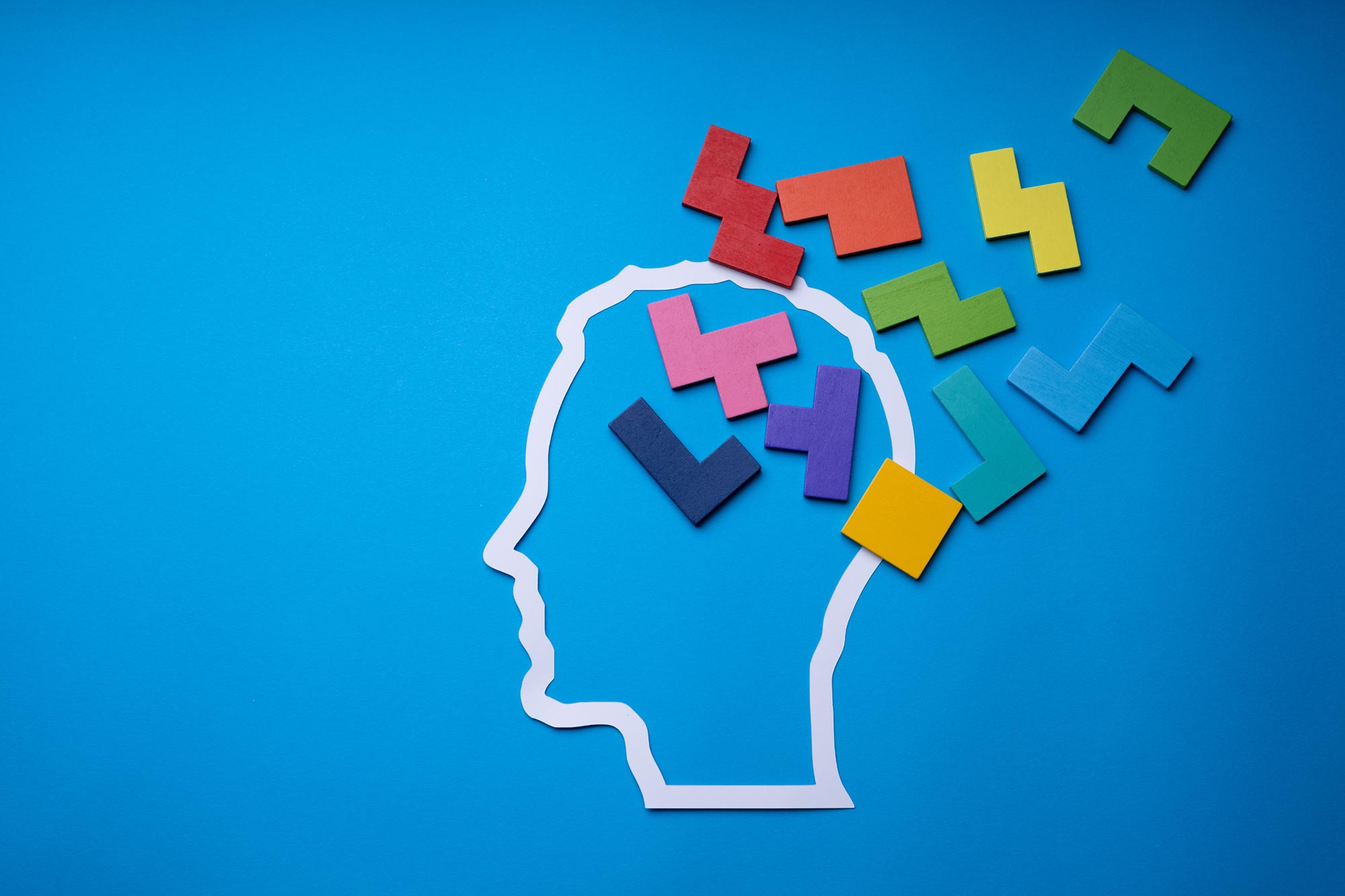
Leaning into ADHD strengths like creativity and hyperfocus may be the key to better mental health and a happier life.
Adults with ADHD who understand and actively use their personal strengths tend to experience higher well-being, a better quality of life, and fewer mental health challenges, according to a new international study.
The research, conducted by scientists from the University of Bath, King’s College London, and Radboud University Medical Center in the Netherlands, is the first large-scale effort to measure psychological strengths in people with ADHD.
Published in Psychological Medicine, the study compared 200 adults with ADHD and 200 adults without the condition. Participants were asked how strongly they identified with 25 positive traits, including creativity, humor, spontaneity, and hyperfocus, defined by researchers as “things [they] do well or best.”
Shifting the Focus From Challenges to Strengths
ADHD is often linked to difficulties such as impulsivity, forgetfulness, and trouble focusing. However, these findings point to a different perspective by emphasizing the importance of recognizing and applying personal strengths.
Luca Hargitai, lead researcher from the Department of Psychology at the University of Bath, said: “These exciting findings give us an indication of which positive qualities may be tied to ADHD and thus can be considered ADHD-related strengths. It can be really empowering to recognize that, while ADHD is associated with various difficulties, it does have several positive aspects.”
Key Strengths More Common in ADHD
The study found that adults with ADHD were more likely than neurotypical participants to strongly identify with 10 specific strengths, including:
- Hyperfocus (deep concentration on tasks of interest)
- Humor
- Creativity
- Spontaneity
- Intuitiveness
Even though adults with ADHD often face ongoing challenges in areas such as work, relationships, and mental health, they were just as likely as those without ADHD to recognize and use their strengths in everyday life.
Using Strengths Improves Well-Being
Across both groups, participants who had greater awareness of their strengths and used them more frequently reported clear benefits. These included:
- Higher subjective well-being
- Better quality of life (across physical, psychological, social, and environmental domains)
- Fewer symptoms of anxiety, depression, and stress
Dr. Punit Shah, senior author and Associate Professor of Psychology at the University of Bath, said: “Our findings highlight that knowing that we have certain skills and positive qualities at our disposal and using these strengths where appropriate can be beneficial for our wellbeing. This might sound obvious, but now that our research confirms this hypothesis, we can start designing psychological supports with this fresh evidence.”
Rethinking ADHD Support and Treatment
The results support a growing interest in strengths-based approaches within mental health care. While this strategy is already being used more widely in autism services, it has received far less attention in ADHD.
Potential applications include psychoeducational programs, coaching, and customized therapies designed to help individuals identify and make better use of their strengths.
Dr. Shah added: “The next step now is to investigate whether interventions that promote the recognition and use of personal strengths can offer tangible improvements in mental wellbeing for adults with ADHD. People with ADHD and other neurodivergences have been calling for this for a long time, and we are excited to have some of the first research to support this.”
Understanding ADHD Strengths More Broadly
Senior author Assistant Professor Martine Hoogman from Radboud University Medical Center, Netherlands, emphasized that research in this area is still developing.
“Research on ADHD-related strengths is still in its early stages. Most studies ask only people with ADHD about their strengths, but we also asked neurotypical people. We found that people without ADHD recognize many of the same strengths, though only those with ADHD endorse some of them. This helps us better understand ADHD strengths.
“It’s important to educate people with ADHD not just about challenges, but also about their potential strengths to improve quality of life and reduce risks in work or education.”
Reference: “The role of psychological strengths in positive life outcomes in adults with ADHD” by Luca D. Hargitai, Emma L. M. Laan, Lessa M. Schippers, Lucy A. Livingston, Graeme Fairchild, Punit Shah and Martine Hoogman, 6 October 2025, Psychological Medicine.
DOI: 10.1017/S0033291725101232
The study was funded by the UK Economic and Social Research Council and the Dutch Research Council.
Never miss a breakthrough: Join the SciTechDaily newsletter.
Follow us on Google and Google News.
7 Comments
I can’t control my hyperfocus so it’s definitely not a strength, there is absolutely no use in me spending 2 weeks barely eating or washing while I glue book nooks together or upcycle all my furniture. I’m not creative at all. I’m definitely not spontaneous, I have to plan everything and being spontaneous is something I dislike immensely. I’m not particularly intuitive either.
While I do have a sense of humour that often causes me more problems that it solves because I have a very dark twisted sense of humour that rarely goes down well with most people.
I’m 56 and still haven’t discovered any real strengths, either caused by my adhd or not and adhd has been nothing more than a severe hindrance to my life. I’ve struggled to work and still haven’t found a job that I’m good at and enjoy, I can’t hold a relationship and when I have they’ve been volatile and toxic. I’m always late for everything, while it’s a common joke among my family that I’ll be late for my own funeral it’s not actually funny because it’s caused way too many problems for me and others. I don’t have friends because I’m unreliable and always late, forget they exist or that we’ve made arrangements or I’ll flake out at the last minute due to anxiety. My flat is a mess because my executive functioning is pathetic and I have no motivation for anything that doesn’t interest me.. And housework certainly doesn’t interest me.
I think we need move away from the narrative that everyone with adhd has the same strengths or struggles or that it’s some kind of superpower and a good thing. It’s a disability and would be recognised as such if it didn’t cause severe issues for many people. This need to be recognised, because it’s not something that most with it would welcome.
You need to be checked for other underlying conditions that go along with having ADHD, they are called comorbidities (not a doctor but used to work in a dr office)
Fred I agree. It has been more of a hindrance than a “SuperPower”. It presents in so many different ways, and there is not a single blanket treatment.
Upcycling furniture is a creative pursuit for the record
I love all these traits within myself…
Hyperfocus has gotten me through some personal projects I’m really proud of…
My humour, as inappropriate as it is, has given me some wonderful connections with others in my life…
Creativity has allowed me to be immersed in my artwork and given me the adaptability to work around so many problems in my life…
Spontaneity… well… that might’ve gotten me into trouble on more than occasion… but I have had fun at times in life and I don’t regret any of them…
Intuitiveness is one of my favourite traits, it’s like being able to predict the future, lol! That, and my studies in psychology, personal development, and spirituality is like having a super power… I can work in supporting others to work through trauma to lead better lives as well as to heal myself…
When I really understood these traits within myself I began to utilise them to my best advantage…
Prior to that I couldn’t hold down a job for long, never finished my studies although I’m going back to them and my place is disaster although I’m working on that too… not to mention I also ended up with chronic fatigue which apparently is more common for neurodivergents… but as much as that’s stolen time for me it’s also given me the space to figure out and work out what I need to do moving forward.
Now to look up the other traits to see what else they say about me and how I utilise those traits.
Hyperfocus is never a “hidden strength” or any kind of beneficial state to further develop a state of …
• of reckless abandon
• of denying self-care
• of pursuing a path that deviates FAR & WIDELY from the intended target outcome
• of producing pronounced guilt & shame from not producing succinct task-relevant output.
• of encouraging & committing your brain over & over again to boost the randomized default-mode-network, reduce the rational judgement of the task-positive network, and orient the salience network towards rewards of immediate pleasure vs. longer-lasting feelings of capability & self-value.
Only in the minds of neurotypicals or narcissists does unhindered pursuit of guiltless abandon doing attractive. If you live with that feeling 24/7, then you’d know it’s a state of everlasting drunkenness, addiction, and a life kept unrealized by our very selves. Shame on these twits for putting a pretty ribbon & bow on a pile of nothing.
I love all these traits within myself…
Hyperfocus has gotten me through some personal projects I’m really proud of…
My humour, as inappropriate as it is, has given me some wonderful connections with others in my life…
Creativity has allowed me to be immersed in my artwork and given me the adaptability to work around so many problems in my life…
Spontaneity… well… that might’ve gotten me into trouble on more than occasion… but I have had fun at times in life and I don’t regret any of them…
Intuitiveness is one of my favourite traits, it’s like being able to predict the future, lol! That, and my studies in psychology, personal development, and spirituality is like having a super power… I can work in supporting others to work through trauma to lead better lives as well as to heal myself…
When I really understood these traits within myself I began to utilise them to my best advantage…
Prior to that I couldn’t hold down a job for long, never finished my studies although I’m going back to them and my place is disaster although I’m working on that too… not to mention I also ended up with chronic fatigue which apparently is more common for neurodivergents… but as much as that’s stolen time for me it’s also given me the space to figure out and work out what I need to do moving forward.
Now to look up the other traits to see what else they say about me and how I utilise those traits.