
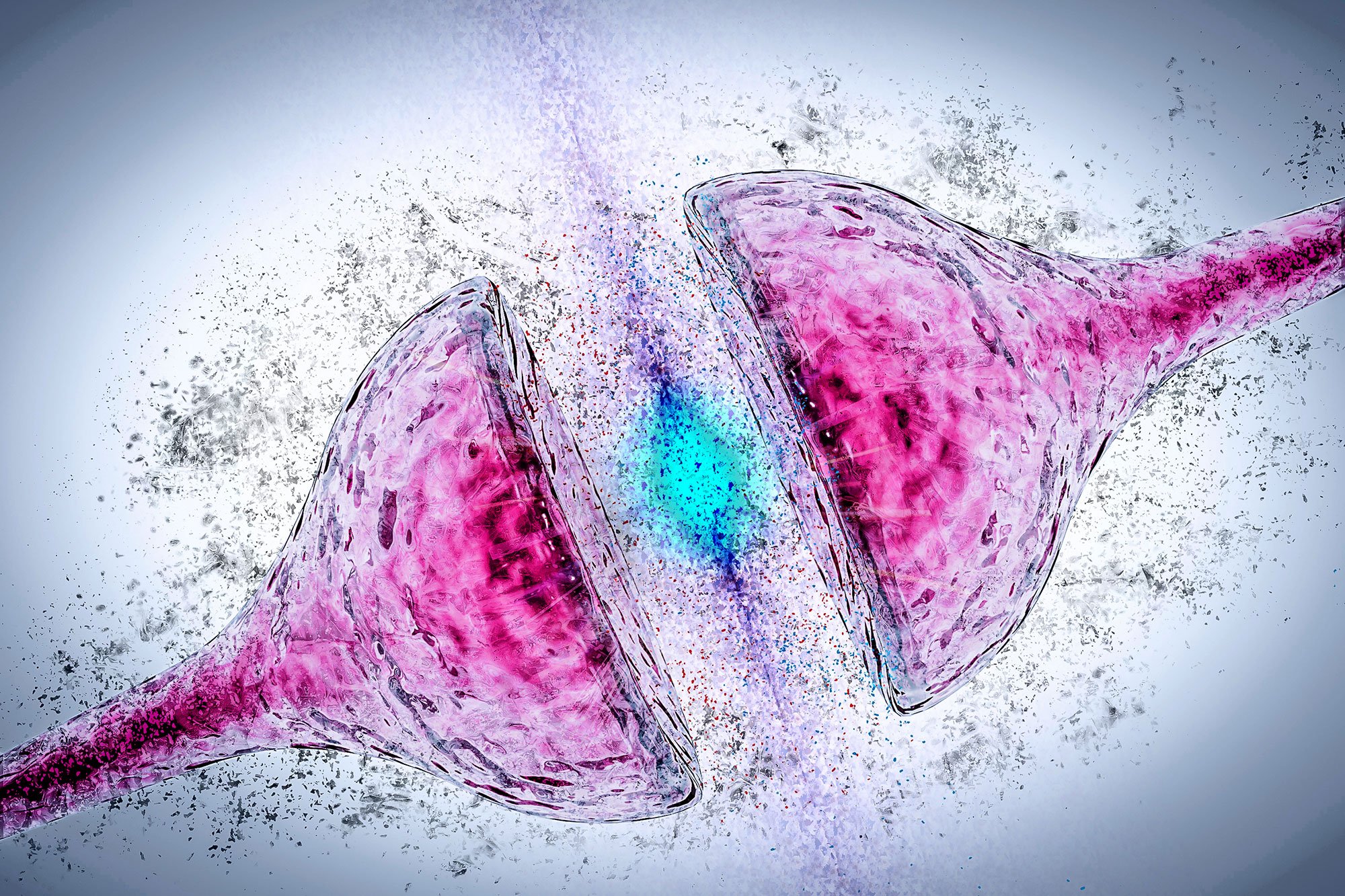
New research suggests the brain may already possess underutilized mechanisms to combat Alzheimer’s disease.
What if the brain already has the tools to fight Alzheimer’s, but just needs a boost to use them?
Scientists at Baylor College of Medicine have uncovered a way to switch on a natural cleanup system in the brain that removes harmful amyloid plaques and helps preserve memory in mice. Their findings, published in Nature Neuroscience, highlight the untapped potential of astrocytes, star-shaped support cells that are far more common than neurons yet often overlooked in Alzheimer’s research.
These cells play a central role in keeping the brain stable, supporting communication between neurons, and helping store memories. But as the brain ages, astrocytes begin to change in ways scientists do not fully understand, especially in diseases like Alzheimer’s.
“Astrocytes perform diverse tasks that are essential for normal brain function, including facilitating brain communications and memory storage. As the brain ages, astrocytes show profound functional alterations; however, the role these alterations play in aging and neurodegeneration is not yet understood,” said first author Dr. Dong-Joo Choi.
A Different Strategy for Alzheimer’s
Alzheimer’s disease remains one of the most pressing health challenges worldwide, affecting tens of millions of people. It gradually damages memory and thinking, in part due to the buildup of sticky protein clumps known as amyloid plaques. Most current treatments aim to prevent these plaques from forming or to shield neurons from damage, but success has been limited.
The Baylor team took a different approach by focusing on a protein called Sox9, a key regulator of gene activity in aging astrocytes. When they increased Sox9 levels in mice that had already developed memory problems and plaque buildup, the results were striking. Astrocytes became more active and began clearing the plaques.
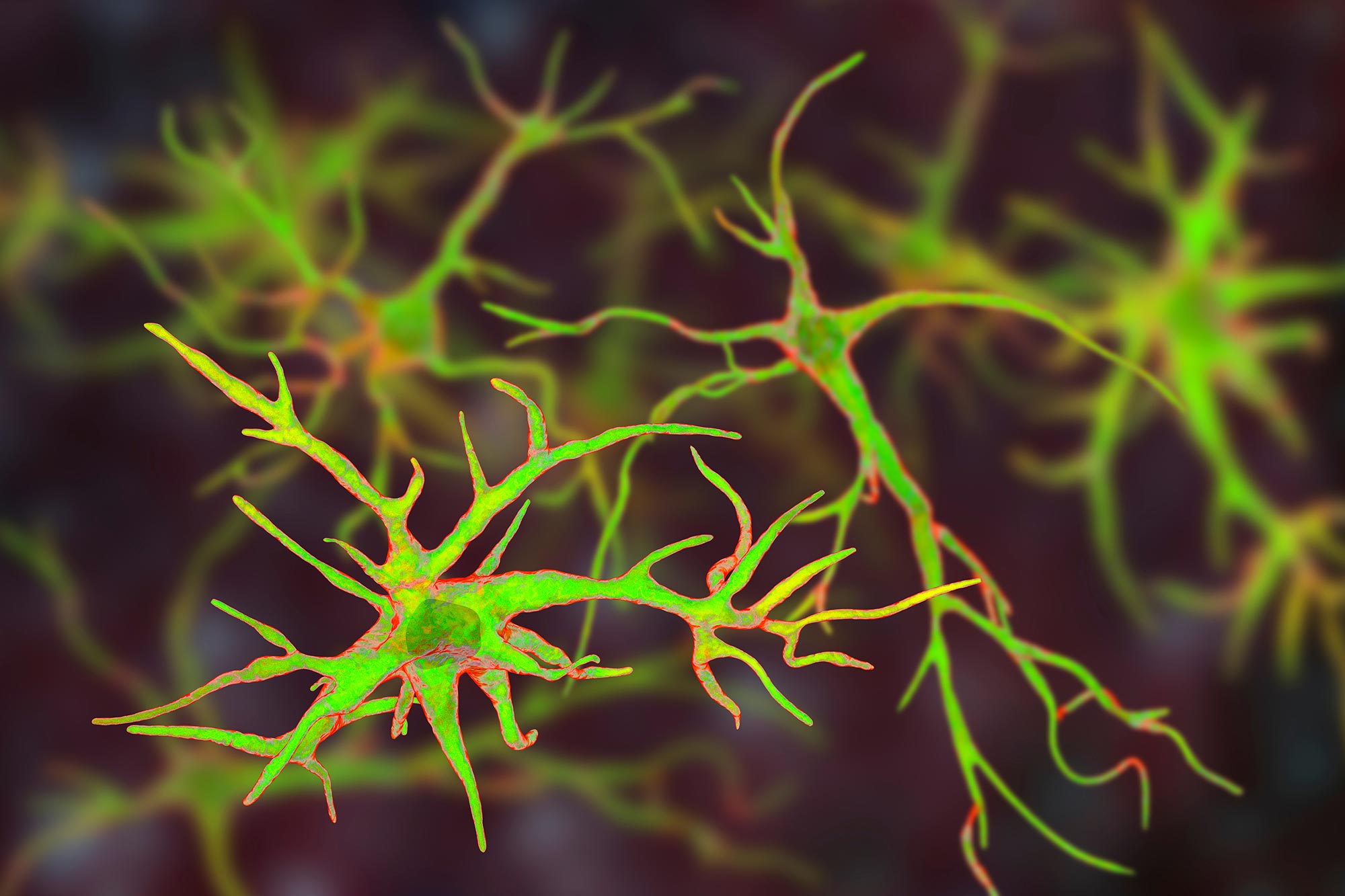
“We found that increasing Sox9 expression triggered astrocytes to ingest more amyloid plaques, clearing them from the brain like a vacuum cleaner,” said senior author Dr. Benjamin Deneen.
This effect relies on a receptor called MEGF10, which Sox9 helps control. The receptor allows astrocytes to engulf and break down amyloid deposits through a process known as phagocytosis. By strengthening this pathway, the researchers reduced plaque levels and maintained cognitive function over six months.
A More Realistic Disease Model
Rather than intervening before the disease takes hold, the researchers designed their experiments to better reflect real-world conditions by working with mice that had already developed memory problems and amyloid plaque buildup.
“An important point of our experimental design is that we worked with mouse models of Alzheimer’s disease that had already developed cognitive impairment, such as memory deficits, and had amyloid plaques in the brain,” Choi said. “We believe these models are more relevant to what we see in many patients with Alzheimer’s disease symptoms than other models in which these types of experiments are conducted before the plaques form.”
When Sox9 was reduced, the disease worsened. Plaques accumulated faster, astrocytes lost complexity, and memory declined more quickly. This contrast underscores how important these cells may be in controlling the course of the disease.
The findings reflect a broader shift in Alzheimer’s research. Scientists are beginning to look beyond neurons and focus on the entire brain environment, including support and immune cells. Astrocytes, once thought to play a passive role, are now emerging as active defenders that can influence disease progression.
Although the work was done in mice and more studies are needed to confirm whether the same mechanism applies to humans, the results point to a promising new strategy. Instead of only trying to block damage, future treatments could enhance the brain’s own ability to clean and protect itself.
If that approach proves effective in people, it could change how Alzheimer’s is treated by turning the brain’s support cells into a powerful line of defense.
Reference: “Astrocytic Sox9 overexpression in Alzheimer’s disease mouse models promotes Aβ plaque phagocytosis and preserves cognitive function” by Dong-Joo Choi, Sanjana Murali, Wookbong Kwon, Junsung Woo, Eun-Ah Christine Song, Yeunjung Ko, Debosmita Sardar, Brittney Lozzi, Yi-Ting Cheng, Michael R. Williamson, Teng-Wei Huang, Kaitlyn Sanchez, Joanna Jankowsky and Benjamin Deneen, 21 November 2025, Nature Neuroscience.
DOI: 10.1038/s41593-025-02115-w
Funding for the study came from several National Institutes of Health grants (R35-NS132230, R01-AG071687, R01-CA284455, K01-AG083128, R56-MH133822). The project also received support from the David and Eula Wintermann Foundation, the Eunice Kennedy Shriver National Institute of Child Health & Human Development of the National Institutes of Health under Award Number P50HD103555, and from shared resources provided by Houston Methodist and Baylor College of Medicine.
Never miss a breakthrough: Join the SciTechDaily newsletter.
Follow us on Google and Google News.
20 Comments
Someone diagnosed with dementia would try anything to help slow it down or reverse it. They know in the end they will continue to get worse and worse and eventually pass a way. Why does testing in mice and before it can go to human trials take so long. Then the FDA takes forever to get it patients.
Yes that is the question
Speaking as a 3 year vet of testing for Alzheimer’s study for ASU- the group is very thorough. They test sense of smell, word recall, reaction time, and brain lesions. They go to several locations in Az as they have lots of elderly and stay for 1-2 weeks. Funding is down due to our current administration.
I agree
Why does it take’s so long?
Life is to short to wait when you try to help loved once
Fabulous insight. Now how to pump up our astrocytes?
Is there a way we can boost these wonderful Astrocytes ?
?
Can I be part of research
Yes
So no one knows about the holographs their putting in us & on us or they just do it to me without asking? Making my legs cramp making me pass out they put it in my eyes nose ears throat thinking they got mind control thanks to mixed reality or Hololens & NASA why their rapping people & our kids but nobody believes me why?
Who are “they” and how do they accomplish these acts unless you are incarcerated? Perhaps you are hallucinating, suggesting that you are already experiencing a mental disability.
Hi, I would like to take part in any research you are doing
The above message is impossible to
understand, have you escaped from their lab?
So no one knows about the holographs their putting in us & on us or they just do it to me without asking? Making my legs cramp making me pass out they put it in my eyes nose ears throat thinking they got mind control thanks to mixed reality or Hololens & NASA why their rapping people & our kids but nobody believes me why?
? ? ?
You mentioned neurodegeneration. Could this astrocyte study possibly lead to neuroregeneration, specifically to remyelination?
I rate u 100%
SOX9 upregulation acts as a master transcriptional regulator that promotes cell survival, stemness, and tumorigenesis
So between a rock and a hard place. Choose your poison, cancer or Alzheimer’s if I understand correctly
I would love to be apart of these trials. I lost my mother to Alzheimer’s and Dementia 3yrs ago.