
International consortium funded by Alzheimer’s Association will study effects.
An article published this month in Alzheimer’s & Dementia: The Journal of the Alzheimer’s Association cites decades of published scientific evidence to make a compelling case for SARS-CoV-2’s expected long-term effects on the brain and nervous system.
Dementia researchers from The University of Texas Health Science Center at San Antonio (UT Health San Antonio) are the first and senior authors of the report and are joined by coauthors from the Alzheimer’s Association and Nottingham and Leicester universities in England.
“Since the flu pandemic of 1917 and 1918, many of the flulike diseases have been associated with brain disorders,” said lead author Gabriel A. de Erausquin, MD, PhD, Msc, professor of neurology in the Joe R. and Teresa Lozano Long School of Medicine at UT Health San Antonio. “Those respiratory viruses included H1N1 and SARS-CoV. The SARS-CoV-2 virus, which causes COVID-19, is also known to impact the brain and nervous system.”

Dr. de Erausquin, an investigator with the Glenn Biggs Institute for Alzheimer’s and Neurodegenerative Diseases at UT Health San Antonio, said it is becoming clear that the damage done by the pandemic will not be limited to acute effects, such as delirium in the hospital, but will have chronic consequences that impact many individuals’ quality of life and independence.
The question is to what degree and under what form. Even mild COVID-19 infections may have negative effects on the brain long term, Dr. de Erausquin said.
“As the Alzheimer’s & Dementia article points out, the under-recognized medical history of these viruses over the last century suggests a strong link to brain diseases that affect memory and behavior,” said Maria C. Carrillo, PhD, Alzheimer’s Association chief science officer and a coauthor on the paper. “In this difficult time, we can create a ‘silver lining’ by capitalizing on the Alzheimer’s Association’s global reach and reputation to bring the research community together to illuminate COVID-19’s long-term impact on the brain.”
Urgently Needed International Study
The Alzheimer’s Association is funding the initial work of a consortium of experts from more than 30 countries to understand how COVID-19 increases the risk, severity, pace, and progression of neurodegenerative diseases such as Alzheimer’s and psychiatric diseases including depression. Consortium members will enroll study participants selected from a pool of millions of confirmed COVID-19 cases documented in hospitals worldwide. A second group of enrollees will consist of people participating in existing international research studies. Participants will be evaluated on a host of measures at their initial appointment and again at six, nine, and 18 months. These measures include cognition, behavior and, when possible, brain volumes measured by magnetic resonance imaging.
Infiltrating the Brain
The coronavirus is known to enter cells via receptors called ACE2. The highest concentration of ACE2 receptors is in the olfactory bulb, the brain structure involved in the sense of smell.
“The basic idea of our study is that some of the respiratory viruses have affinity for nervous system cells,” said senior author Sudha Seshadri, MD, professor of neurology in the Long School of Medicine at UT Health San Antonio and director of the Glenn Biggs Institute. “Olfactory cells are very susceptible to viral invasion and are particularly targeted by SARS-CoV-2, and that’s why one of the prominent symptoms of COVID-19 is loss of smell.”
The olfactory bulb connects with the hippocampus, a brain structure primarily responsible for short-term memory.
“The trail of the virus, when it invades the brain, leads almost straight to the hippocampus,” Dr. de Erausquin said. “That is believed to be one of the sources of the cognitive impairment observed in COVID-19 patients. We suspect it may also be part of the reason why there will be an accelerated cognitive decline over time in susceptible individuals.”
The authors point out that:
- Intranasal administration of SARS-CoV-2 in mice results in rapid invasion of the brain.
- Headache, hypogeusia (reduced ability to taste), and anosmia (loss of smell) appear to precede the onset of respiratory symptoms in the majority of affected patients.
- SARS-CoV-2 can be found in the brain post-mortem.
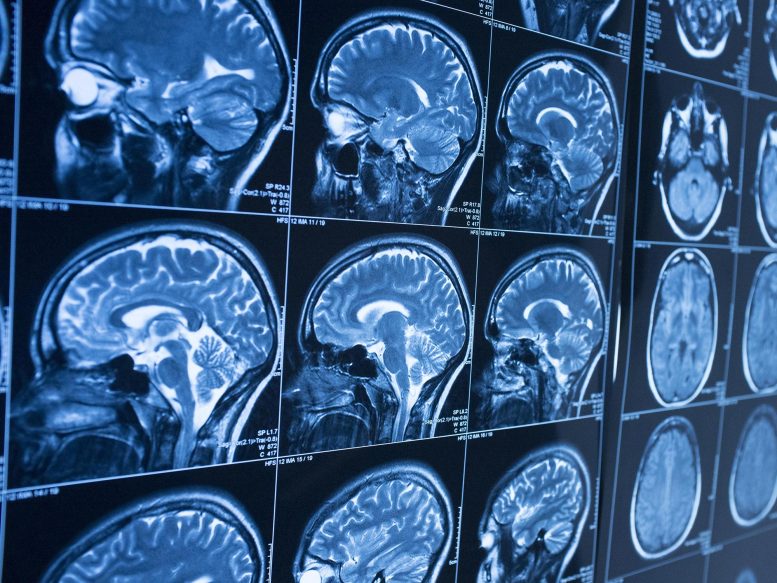
- Abnormal brain imaging that may be characterized by the appearance of lesions in different brain regions – and the appearance of other abnormal brain changes that may influence clinical presentation – has emerged as a major feature of COVID-19 from all parts of the world.
- Abnormal imaging was seen in an individual whose only symptom was loss of smell.
The study will collect information over the next two to three years. Initial results are expected in early 2022 for the first set of evaluations. The consortium is aided by technical guidance from the World Health Organization.
Reference: “The chronic neuropsychiatric sequelae of COVID‐19: The need for a prospective study of viral impact on brain functioning” by Gabriel A. de Erausquin, Heather Snyder, María Carrillo, Akram A. Hosseini, Traolach S. Brugha, Sudha Seshadri and the CNS SARS‐CoV‐2 Consortium, 5 January 2021, Alzheimer’s & Dementia: The Journal of the Alzheimer’s Association.
DOI: 10.1002/alz.12255
Never miss a breakthrough: Join the SciTechDaily newsletter.
Follow us on Google and Google News.