
Close Menu
    Facebook X (Twitter) Instagram
    SciTechDaily
    • Biology
    • Chemistry
    • Earth
    • Health
    • Physics
    • Science
    • Space
    • Technology
    Facebook X (Twitter) Pinterest YouTube RSS
    SciTechDaily
    Home»Biology»Common Pesticides Stop Bees and Flies From Getting a Good Night’s Sleep and Disrupts Their Memories
    Biology

    Common Pesticides Stop Bees and Flies From Getting a Good Night’s Sleep and Disrupts Their Memories

    By University of BristolJanuary 21, 20211 Comment3 Mins Read
    Facebook Twitter Pinterest Telegram LinkedIn WhatsApp Email Reddit
    Share
    Facebook Twitter LinkedIn Pinterest Telegram Email Reddit
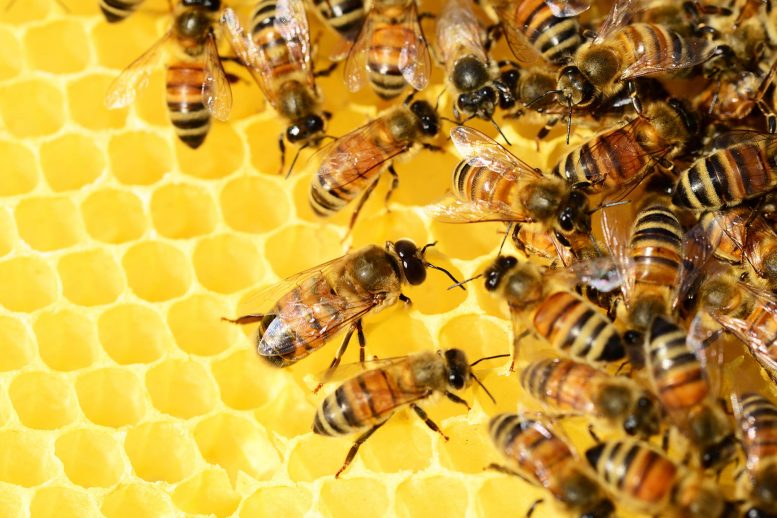
    Honey Bees Beehive
    Neonicotinoid insecticides disrupt the sleep patterns of bumblebees and fruit flies, possibly contributing to the decline of insect pollinators.

    Researchers urge UK to keep EU ban on pesticide which has detrimental effect on pollinators.

    Just like us, many insects need a decent night’s sleep to function properly, but this might not be possible if they have been exposed to neonicotinoid insecticides, the most common form of insecticide used worldwide, suggests research by academics at the University of Bristol.

    Two studies by scientists at Bristol’s Schools of Physiology, Pharmacology, and Neuroscience and Biological Sciences have shown these insecticides affect the amount of sleep taken by both bumblebees and fruit flies, which may help us understand why insect pollinators are vanishing from the wild.

    Dr. Kiah Tasman, Teaching Associate in the School of Physiology, Pharmacology and Neuroscience and lead author of the studies, said: “The neonicotinoids we tested had a big effect on the amount of sleep taken by both flies and bees. If an insect was exposed to a similar amount as it might experience on a farm where the pesticide had been applied, it slept less, and its daily behavioral rhythms were knocked out of synch with the normal 24-hour cycle of day and night.”

    Neonicotinoids Impair Memory and Internal Clocks

    The fruit fly study published today (January 21, 2021) in Scientific Reports, allowed the researchers to study the impact of the pesticides on the insect brain.

    As well as finding that typical agricultural concentrations of neonicotinoids ruined the flies’ ability to remember, the researchers also saw changes in the clock in the fly brain which controls its 24-hour cycle of day and night.

    Dr. James Hodge, Associate Professor in Neuroscience in the School of Physiology, Pharmacology and Neuroscience and senior author for the study, added: “Being able to tell time is important for knowing when to be awake and forage, and it looked like these drugged insects were unable to sleep. We know quality sleep is important for insects, just as it is for humans, for their health and forming lasting memories.”

    Implications for Pollinator Behavior and Survival

    Dr. Sean Rands, Senior Lecturer in the School of Biological Sciences and co-author, explained: “Bees and flies have similar structures in their brains, and this suggests one reason why these drugs are so bad for bees is they stop the bees from sleeping properly and then being able to learn where food is in their environment.

    “Neonicotinoids are currently banned in the EU, and we hope that this continues in the UK as we leave EU legislation.”

    References:

    “Neonicotinoids disrupt memory, circadian behaviour and sleep” by Kiah Tasman, Sergio Hidalgo, Bangfu Zhu, Sean A. Rands and James J. L. Hodge, 21 January 2021, Scientific Reports.
    DOI: 10.1038/s41598-021-81548-2

    “The Neonicotinoid Insecticide Imidacloprid Disrupts Bumblebee Foraging Rhythms and Sleep” by Kiah Tasman, Sean A. Rands and James J.L. Hodge, 19 November 2020, iScience.
    DOI: 10.1016/j.isci.2020.101827

    About Neonicotinoids

    Neonicotinoids are the most commonly used insecticides in the world and make up nearly 25 percent of the global insecticide market, which is valued at US $1 billion/year. The intensive use of insecticides has been linked with the global decline in pollinating insects, and all four major types of neonicotinoid have largely been banned in the EU and currently in the UK.

    Never miss a breakthrough: Join the SciTechDaily newsletter.
    Follow us on Google and Google News.

    Bees Ecology Entomology Pesticides University of Bristol
    Share. Facebook Twitter Pinterest LinkedIn Email Reddit

    Related Articles

    Common Pesticide Alters Bumblebee Genes, Threatening Future Pollination

    5.5 Million Bees Discovered Living Beneath a New York Cemetery

    Researchers Create First Global Map of Bee Species

    Baby Bee Brain Development Impaired by Pesticides – “Permanent and Irreversible”

    Periodical Cicadas Manipulate the Populations of Predatory Birds

    Antibiotics Might Contribute to the Health Problems of the Bee Colonies

    Common Pesticides Are Severely Affecting Bees

    Honeybees Switch Roles within the Hive

    Researchers Recreate the Song of 165 Million Year Old Katydid

    1 Comment

    1. xABBAAA on January 21, 2021 9:37 am

      …”Pesticides” are able to the very same thing to humans, too…

      Reply
    Leave A Reply Cancel Reply

    • Facebook
    • Twitter
    • Pinterest
    • YouTube

    Don't Miss a Discovery

    Subscribe for the Latest in Science & Tech!

    Trending News

    The Secret to Healthy Aging May Be More Protein and More Exercise

    These 567-Million-Year-Old Fossils Are Rewriting the Story of Life on Earth

    The Spider-Like Creatures Helping Scientists Decode the Origins of Fatherhood

    Scientists Baffled by a Sudden Reversal Deep Inside Earth’s Core

    This Strange Sea Creature Can Survive Five Years Without Food – Scientists Finally Know Why

    New Quantum Sensor Opens a Window Into the Invisible Universe

    Stanford Scientists Reverse Age-Related Memory Loss by Targeting the Gut

    James Webb Uncovers the Atmosphere of a Hellish Lava World 41 Light-Years Away

    Follow SciTechDaily
    • Facebook
    • Twitter
    • YouTube
    • Pinterest
    • Newsletter
    • RSS
    SciTech News
    • Biology News
    • Chemistry News
    • Earth News
    • Health News
    • Physics News
    • Science News
    • Space News
    • Technology News
    Recent Posts
    • New Research Could Help Break China’s Rare Earth Magnet Monopoly
    • The Milky Way’s Black Hole Isn’t Tearing Everything Apart – New Observations Reveal a Surprise
    • Black Hole Shredded a Massive Star in the Most Powerful Stellar Explosion Ever Seen
    • Building the Brain Requires Millions of Dangerous DNA Breaks
    • The Future of Obesity Care Goes Far Beyond Ozempic, Wegovy, and Zepbound
    Copyright © 1998 - 2026 SciTechDaily. All Rights Reserved.
    • Science News
    • About
    • Contact
    • Editorial Board
    • Privacy Policy
    • Terms of Use

    Type above and press Enter to search. Press Esc to cancel.