
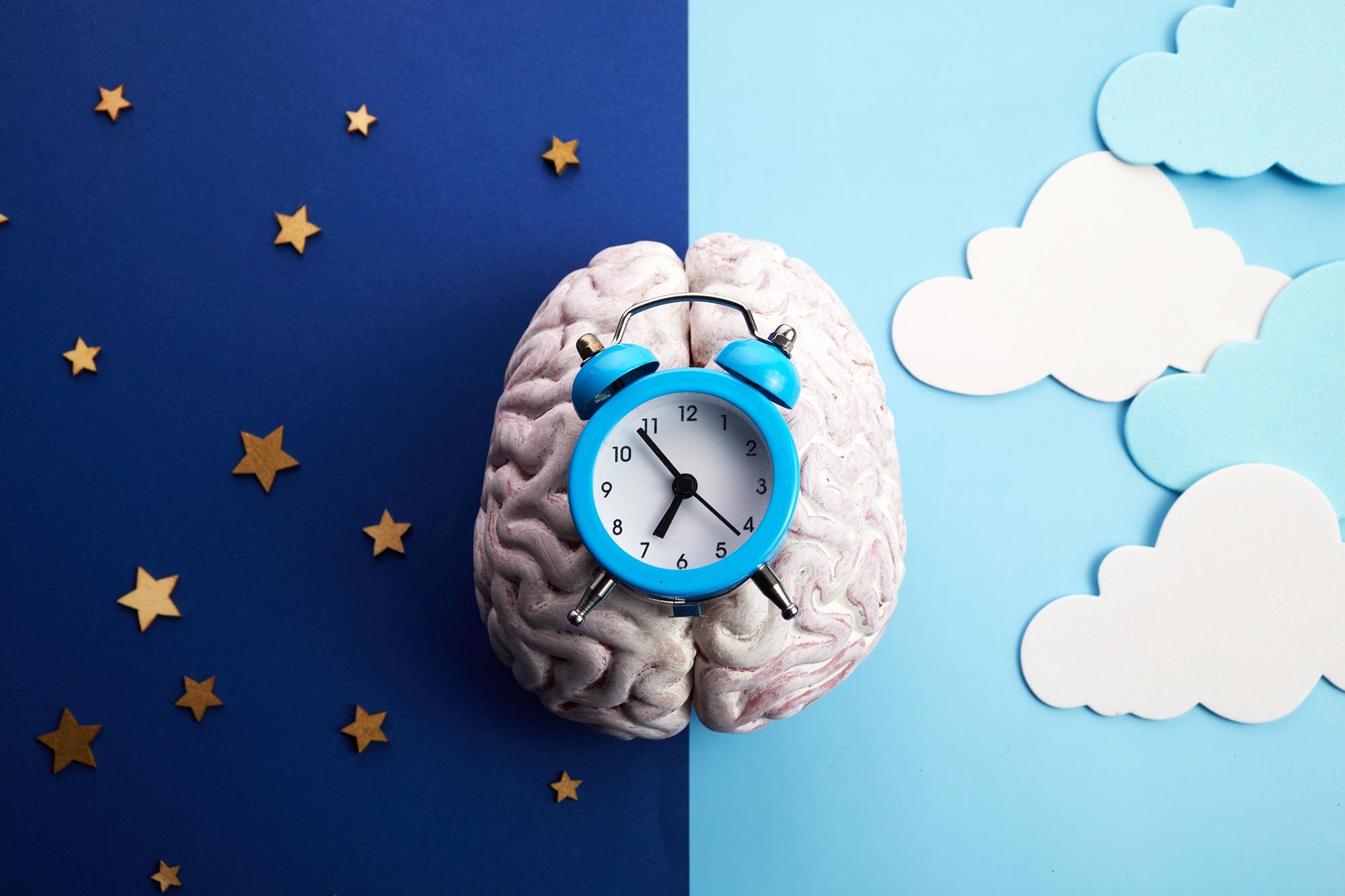
Alzheimer’s may advance by breaking the brain’s internal clock—and resetting it could help fight the disease.
Alzheimer’s disease often interferes with a person’s normal daily patterns. Early warning signs frequently include poor sleep at night combined with increased daytime napping. As the disease advances, many patients develop sundowning, a state of confusion and agitation that usually appears later in the day. These symptoms point to a connection between Alzheimer’s progression and the circadian system, the body’s internal clock that governs sleep and wake cycles. For years, however, researchers lacked a clear understanding of how this system was involved in the disease.
Brain Cell Clocks Go Off Track in Alzheimer’s
Scientists at Washington University School of Medicine in St. Louis have now shown, using mouse models, that Alzheimer’s disease disrupts circadian rhythms inside specific types of brain cells. These disturbances change both the timing and activity of hundreds of genes that control essential brain functions.
The results, published in Nature Neuroscience, suggest that restoring or adjusting these internal rhythms could represent a new therapeutic strategy for Alzheimer’s.
“There are 82 genes that have been associated with Alzheimer’s disease risk, and we found that the circadian rhythm is controlling the activity of about half of those,” said Erik S. Musiek, MD, PhD, the Charlotte & Paul Hagemann Professor of Neurology at WashU Medicine, who led the study. In mice designed to model Alzheimer’s disease, the normal daily patterns of these genes were disrupted. “Knowing that a lot of these Alzheimer’s genes are being regulated by the circadian rhythm gives us the opportunity to find ways to identify therapeutic treatments to manipulate them and prevent the progression of the disease.”
Sleep Changes May Accelerate Disease Progression
Musiek, who also serves as co-director of the Center on Biological Rhythms and Sleep (COBRAS) at WashU Medicine, said sleep disruption is one of the most common issues reported by caregivers of people with Alzheimer’s. Earlier research by his team showed that these sleep changes often begin years before noticeable memory loss. Beyond adding strain for patients and caregivers, disrupted sleep can trigger biological and psychological stress that speeds up disease progression.
To interrupt this cycle, researchers must identify its source. The circadian clock influences about 20% of all genes in the human genome, determining when they activate or shut down to regulate processes such as digestion, immune function, and the sleep-wake cycle.
A Protein Link to Amyloid Buildup
In previous work, Musiek identified a protein called YKL-40 that naturally rises and falls throughout the circadian cycle and helps regulate normal amyloid levels in the brain. When YKL-40 levels become too high, a condition linked to increased Alzheimer’s risk in humans, amyloid begins to accumulate. Amyloid buildup is one of the defining features of the disease.
Amyloid Disrupts the Brain’s Genetic Timing
Because Alzheimer’s symptoms tend to follow daily patterns, the researchers suspected that additional circadian-regulated proteins and genes were involved beyond YKL-40. In the new study, they analyzed gene activity in the brains of mice with amyloid accumulation that mimics early Alzheimer’s. These results were compared with healthy young mice and older mice without amyloid buildup. Brain tissue was collected every 2 hours over a 24-hour period to track changes in gene activity across the circadian cycle.
The team found that amyloid disrupted the normal daily rhythms of hundreds of genes in microglia and astrocytes, two critical types of brain cells. Microglia serve as the brain’s immune defenders, clearing toxins and dead cells, while astrocytes support neurons and help maintain communication between them. Many of the affected genes normally assist microglia in breaking down waste, including amyloid itself.
Although the genes were not completely shut down, their usual timing became disorganized. This loss of coordination reduced the efficiency of key brain functions, such as clearing amyloid from brain tissue.
New Rhythms and New Treatment Possibilities
The researchers also discovered that amyloid appeared to trigger new rhythmic patterns in hundreds of genes that do not normally follow a circadian schedule. Many of these genes are involved in inflammation or the brain’s response to stress and imbalance, including amyloid plaque buildup.
Taken together, the findings suggest that treatments aimed at adjusting circadian rhythms in microglia and astrocytes could help preserve healthy brain function.
“We have a lot of things we still need to understand, but where the rubber meets the road is trying to manipulate the clock in some way, make it stronger, make it weaker, or turn it off in certain cell types,” Musiek said. “Ultimately, we hope to learn how to optimize the circadian system to prevent amyloid accumulation and other aspects of Alzheimer’s disease.”
Reference: “A glial circadian gene expression atlas reveals cell-type and disease-specific reprogramming in response to amyloid pathology or aging” by Patrick W. Sheehan, Stuart B. Fass, Darshan Sapkota, Sylvia Kang, Henry C. Hollis, Jennifer H. Lawrence, Sohui Park, Ashish Sharma, Dorothy P. Schafer, Ron C. Anafi, Joseph D. Dougherty, John D. Fryer and Erik S. Musiek, 23 October 2025, Nature Neuroscience.
DOI: 10.1038/s41593-025-02067-1
Sheehan PW, Fass S, Sapkota D, Kang S, Hollis HC, Lawrence JH, Anafi RC, Dougherty JD, Fryer JD, Musiek ES. A glial circadian gene expression atlas reveals cell type and disease-specific reprogramming in response to amyloid pathology or aging. Nature Neuroscience. October 23, 2025. DOI: 10.1038/s41593-025-02067-1.
This study was funded by the National Institute on Aging (R01AG054517, T32AG058518), the National Institute of Neurological Disorders and Stroke (R01NS102272) and the National Institutes of Health (R00AG061231). The content is solely the responsibility of the authors and does not necessarily represent the official view of the NIH.
Never miss a breakthrough: Join the SciTechDaily newsletter.
Follow us on Google and Google News.