
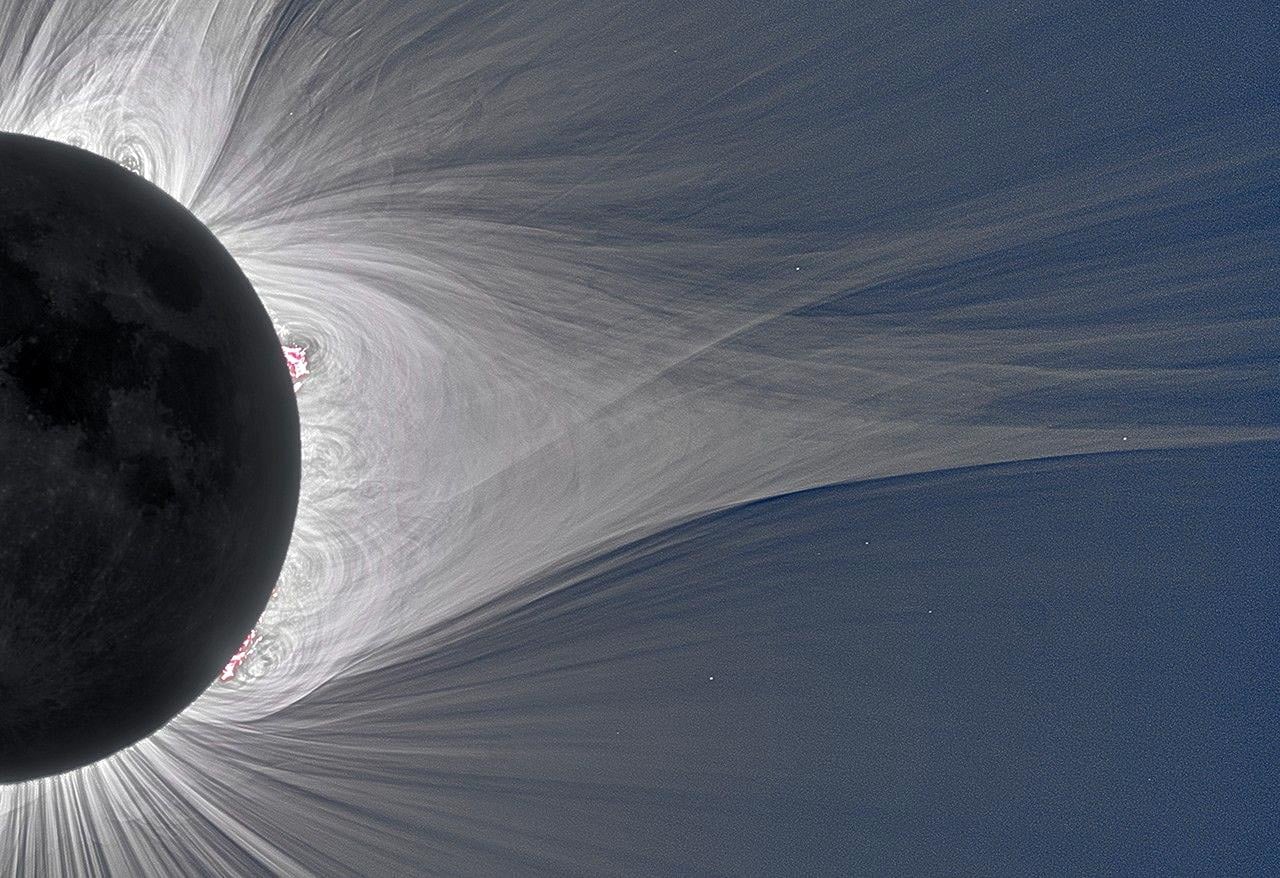
The Sun unleashed a bizarre radio signal that kept broadcasting for 19 straight days, leaving NASA scientists stunned.
A radio burst detected from the Sun in August 2025 initially appeared to be a normal solar event to NASA scientists. These bursts, which are caused by energetic particles interacting with the Sun’s magnetic fields, usually last anywhere from a few hours to several days.
But this signal kept going.
Instead of fading quickly, the radio burst continued for an astonishing 19 days, setting a new record for the longest known event of its kind. The previous record holder lasted just five days.
Record Breaking Type IV Solar Burst
The unusual event was classified as a Type IV radio burst, a category linked to clouds of electrons trapped inside large magnetic structures surrounding the Sun. While the radio waves themselves are harmless to Earth, the same magnetic conditions can also generate intense solar activity capable of disrupting satellites and spacecraft.
Scientists are especially interested in these bursts because they can reveal conditions that lead to dangerous space weather.
To investigate the event, researchers gathered observations from several spacecraft positioned throughout the inner solar system. Data came from NASA’s STEREO (Solar Terrestrial Relations Observatory), Parker Solar Probe, and Wind missions, along with ESA (the European Space Agency) and NASA’s Solar Orbiter mission.
Spacecraft Across the Solar System Joined the Search
Because the Sun rotates, the long-lasting burst moved into the view of different spacecraft over time. Each mission observed the signal for several days during its 19-day lifespan, allowing scientists to combine the data into a more complete timeline of the event.
Researchers also developed a new method using observations from the STEREO mission to determine where the burst originated. Their analysis traced the source to a massive magnetic feature in the Sun’s atmosphere called a helmet streamer.
Scientists believe three coronal mass ejections erupting from the same region may have helped sustain the burst for nearly three weeks. Coronal mass ejections are enormous explosions that blast plasma and magnetic energy into space.
Findings Could Improve Space Weather Forecasts
The results were published in the journal Astrophysical Journal Letters and may help researchers better recognize and analyze long-duration solar radio bursts in the future.
Improved understanding of these events could also strengthen space weather forecasting, helping scientists predict solar activity that can threaten satellites, spacecraft, and other technology operating in space.
Reference: “Unprecedented 19 Day Type IV Radio Burst as a Corotating Electron Reservoir” by Vratislav Krupar, Oksana Kruparova, Adam Szabo, Lynn B. Wilson, Lan K. Jian, David Lario, Teresa Nieves-Chinchilla, Andreas J. Weiss, Anthony Iampietro, Hamish A. S. Reid, Lucie M. Green, Eduard P. Kontar, Rui F. Pinto and Keith Goetz, 14 May 2026, The Astrophysical Journal Letters.
DOI: 10.3847/2041-8213/ae5537
Never miss a breakthrough: Join the SciTechDaily newsletter.
Follow us on Google and Google News.