
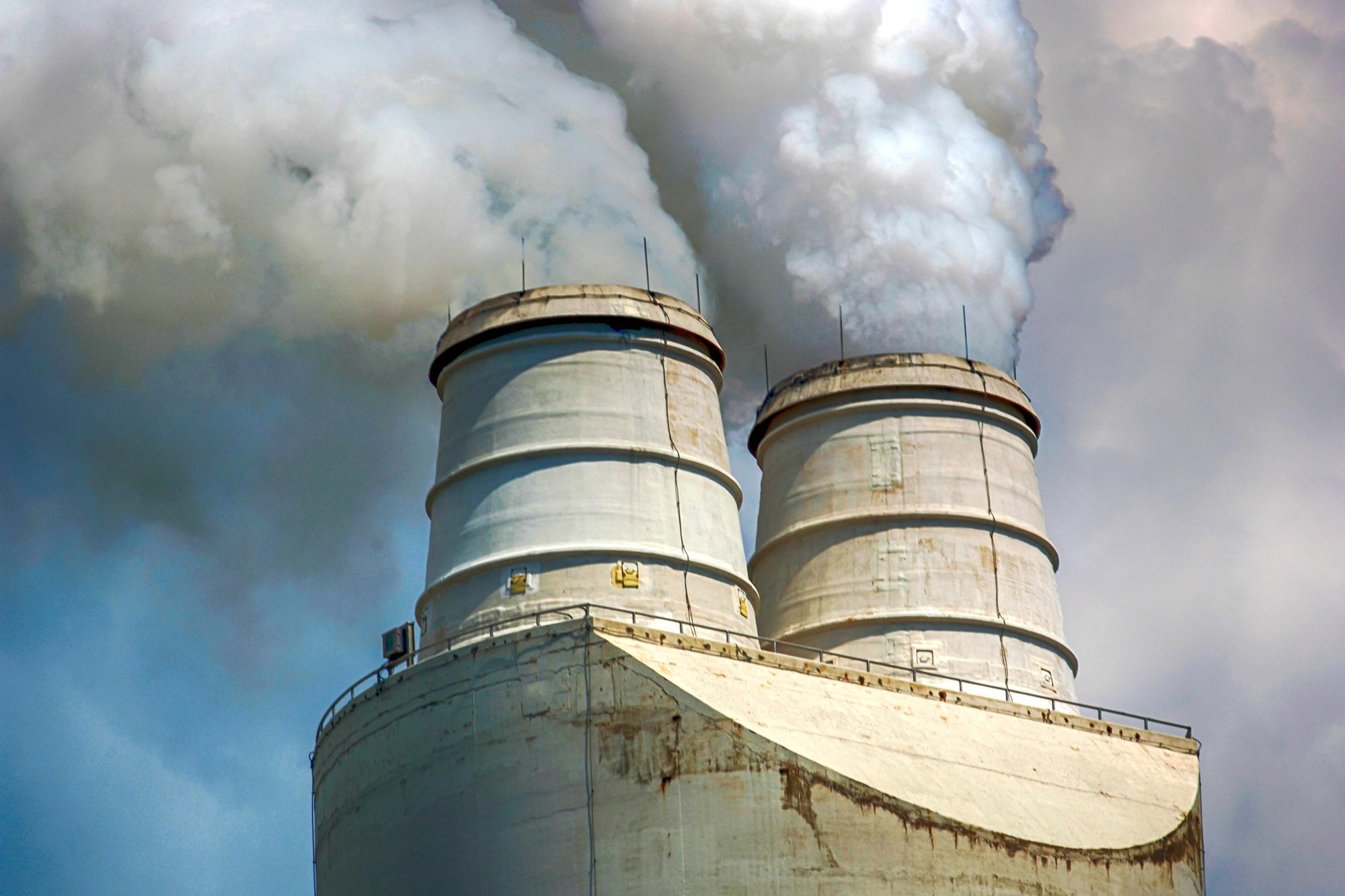
An analysis found that Climate TRACE may substantially underestimate city vehicle CO2 emissions, raising concerns about data accuracy in climate policy.
Some of the world’s most widely used climate emissions estimates could be missing far more pollution than anyone realized.
A new study from Northern Arizona University reports that the global greenhouse gas emissions database created by the Climate TRACE consortium, co-founded by former Vice President Al Gore, may be undercounting vehicle carbon dioxide emissions in cities by an average of 70%.
The findings, published in Environmental Research Letters, come as governments and cities increasingly rely on high-resolution emissions data to shape climate policy and track progress toward emissions goals.
Led by Kevin Gurney, a professor in NAU’s School of Informatics, Computing, and Cyber Systems (SICCS), the study examined how Climate TRACE estimated emissions from cars and trucks and compared those figures against established transportation and fuel-use data. According to Gurney, the discrepancies — combined with similar issues his team previously identified in power plant emissions estimates — raise broader concerns about the reliability of rapidly emerging AI-driven climate monitoring systems.
“Given the importance of vehicle CO2 emissions in cities, we carefully examined the Climate TRACE data which relied on promising new artificial intelligence-based approaches,” Gurney said. “When combined with our previous study on Climate TRACE power plant CO2 emissions, our results suggest that the Climate TRACE data significantly underestimate over half of U.S. fossil fuel-based CO2 emissions in cities.”
A city-by-city comparison found gaps
Gurney and his colleagues compared Climate TRACE estimates for urban vehicle CO2 emissions in the United States with Vulcan, a similar “onroad” emissions database developed in Gurney’s lab. Vulcan is calibrated using official traffic and energy use data.
“While the Vulcan onroad data is not perfect, with uncertainty of about 14%, this is far lower than the differences found when we compared 260 city vehicle CO2 emissions in the U.S. to the Climate TRACE database,” said Bilal Aslam, a SICCS postdoc and co-investigator on the study. “The Climate TRACE CO2 emissions were, on average, 70% lower than those same emissions in the Vulcan onroad CO2 emissions database.”
“Individual cities such as Indianapolis and Nashville were lower by more than 90%,” added Pawlok Dass, a research associate in SICCS and contributor to the study. The study’s authors suspect that the undercounting may also occur outside the United States, and they raise broader concerns about other parts of the Climate TRACE database.
AI still needs scientific guardrails
The authors say artificial intelligence could become a powerful tool for measuring many environmental indicators, but they stress that accuracy still depends on scientific rigor, transparency, and review by experts. Reliable greenhouse gas estimates remain a foundation for effective climate policy.
The publication also offers several recommendations for improving Climate TRACE’s work so that it can better support policy and budget decisions aimed at cutting emissions.
“We will never estimate emissions with perfect accuracy, but we must ensure that the data shared with policymakers and the public is unbiased and meets best practices and the most rigorous scientific standards available,” Gurney said. “Without this, we mislead decision-makers and potentially lose public trust in our ability to tackle climate change.”
Reference: “Assessing the accuracy of the Climate Trace global vehicular CO2 emissions” by Kevin R Gurney, Bilal Aslam and Pawlok Dass, 5 May 2026, Environmental Research Letters.
DOI: 10.1088/1748-9326/ae6355
Disclosure: Gurney, who specializes in atmospheric science, ecology, and public policy, has spent the past two decades developing a standardized system quantifying greenhouse gas emissions in the U.S. His Vulcan and Hestia projects, funded by multiple federal agencies, quantify and visualize greenhouse gases emitted across the entire country down to individual power plants, neighborhoods, and roadways, identifying “hotspots” and enabling better decisions about where to cut emissions most effectively. His estimates have shown excellent performance when compared to direct atmospheric monitoring.
Never miss a breakthrough: Join the SciTechDaily newsletter.
Follow us on Google and Google News.
27 Comments
Discrepancies between 2 calculation algorithms do not tell us which one is closer to the truth. Why does the headline make the assumption that the one funded by Al Gore is automatically wrong? Of course, if Al Gore isn’t updating his routinely, it might be fair to assume that a newer algorithm might be more accurate, but it seems that the weather algorithms tend to be more accurate the closer you are to wherever most of their data comes from. It’s always good to tweak the calculations, but it’s not appropriate to drag anyone’s name through the mud for no good reason.
Cheryl V Johnson
Yes, and denier trolls will flock to anything with the dog whistle words Al Gore.
Is there anything scientific in your claim? Can you cite any studies to support it?
My own non-statistically based social experience of this statement is that it would seem to be correct. Have you read any papers to the contrary? It would make an interesting study and it could be interesting to assemble a data-set of a couple of billion comments, although I would be surprised as to how few people might not have heard of Al Gore
I have written something like 15 formal papers myself, with citations and numerous comments like this as well. There are Nobel Laureates who have written peer-reviewed papers as well. Al Gore may be rich, and may be well recognized, but doesn’t come close the level of my understanding of Earth Science. He is not competent to comment on climatology.
However, my remark was pointed at Mercer who used words like “denier troll” and “dog whistle,” with no specific topic mentioned, and no facts presented.
Climate Trace posted a response to this NAU report comparing CT to Vulcan.
This study uses old, anomalous data from a 2-month period when there was a bug present in our cities dataset (but did not impact any other aggregated or asset-level road transportation data).
Climate TRACE identified, disclosed, and promptly corrected this bug a year ago.
The bug occurred in late March 2025 in Climate TRACE data version 4.1.0, the Climate TRACE team identified the bug that same month, and we published corrected data as quickly as was feasible (in May 2025).
We clearly documented the bug fix in our public changelogs (which we publish alongside every monthly data release).
The bug has not been present in Climate TRACE data since May 2025 — six months before the paper was submitted for publication and ten months before the final revisions were made to the paper.
CT showed a year’s worth of comparative CT/Vulcan results showing CT at just 7.5 % over Vulcan.
Why did NAU not address this anomaly In their paper. It seems, without further explanation, to be dishonest to not do so, especially from the group promoting the Vulcan system.
It appears that Mr. Gurney may have a dog in this fight.
His program is apparently in competition with Al Gorithm’s program for that sweet sweet federal money that is getting scarce and likely to dry up.
The horror.
Who hears the dog whistle is the dog, by the way.
Btw, they did say that the second study was so much more reliable, with a variance of only 14%, much lower than the noted discrepancy. So we can be pretty sure the numbers from TRACE were too low. But how does this actually impact the analyses? Anything that assumes the data was correct over calibrated, and anyone that used it directly had it too low, so it could impact math and models in either direction. More research will need to go into this.
Do you not know what analysis, it were there too my words in the article for you to read the whole thing?
The authors compared their Vulcan system against a specific subset of data published in early 2025 which Climate TRACE subsequently identified as bugged, corrected anomalies, republished, and noted in the changelog within about 60 days of its initial release. The corrected Climate TRACE data had been available 6 months prior to this Vulcan study’s initial submission and about 10 months prior to its final revisions. Climate TRACE claims the actual discrepancy between the corrected data and Vulcan’s is more like 7% than 70%.
Why would the paper’s authors still have published findings an outdated dataset with known issues? Well, the paper itself doesn’t seem to disclose that the lead author and the university he works for are, respectively, inventor and assignee on active patent US12051028B1, which was granted in mid-2024 and describes methods for modeling the flow of resources and emissions therefrom, so who can say, really?
Eco liberals like Al Gore have an agenda and a narrative to twist science into a pseudo science to back their agenda. Planetary heating and cooling have been ongoing since the 3rd rock locked into the solar system. Suddenly every ocean current change, El Nino, or any other climate phenomena is fossil fuel use. The most devastating El Nino that occurred in 1877 killing millions of people was long before there was burning of any fossil fuel other than coal which widespread use was in its infancy.
Right on, Brian. Excellent!
Oh look, anti science douche decides their ignorance is face and invent conspiracy bullshit. Man made climate change is a fact. Easily demonstrable at that. Warning, there maybe polysyllabic words used, which are know to frightening and anger anti science people like you.1) Visible light strikes the Earth.
Testable: your eyes.
2) Visible light has nothing for CO₂ to absorb, so it passes through.
Testable: Lab spectroscopy confirms CO₂’s absorption bands.
3) When visible light strikes an object, IR is generated.
Testable: You can measure this thermal IR with radiometers, infrared cameras, satellites and direct surface instruments.
4) Greenhouse gases, like CO₂, absorb IR.
Testable: This is the fundamental greenhouse effect — demonstrated in lab experiments and confirmed by atmospheric spectroscopy from ground and space.
5) Humans produce more CO₂ than natural sinks can absorb.
Testable: Verified by carbon cycle models, isotopic analysis (fossil carbon has a distinct signature), and global carbon budget studies.
Why don’t you deniers actually address the facts of global warming? Why don’t petroleum corporations have gold standard repeatable tests that show these to be false?
So now you have to answer:
Why do you think trapping more energy(heat) in the lower atmosphere does not impact the climate?
Padawan, learn must you that in isolation citing facts truth told is not.
“Planetary heating and cooling have been ongoing since the 3rd rock locked into the solar system”
I suppose that that statement is, in the main, correct. What is important is the rate of change. A rate of change that is geological, i.e during several million or even perhaps hundreds of thousands of year is a rate of change to which life can adapt; a catastrophic rate of change such as one covering 200-300 years is one less comfortable and, in the case of H sapiens with its attendant irresponsible political idiots and psychopaths, is perhaps quite dangerous to heavily armed, militaristic populations.
Climate has always changed at rates greater than even hundreds of thousands of years. The Milankovitch obliquity cycles have had periods of 41,000 and 100,000 years, with even smaller changes imposed on those major cycles. The claims of “unprecedented” warming are difficult to validate because time acts like a low-pass filter, suppressing peaks and broadening the width. In most cases, the slopes on temperature rises are a lower-bound on the actual changes, such as the Paleocene-Eocene Thermal Maximum.
Scientific proof of your first sentence, please.
How about scientific proof of your claim that significant changes over 200-300 years is a new phenomenon?
Good point; an opinion based on the geological record, although a catastrophic change need not be significant depending how local is the catastrophe. A global change over 200-300 years indeed may not be catastrophic albeit significant, although given our planet over-populated by H sapiens (irony alert) even a small change, such as a 1 metre rise in global sea-level in a couple of hundred years could be catastrophic to we H saps but to tigers, gazelles and elephants, not to mention mosquitoes and fish, perhaps it could be significant to the point of being beneficial in the long term.
Extremely large meteorites hitting the Earth clearly cause catastrophic significant change in a few seconds; the Siberian Traps were a bit slower.
Yes, and denier trolls will flock to anything with the dog whistle words Al Gore.
You seem to favor pejorative words rather than facts. Why should anyone believe your accusations? Do you have anything substantive to contribute?
Climate extremism is so ‘yesterday’.
St Greta has moved on to political activism now supporting terrorists in the Middle East.
Meanwhile normal people can see both issues for what they really are.
Yes; one issue is the mass murder of populations and the bombing of medical facilities and attendant medical staff, not overly fashionable even in these heady times.
am impressed you are so willing to publicly crticize hamas…well done!
Right on, Brian. Excellent!
0.02% CO2 is where plant-life collapses – the earth had 0.2% (10 times that) for almost all of its history – which includes all the forestation and rise of animal life.
We have suddenly fallen to 0.04% CO2, hovering just twice above the death floor – and you people were told some stuff that made you think the sky is falling – when plant life has retreated to desert all over the world.
Medieval fairy tales tell of mass hysteria because the ‘sky is falling’ – or something silly is always the cause – it is a syndrome that been around a long time – wherever you get inexperienced, fearful people together and no one is there to rescue them.
You want the plants to breathe – ok?
I’m a regular guy,but I wonder about all the wind turbines and solar panels taking away energy from the environment. How does taking wind energy impact the weather? Solar panels taking the energy that heated the ground.
I don’t know enough to guess,but it seems it would effect it.