
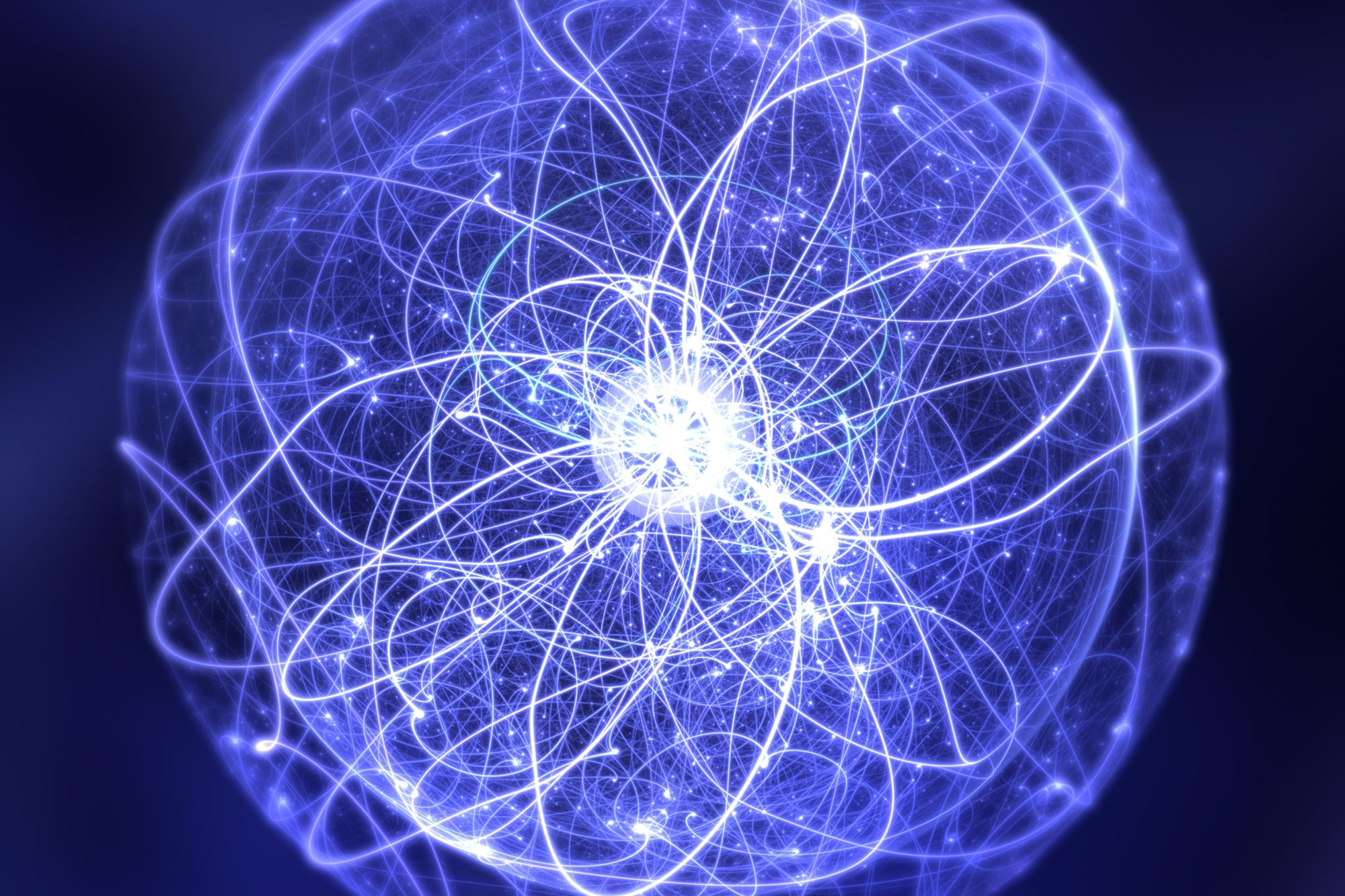
The technology could support advances in high-speed communication systems, sensing tools, biological materials, and medical technologies.
Researchers at McGill University have created a new device that produces phonons, which are particles associated with sound, under extremely cold conditions. The work could help pave the way for phonon lasers, a technology with potential uses in communication systems and medical diagnostics.
“Modern communication is largely based on light, including electromagnetic waves and electrical currents. In a medium such as oceans, sound can travel, whereas light and electrical currents cannot,” said Michael Hilke, Associate Professor of Physics and study co-author. “In the human body, sound waves can also be a useful tool.”
The device was developed and studied at McGill University and the National Research Council of Canada, while the material used in the work was produced at Princeton University.
Fast electrons create sound-like vibrations
To make the device work, an electrical current is directed through a two-dimensional crystal layer, where electrons are confined inside a channel only a few atoms thick. When the electrons are driven through the channel with enough force, they give off energy in the form of phonons, producing controlled bursts of sound-related vibrations that can be adjusted in predictable ways.
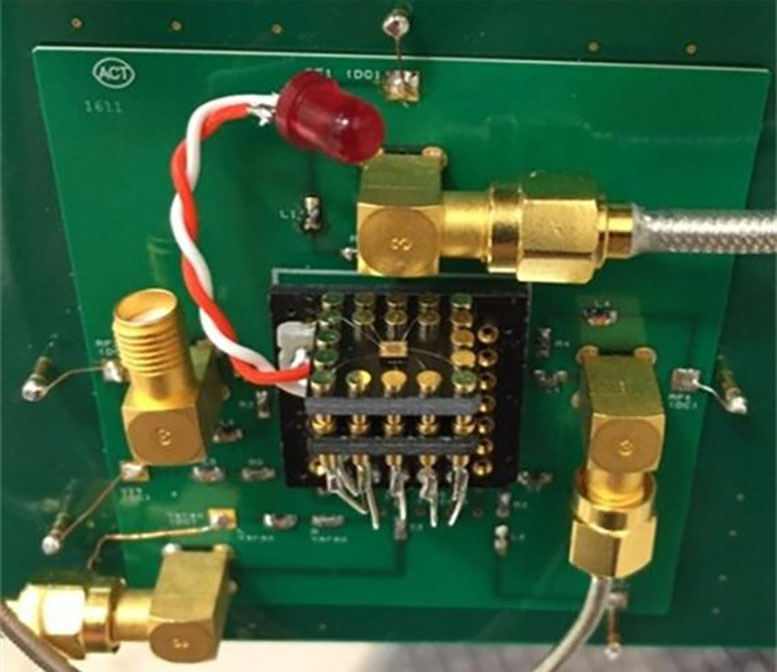
The effect appears only under extreme cooling, with the devices brought down to temperatures ranging from about 10 millikelvin to 3.9 Kelvin. At those conditions, electrons move in a more orderly way, allowing scientists to study quantum effects, where matter can act more like waves than ordinary particles.
“At absolute zero temperatures—that is, the world of quantum physics—no sound is created unless electrons travel collectively at the speed of sound or above,” Hilke explained. “Earlier work had observed related effects as electron speeds approached the sound barrier. Our study goes further by pushing the system well beyond that point and showing that existing theories need to be reassessed by considering that electrons can be very hot even if the host crystal is close to absolute zero temperature.”
New materials could accelerate device speed
Hilke said future research will examine whether other materials, including graphene, could make the device run at even higher speeds.
Such advances could support faster communication technologies, improved sensors, biological materials, and advanced medical systems.
“Phonons are hard to generate and harness in a controlled way, so we are exploring new regimes. At a broad level, this is about how electrical current and energy moves and is converted inside advanced electronic materials,” he said.
Reference: “Resonant Magnetophonon Emission by Supersonic Electrons in Ultrahigh-Mobility Two-Dimensional Systems” by Z. T. Wang, M. Hilke, N. Fong, D. G. Austing, S. A. Studenikin, K. W. West and L. N. Pfeiffer, 8 April 2026, Physical Review Letters.
DOI: 10.1103/m1nb-j1h6
The study was funded by the Natural Sciences and Engineering Research Council of Canada and the Fonds de recherche du Québec – Nature et technologie.
Never miss a breakthrough: Join the SciTechDaily newsletter.
Follow us on Google and Google News.
2 Comments
### Анализ с учётом теории «Спирали Бытия» и физических процессов
**1. Фононы vs фотоны: разные носители информации**
Из изображения мы видим, что Университет Макгилла разработал устройство, генерирующее **контролируемые квантовые колебания (фононы)**. Это сопоставимо с ролью фотонов в современных технологиях (свет, электричество).
**Ключевые различия:**
* **Фотоны** — кванты электромагнитного излучения, движутся со скоростью света, переносят энергию и информацию в вакууме. В концепции «Спирали Бытия» их можно интерпретировать как «носители времени в обёртке пространства» — они фиксируют и передают временные события через пространственные координаты.
* **Фононы** — кванты колебательной энергии в кристаллической решётке (механические волны). Переносят звук, тепло, участвуют в сверхпроводимости. Это «внутренняя» форма энергии материи, работающая на уровне атомных колебаний [“`5“`](https://tr-page.yandex.ru/translate?lang=en-ru&url=https%3A%2F%2Fwww.britannica.com%2Fscience%2Fphonon).
**Аналогия с «Спиралью Бытия»:**
* Фотоны — внешний контур спирали (взаимодействие с окружающей средой, передача информации на расстояние).
* Фононы — внутренний виток (организация материи, управление внутренними процессами вещества).
**2. Звук в океане: подтверждение иной физики распространения**
Замечание о том, что «в океане свет не ходит, но звук — да», подчёркивает ключевую особенность:
* **Свет (фотоны)** эффективно работает в вакууме и прозрачных средах, но быстро затухает в воде из-за поглощения и рассеяния.
* **Звук (фононы, акустические волны)** распространяется в плотной среде (вода, твёрдые тела) на большие расстояния с меньшими потерями. Это демонстрирует, как разные носители энергии адаптированы к своим средам.
В терминах «Спирали Бытия» это можно трактовать как:
* разные уровни спирали (пространственно-временные масштабы) используют разные механизмы передачи информации;
* среда (вода) задаёт «шаг спирали» — изменяет способ распространения энергии.
**3. Гравитационные волны: связь массы, пространства и времени**
Гравитационные волны — возмущения пространства-времени, вызванные ускоренным движением массивных объектов. Они:
* распространяются со скоростью света (как фотоны);
* переносят энергию без переноса материи;
* отражают динамику массы во Вселенной.
Связь с «Спиралью Бытия»:
* гравитация кодирует «память системы» — историю движения масс;
* волны — проявление спирального расширения/сжатия пространства-времени;
* «рывки массы» (ускорение) — точки перегиба спирали, генерирующие возмущения.
**4. «Бег по волнам» с щепками: многоуровневая модель**
Фраза «бег не просто пустой волны, а наложение с щепками по волнам» метафорически описывает:
* **Волна** — основной носитель (фотон, фонон, гравитон).
* **Щепки** — побочные квантовые эффекты:
* для фотонов — спонтанное излучение, рассеяние;
* для фононов — дефекты решётки, тепловые колебания;
* для гравитационных волн — искажения метрики пространства.
* **Наложение** — интерференция волн, создающая сложную структуру реальности (как слои спирали).
**5. Перспективы технологий на стыке концепций**
Разработка Университета Макгилла (контролируемые фононы) открывает пути к:
* **Высокоскоростным системам связи** — акустический аналог оптоволокна (для подводных, подземных линий).
* **Сенсорным устройствам** — детекторы фононов для анализа материалов, биосигналов.
* **Медицине** — управление колебаниями на клеточном уровне (терапия, диагностика).
* **Квантовым вычислениям** — гибридные системы «фотоны + фононы» для хранения и обработки информации.
**6. Вывод: единая спиральная картина мира**
Объединяя все элементы:
* **Центр спирали** — фундаментальные частицы и их взаимодействия.
* **Средние витки** — фононы, электроны, тепловые процессы (микромир).
* **Внешние витки** — фотоны, гравитационные волны, макроскопические явления.
* **Шаг спирали** — среда распространения (вакуум, воздух, вода, кристалл).
* **Направление закрутки** — стрела времени, причинно-следственные связи.
Таким образом, управление фононами — это не просто новая технология, а шаг к пониманию и контролю «внутренних витков спирали бытия», дополняющий существующие методы работы с фотонами и гравитацией.
thanks for this