
A modified form of Spirulina may offer a more sustainable source of vitamin B12.
A new study suggests that Spirulina, long promoted as a nutrient-rich food, may finally overcome one of its biggest nutritional weaknesses. Researchers report that a specially grown form of the blue-green algae can produce biologically active vitamin B12 at levels comparable to beef, a finding that could reshape how scientists think about sustainable nutrition.
The research, published in Discover Food, was led by Dr. Asaf Tzachor of Reichman University together with collaborators from Iceland, Denmark, and Austria. Their team studied a system that uses carefully controlled light to grow what they call photosynthetically controlled Spirulina.
Unlike conventional Spirulina, which mostly contains a pseudo-form of vitamin B12 that humans cannot use, this version produced active B12, the form the body actually needs. According to the researchers, this is the first time biologically active vitamin B12 has been reported in Spirulina.

The Global Challenge of Vitamin B12 Deficiency
Vitamin B12 deficiency remains one of the most common micronutrient deficiencies worldwide. More than one billion people are believed to have low levels. The vitamin is essential for DNA production, nerve function, and the formation of red blood cells. Severe deficiency can lead to anemia, nerve damage, memory issues, and developmental problems in infants. Addressing this issue is difficult because most natural sources of B12 come from animal products such as meat and dairy.

Foods such as beef and milk help meet the recommended intake of vitamin B12 (2.4 µg/day), but producing them carries a heavy environmental burden. Ruminant agriculture is linked to high greenhouse gas emissions, land use, water demands, and deforestation. So while animal products remain nutritionally important for many people, expanding their production to fight B12 deficiency comes at a cost.
Spirulina has often been presented as a possible alternative because it is rich in protein, essential amino acids, iron, and other micronutrients. It has also attracted attention for its antioxidant, anti-inflammatory, and immune-supporting properties. But one major flaw has limited its value as a true substitute for animal-source foods.
Most of the vitamin B12 in traditional Spirulina is pseudo-vitamin B12, also known as cobamide, which is not bioavailable to humans. In other words, it may look like B12 chemically, but it does not solve the deficiency problem.
Engineering a Functional Form of B12
To address this limitation, the researchers tested a biotechnology system developed by VAXA Technologies in Iceland. In this setup, Spirulina is grown in enclosed photobioreactors under artificial light. By fine-tuning the light conditions, the team was able to influence the algae’s metabolism without genetic modification.
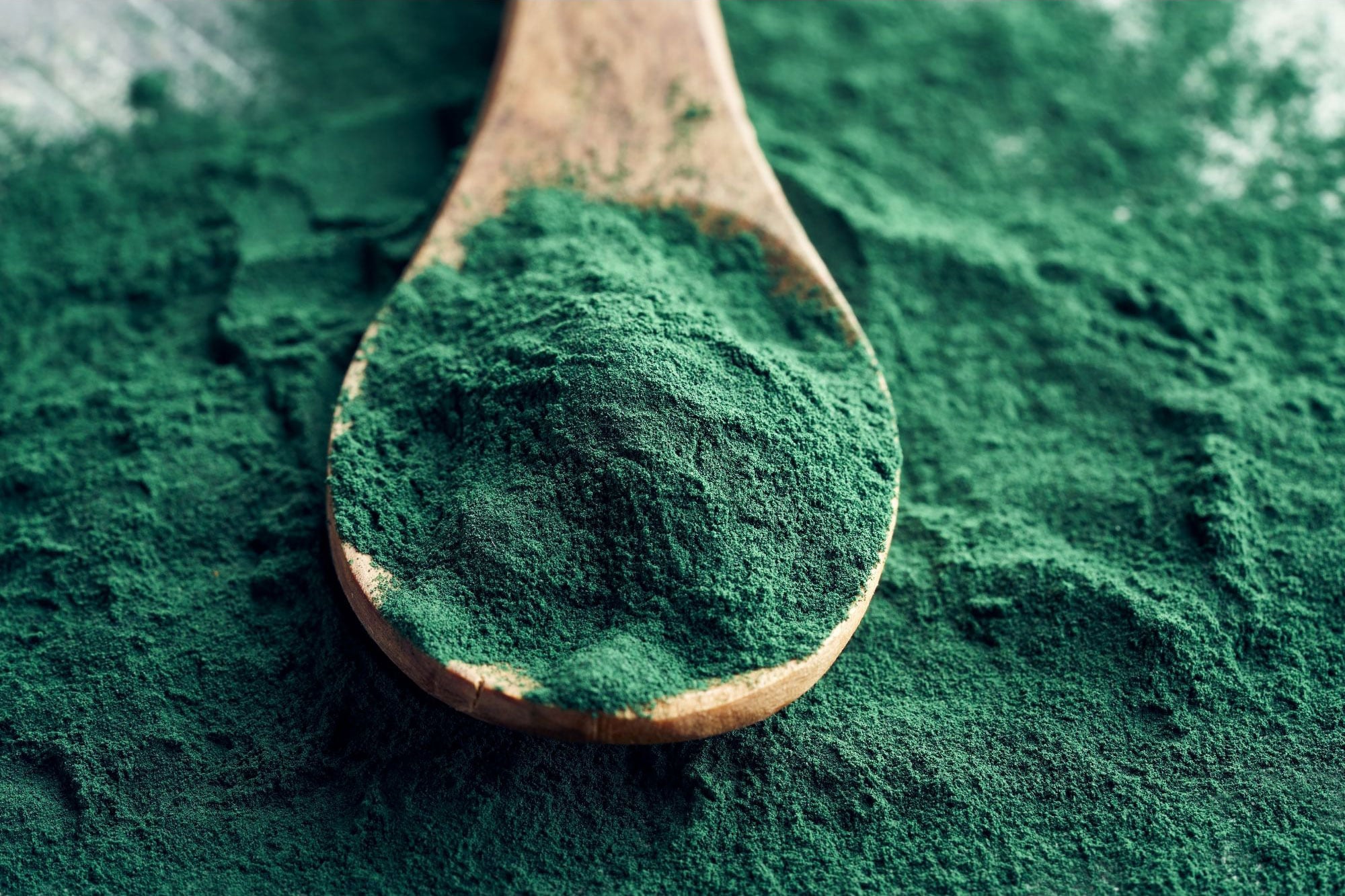
The resulting biomass was carbon neutral and contained biologically active vitamin B12 at levels comparable to beef (1.64 µg/100g in PCS vs. 0.7–1.5 μg/100g in beef). More than 98% of the vitamin B12 measured in the cultivated Spirulina was in its active form. This is a major difference from conventional products, where the inactive pseudo form dominates.
The researchers also found that these results were stable. The B12 profile remained consistent over 9 months of continuous cultivation, suggesting the effect is reliable over time.
Dr. Asaf Tzachor said, “The findings demonstrate that photosynthetically controlled Spirulina can produce desirable levels of active vitamin B12, offering a sustainable alternative to traditional animal-source foods.”

Scaling Up Sustainable Production
Because the system is designed for controlled industrial production, the team modeled what might happen if it were scaled up in Iceland, where most electricity comes from renewable geothermal and hydroelectric sources. In one scenario, if electricity currently used by heavy industry were redirected, Iceland could produce 306,400 US tons of Spirulina biomass each year.
That would generate about 4555 grams of active vitamin B12 annually, enough to meet the recommended dietary allowance for more than 13.8 million children aged 1–3. In more ambitious scenarios, the researchers estimate that production could meet the needs of over 26.5 million children aged 1–3 and more than 50 million children aged 0–6 months.
Overall, the findings point to a promising way to address global vitamin B12 deficiency while reducing dependence on environmentally demanding meat and dairy production.
Reference: “Photonic management of Spirulina (Arthrospira platensis) in scalable photobioreactors to achieve biologically active unopposed vitamin B12” by A. Tzachor, S. P. van den Oever, H. K. Mayer, M. Asfur, A. Smidt-Jensen, M. Geirsdóttir, S. Jensen and B. O. Smárason, 7 August 2024, Discover Food.
DOI: 10.1007/s44187-024-00152-1
Never miss a breakthrough: Join the SciTechDaily newsletter.
Follow us on Google and Google News.
50 Comments
I have these months having certain issues,
Needles & Pins, knubness. Now been taken
B12 Vitamin ,
What else can I do to take away all the above.
Thank you
I have been taking B12 injections every three months for two years and more. But my doctors tell me I am still anemic. What could be the reason. Aren’t the injectikns working?
ANEMIA is caused by IRON deficiency- NOT B12 deficiency! There are many vegan sources- from beans, nuts and seeds to leafy greens.
Pernicious Anemia is caused by the body’inability to process vitamin B12.
For the love of pete… just eat a pound of beef with its fat everyday. Simple as that. It is the most nutrient dense and healthiest thing a person can eat and also bioavailable unlike many supplements and plant sources. If your food isn’t good enough to provide nutrients, you’re eating the wrong foods.
Who eats a lb of beef a day
You can’t eat beef if you are vegan or vegetarian like me
For love of paul, can you please supply 8 billion pounds of beef everyday. 1 pound for every human.
Your cholesterol will shoot through the roof with that much of beef consumption!!!!
Check out Pernicious Anaemia before making a sweeping statement, please.
People are prescribed B12 injections for pernicious anemia.
B12 injections are also prescribed every 3 months for people with diabetes taking metformin as it deletes B12
Nope if you have a B12 insufficiency also Addison biermer/ annemie your oxygen in ur blood can be really low, ur iron can be low, HB low in blood, all the same as a result. Injecting Hydro cobalamin B12 3 times a week, or once a week can restore this level, taking Iron pills only staples up the iron in the liver and doesn’t work.
Get a new doctor
Dear Marcy,
The lady who posted that she has anemia, could have pernicious anemia, this is B12, not Iron.
the one causes the other to become worse. pernacious anemia is both. the body isnt absorbing nutrients correctly. she needs to have a colonoscopy done too.
Thanks
I have B12 deficiency yet GP as not followed up treatment or any checks. I received 3 months of B12 injections no follow up. I feel rejected and awful.
I get B12 injections every 3 months. As my body is unable to turn protein into iron,
Is that enough?
Barbara you need to be proactive and follow them up, not sit back and wait.
Copper and iron
Iodine and zinc
All top tier quality no cheap synthetic stuff
I have low iron in my body my doctor onces told me 11.00 level is normal.
Currently I have been feeling like I wanna faint on high levels and in my last two weeks flight , I fainted.
What should I do?
That means you need b12 shots more often, with a vit B insufficiëntie you can get 2ml per week until u feel good. And if your body makes antibodies against intrinsic factor than this whole article is nonsense because then you have to inject b12 because your body doesn’t take B12 out of food itself. And every B12 insufficiency comes from an autoimmune disease most not curable and need lifetime injections
Many elders lack intrinsic factor, which normally is produced by the body and is necessary for production of red blood cells in the bone marrow. If you take B12 orally it will be destroyed by gastric juices. There is a sublingual form, just put the tiny tablet under your tongue, let it disolve, and enter the bloodstream, it will be absorbed. If there was an enteric coated tablet, it would work too. I had anemia due to this condition, I use this, and my RBC count is now stable. I had to take iron for quite a while, too, but not any more.
Try drinking a liter of orange juice a day. Your body needs vit c and B12 to absorb the iron.
I do take vitamins C&D every day
Very promising the study about vit B12 and spirulina.Thanks
More push for plant based food replacing healthy meat consumption. Bill Gates has been influencing these scientists to depopulate the planet and big pharma making lots of money from pills.
Eat like our grandparents did and you will be healthy and balanced
I agree – stop messing with our food! I will never eat fake meat 🥩!
Excellent landmark discovery
Ensure to take masoor Dal and curd. No processed food
They will never cure cancer . Then no job. Go to another doctor. Figure it out yourself. Search on line what you need. Im not dressed or unhappy or sad ..I don’t need anti depression pulls. But for the fun of it I went to the doctor many times getting more drugs I never take ..but the amount of the pills they recommend is enough to know ll me in one day . Go to a pharmacy in the Philippines or Vietnam or Thailand or Cambodia. They are much more educated than in the USA and you don’t need a prescription. Unless your living in stupid USA
I’m a Canadian pharmacist with holistic interests, so this is not medical advice from a doctor who knows your labs.
One thing that sometimes gets overlooked is copper status. If you happen to be taking zinc supplements, that can interfere with copper absorption over time.
Might be worth checking with your doctor about a full workup (iron studies, folate, maybe even copper levels) if that hasn’t been done already.
In the meantime, making sure you’re getting some copper through diet (nuts, seeds, dark chocolate, shellfish) and not overdoing zinc could be a small thing to try, but I’d definitely base any changes on proper labs.
Notably, you might not significant see changes for up to 3 months. If it is related to something like a nutritional deficiency, changes in blood counts can take 3 to 4 months to show up, so it’s something that would need follow-up labs rather than just going by how you feel.
Good job 🇳🇵 🙏 🕉 👏
If you have neurological symptoms you may need to take B12 injections (intramuscular it subcutaneous). You need to figure out what the culprit is for mala sorption issues first. There are some excellent B12 deficiency groups on Facebook you can join – they have done years and years of research. Good luck & please know it’s solvable.
My daughter too complains of pins and middles, palpation and all. What can she take to be well, I don’t know what to do.
My daughter is also lacking b12,what can we do to restore back her health
What company is producing this spirulina? I’m ready to buy it!
but check if it’s verified through independent lab checks like GMP in america.
Pins and needles in left upper leg. Since I stopped B12 or neurobian injections.
As a vegetarian, the nerve fibre damage can grow to be painful. Memory loss. And significant loss of go in life. Boost your B’s, D”s, Mags, Omegas, and a slow release strong multi vitamin.. go heavy on fruit and vegs and nuts daily. Become a smoothie coholic. Watch your eyesight, skin, memory. Moods for signs of vit deficiency..
Please explain where to buy this advanced form of Spirilina.
Its produced in northen Denmark too. It also contain high amounts of B12. As does clorella. It also binds heavymetals in the body. It take both every day in my morning shake. Aliga aqtive. Is the brand.
stuff is awful, horrible smell and taste.
I’ll take the deficiency.
Just in case the above people commenting on B12 might like the following: Am now 83 and 30 years vegetarian. Of course I substitute B12 with monthly injections of 500 mikrogramm B12 serum. When I was about 40 I had gastritis and I suffered from pernicious anaemia with makrozytaer blood cells. Injections of B12 monthly helped but did not cure me. What miraculously helped was regular hands on healing on my belly by my Reiki friends plus B12 injections. A blood test 1 year later showed that I had normal blood cells again and my GP could not believe this miracle. Since this time never was anemic again. Sometimes low in iron, then I substitute it for a week or two.
That’s very Interesting And helpful for me. I have had Debility of the blood from 15 Until finally diagnosed And treated from approx. 50 yrs onwards. A family Dr. who abused me Very badly and should have been not Just struck off for that, helped to ensure that I Wasn’t treated in Any way, shape or form. Yet it was His misconduct & neglect that resulted in that Very long term debility. It is as Only when I Finally developed Septicaemia which was Not treated for Many months either, that the very lowest level of bloods was realised. I have Never been either offered or given Any B12.
But am aware that many years ago that the regular stuff from the health shop gave me a very bad reaction like an electric shock from head to toe. There is supplement that’s ‘anti tingle’ today. After Many, Many years of struggling with Both energy levels And concentration And the impact of That drs abuse ( who Also falsified my records) I Did take Very large overdoses which Should have ended my lot. But I’ve lived Many years since & regretted my lot.I have managed to run my life through sheer mental determination / hypertension. And an Awful lot of masking. With parents like mine there Was No choice.
Cobamides are not “pseudo-b12” and it is incorrect to say it it “not usable to humans.” This article should be removed or amended.
I do take vitamins C&D every day
I’m 77 and despite a weak heart valve since 18 months old, I haven’t had any form of sickness for 50 years, apart from a relatively serious heart attack six weeks ago .. no idiot ‘medics’ to screw up my body .. I’ve handled this completely alone, initially drinking Melissa tea and sleeping most of the time for the initial 4 weeks. Now I’m back to normal function as a musician, director of a large and successful alternative agricultural project in S. Spain, living alone for years and sailing my 30ft. classic boat.. not rotting away in a marina, but living real, high action adventures .
My general good health is due to one thing only .. I studied Ayurveda medicine for 4 years (in Katmandu) to qualify as a Doctor in the mid 1980’s.
This means I take no medicines just eat normal, everyday food to give my body the correct things it needs .. all very simple .. I’ve also practiced Tai-chi Zidong since 1980.
So anyone who gets injections or generally useless supplements is only compounding any poor situation and making the drug dealing doctors richer while only masking the real, simple solutions.
And the vegans/vegetarians have only themselves to blame for their blind, misguided fanaticism .. we were never meant to be that way.
This I can say clearly as I now live in a cultural community consisting of mainly vegans .. the mentally and physically sickest people on the planet.
So, if you learn and practice simple basic Ayurveda .. not all the pseudo western esoteric crap, but the straight forward original from India then you will have no more problems.
This new development of Spirulina is very interesting and could offer a good, simple alternative to daily, fresh milk .. if it can become easily accessible for the general public.
B12 injections are also prescribed every 3 months for people with diabetes taking metformin as it deletes B12
Oh look Soylent Green!