

An experimental drug is showing promise by targeting Alzheimer’s disease at the level of gene regulation.
Researchers at the University of Barcelona have developed an experimental Alzheimer’s drug that aims at a very different target from today’s approved treatments. Instead of mainly clearing beta-amyloid plaques from the brain, the compound, called FLAV-27, is designed to reset part of the cell’s epigenetic machinery, the system that helps control which genes are turned on or off. In animal models, that approach appeared to affect several hallmarks of the disease at once, suggesting a broader strategy than therapies focused mainly on amyloid removal.
The findings, published in Molecular Therapy, point to a possible new treatment direction based on epigenetic regulation.
In Alzheimer’s disease, brain damage is often linked to a mix of problems, including beta-amyloid buildup, tau pathology, inflammation, and breakdown of synaptic communication. By targeting gene regulation rather than a single protein alone, the researchers believe FLAV-27 may be able to act closer to the disease’s underlying biology.
A new therapeutic direction
“The compound FLAV-27 represents an innovative and promising approach to Alzheimer’s disease, with the potential to modify the disease process, as it acts not only on its symptoms or a single pathological biomarker, but directly on its underlying molecular mechanisms,” says Aina Bellver, a researcher at the UB Institute of Neurosciences (UBneuro) and first author of the paper.
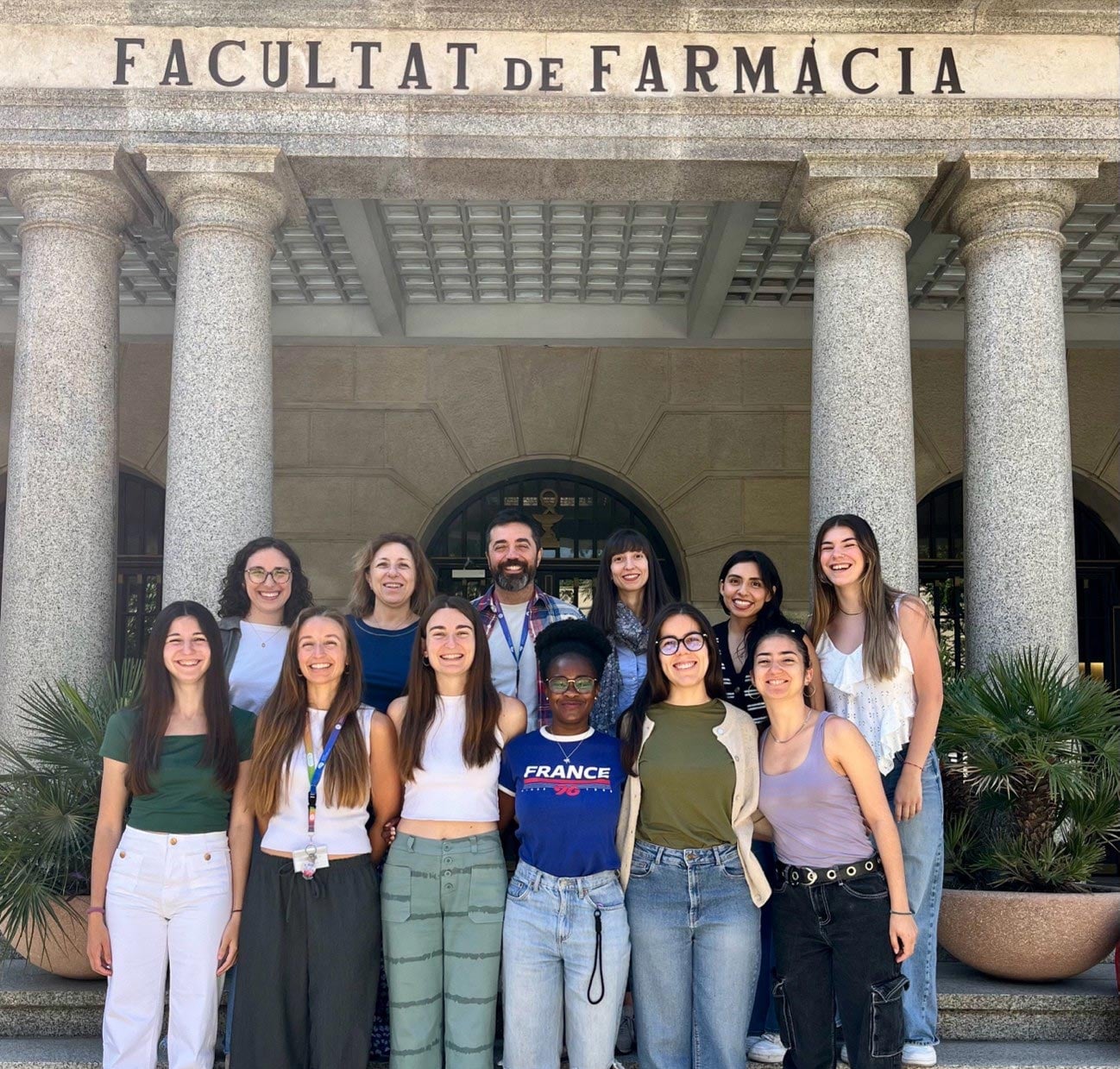
The study was led by Professor Christian Griñán and Professor Mercè Pallàs of the Faculty of Pharmacy and Food Sciences. It also included researchers from UBneuro, the CIBER Area for Neurodegenerative Diseases (CIBERNED), the UB Institute of Biomedicine (IBUB), the Institute of Nutrition and Food Safety (INSA-UB), the August Pi i Sunyer Biomedical Research Institute (IDIBAPS), and other institutions in Spain and abroad.
Beyond the beta-amyloid protein
Approved Alzheimer’s treatments such as lecanemab and donanemab are monoclonal antibodies designed to clear beta-amyloid protein plaques from the brain. “Although they represent a breakthrough, their efficacy is limited, as they only slow cognitive decline by 27% to 35%, have several side effects and only address the part of the pathology caused by beta-amyloid accumulation,” the researchers explain.
FLAV-27 takes a different approach. It is the first inhibitor in its class to target the G9a enzyme, which plays a central role in the brain’s epigenetic regulation by helping silence genes needed for neuronal development, synaptic plasticity, and memory consolidation.
The drug blocks the natural molecule S-adenosylmethionine (SAM) from reaching G9a, which the enzyme needs to modify DNA. By interfering with that process, FLAV-27 slows the epigenetic dysregulation associated with Alzheimer’s disease and helps neurons recover normal function.
Functional cognitive recovery in animal models
The study found that blocking G9a with FLAV-27 not only reduced hallmark disease markers such as beta-amyloid protein and phosphorylated tau, but also improved cognitive function, social behavior, and neuronal synapse structure across several models. These included in vitro tests, the worm C. elegans — in which the drug improved mobility, life expectancy, and mitochondrial respiration — and mouse models of both late-onset and early-onset Alzheimer’s disease.
“In these models, there is evidence of improved short- and long-term memory, spatial memory, and sociability, which demonstrates not only an effect on molecular markers, but also functional cognitive recovery,” the researchers emphasize.
According to the authors, the findings show that epigenetic dysregulation — changes in the chemical mechanisms that control which genes are switched on or off without altering the DNA sequence — is not simply a side effect of Alzheimer’s disease. Instead, they say it is an active and controllable process that connects key features of the disease, including beta-amyloid and tau proteins, neuroinflammation, and synaptic dysfunction, through a shared epigenetic pathway.
That raises the possibility of a new class of therapies: epigenetic disease-modifying treatments that could complement, or potentially replace, strategies focused only on removing beta-amyloid.
Blood biomarkers to monitor treatment
Another important finding that strengthens the treatment’s translational potential is the identification of a biomarker that can be measured in both the brain and blood plasma of patients. The team found that the epigenetic marker H3K9me2, the SMOC1 protein, and the p-tau181 molecule are significantly elevated, and that their blood levels closely track symptoms such as tau buildup, neuroinflammation, and the severity of cognitive impairment. In animal models treated with FLAV-27, these markers returned to normal levels alongside cognitive improvement.
The researchers say the availability of these peripheral bioindicators is one of the main features that sets FLAV-27 apart from other drugs in development.
“It has important implications for future clinical trials, as it will allow the selection of suitable patients with a simple blood test, monitoring of treatment, and demonstration that the drug actually modifies its therapeutic target,” the authors stress.
Toward human trials
Despite the promising results, FLAV-27 still must clear several steps before human clinical trials can begin. The drug is now in an advanced preclinical stage. Next steps include regulatory toxicology studies in at least two animal species, development of the pharmaceutical form, and preparation of the regulatory dossier needed to apply for clinical trial authorization from the relevant agencies. The process is expected to take years.
The next phase will be handled by Flavii Therapeutics, a spin-off from the UB founded in 2025 that holds the exclusive license for FLAV-27. The company will oversee the drug’s preclinical and clinical development, as well as intellectual property management and fundraising, with the goal of turning research from the UB into new therapies for central nervous system diseases such as Alzheimer’s.
Reference: “First-in-class SAM-competitive G9a inhibitor FLAV-27 as a disease-modifying therapy for Alzheimer disease” by Aina Bellver-Sanchis, David Valle-Garcia, Carla Barbaraci, Fernando Romero-Becerra, Rohit Kumar Singh, Júlia Jarne-Ferrer, Foteini Vasilopoulou, Alba Irisarri, Carmen Martínez-Fernández, Juan A. Fafián-Labora, María C. Arufe, Carolin Wüst, Aida Castellanos, David Soto, Núria Casals, Rut Fadó, Jennifer M. Pocock, Gemma Navarro, Cristina Val, José Brea, M. Isabel Loza, Albert Lleó, Juan Fortea, Daniel Alcolea, Anna Perez-Bosque, Lluïsa Miró, Belén Pérez, Sajid Rashid, Muhammad Ali, Manahil Saqib, Marcel lí Carbó, Ana Guerrero, Santiago Vázquez, Bhanwar Singh Choudhary, Shaodong Dai, Carmen Escolano, Rafael Franco, Mercè Pallàs and Christian Griñán-Ferré, 23 December 2025, Molecular Therapy.
DOI: 10.1016/j.ymthe.2025.12.038
Never miss a breakthrough: Join the SciTechDaily newsletter.
Follow us on Google and Google News.
8 Comments
I’m hoping to try it on myself. I have all of the above problems. I was born in 1977. Recently, I’ve lost my sense of smell, I went through menopause two years ago, and I’m having trouble remembering things—even familiar routes.
Fixing epigenetic problems seems to be an answer to numerous issues. One wonders if such treatments will be allowed to be open source, like the Salk vaccine for poliomyelitis, or restricted to only those who can pay through the nose for treatment.
Amity hair purple
Can this be useful in case of brain stroke where a part of body forgets functioning
Lena read through alot, seem to have some of the issues. I’m 76 nice to know that so much research is been done.
FLAV-27 surely sounds like a drug with promise. Need it five years ago. Parent’s plaque build up, behaviors and moods are at the forefront of daily living. Need HELP NOW!
Keep working hard and God Be with You ALL!
Would be good it will help a lot of people including children I lost my mum with the disease
Again, when human beings ‘Get Busy’, their saliva glands emit an enzyme that disintegrates chewing gum, which stomach acid cannot dissolve, into tiny orbs. Because people who ‘Get Busy’ a lot live longer, it’s possible that this very briefly occurring enzyme makes them live longer, by dissolving tooth plagues, arteriosclerosis plaques, and Alzheimer’s disease brain plaques. So, perhaps by using these new quantum computers that compile all possible protein molecules designs to make new drugs, we could analyse a sample of this naturally occurring saliva enzyme, and create a molecular analog drug based on it, to give to Alzheimer’s disease patients. Also, what if we used a highly modified electroshock therapy to dissolve these brain plaques, and also to destroy brain-eating amoebas as well?