
An Antarctic glacier just collapsed at record speed, stunning scientists and raising fears about the future of Earth’s ice.
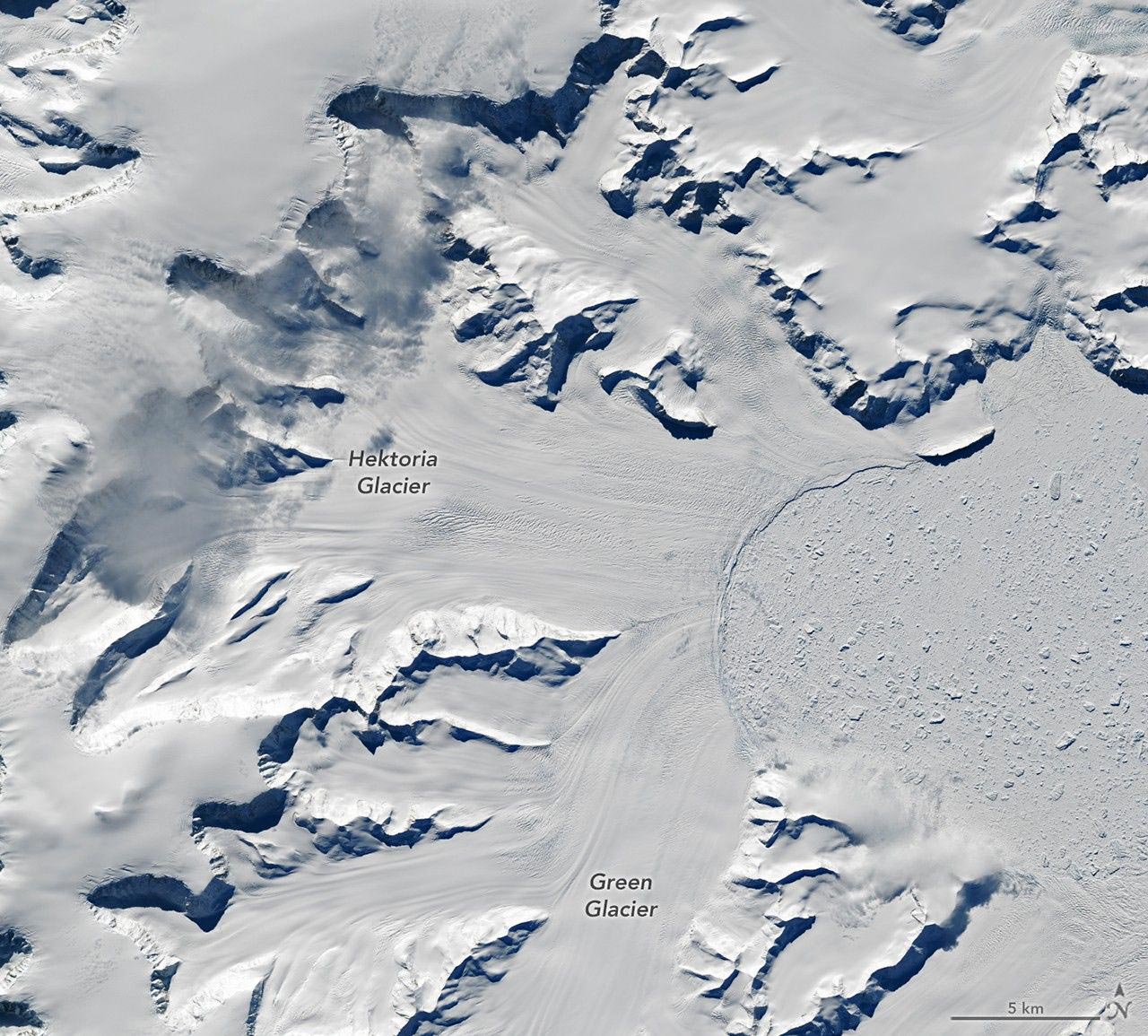
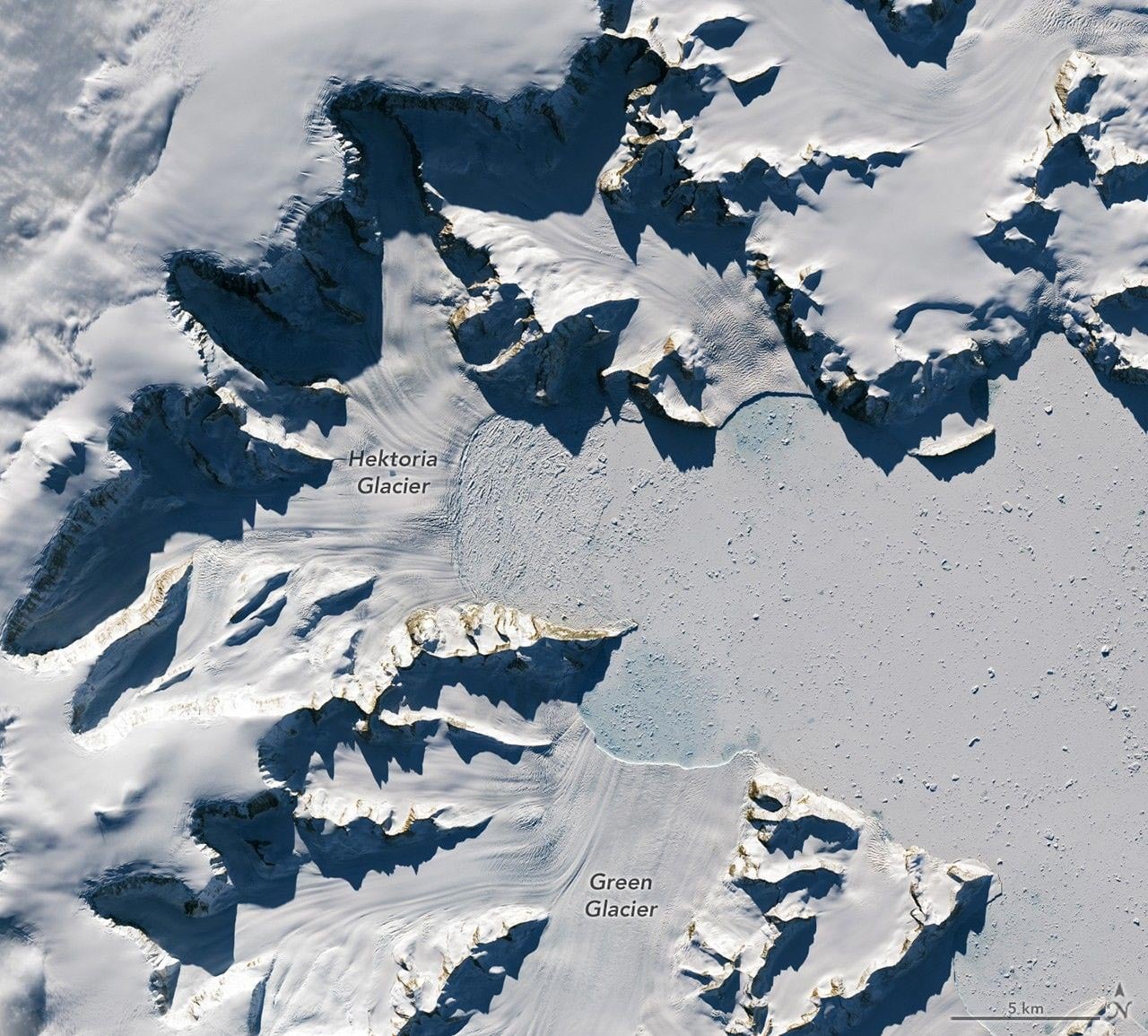
Antarctica’s Hektoria Glacier has undergone one of the fastest glacier retreats ever documented, surprising scientists with how quickly the ice disappeared. Between January 2022 and March 2023, the glacier retreated by about 25 kilometers (15 miles). During a particularly dramatic two-month span, the glacier’s edge pulled back more than 8 kilometers (5 miles), setting a modern record for the fastest loss of grounded glacier ice ever observed.
Researchers used several forms of satellite and remote sensing data to investigate the collapse. Their analysis showed that Hektoria Glacier’s structure made it especially vulnerable to rapid change. Like many glaciers along the Antarctic Peninsula, Hektoria begins on land before extending into the ocean, where its outer section forms a thick floating platform known as an ice tongue.
Scientists found that the glacier lost both its floating ice tongue and a large section of grounded ice resting on a flat area of seabed. That grounded ice loss directly contributes to rising sea levels. Although Hektoria is relatively small compared to some of Antarctica’s largest glaciers, researchers warn that the same type of rapid retreat at larger glaciers could have much greater global consequences.
Satellite Images Reveal Massive Ice Loss
Satellite images highlight the scale of Hektoria Glacier’s retreat on the eastern Antarctic Peninsula. The image showing conditions one year later was used because cloud-free Landsat imagery covering the full region was unavailable from the previous March.
After the dramatic retreat, Hektoria’s terminus remained relatively stable, according to the study. However, nearby Green Glacier continued retreating.
The events leading to Hektoria’s collapse can be traced back more than 20 years. In 2002, the Larsen B ice shelf rapidly broke apart and collapsed. That ice shelf had acted like a stabilizing barrier for Hektoria and neighboring glaciers. Following its disappearance, glaciers in the region began thinning and retreating over the following years.
In 2011, landfast sea ice near Hektoria’s terminus became extensive enough to provide temporary support for the glacier front, allowing the glacier to advance once again.
Sea Ice Breakup Triggered Rapid Retreat
That stability ended abruptly in January 2022 when the landfast sea ice in the Larsen B embayment broke apart, likely because of powerful ocean swells. Once that protective support disappeared, Hektoria Glacier quickly destabilized.
Throughout the rest of the austral summer, the glacier’s floating ice tongue disintegrated through a series of calving events, leading to roughly 16 kilometers of retreat.
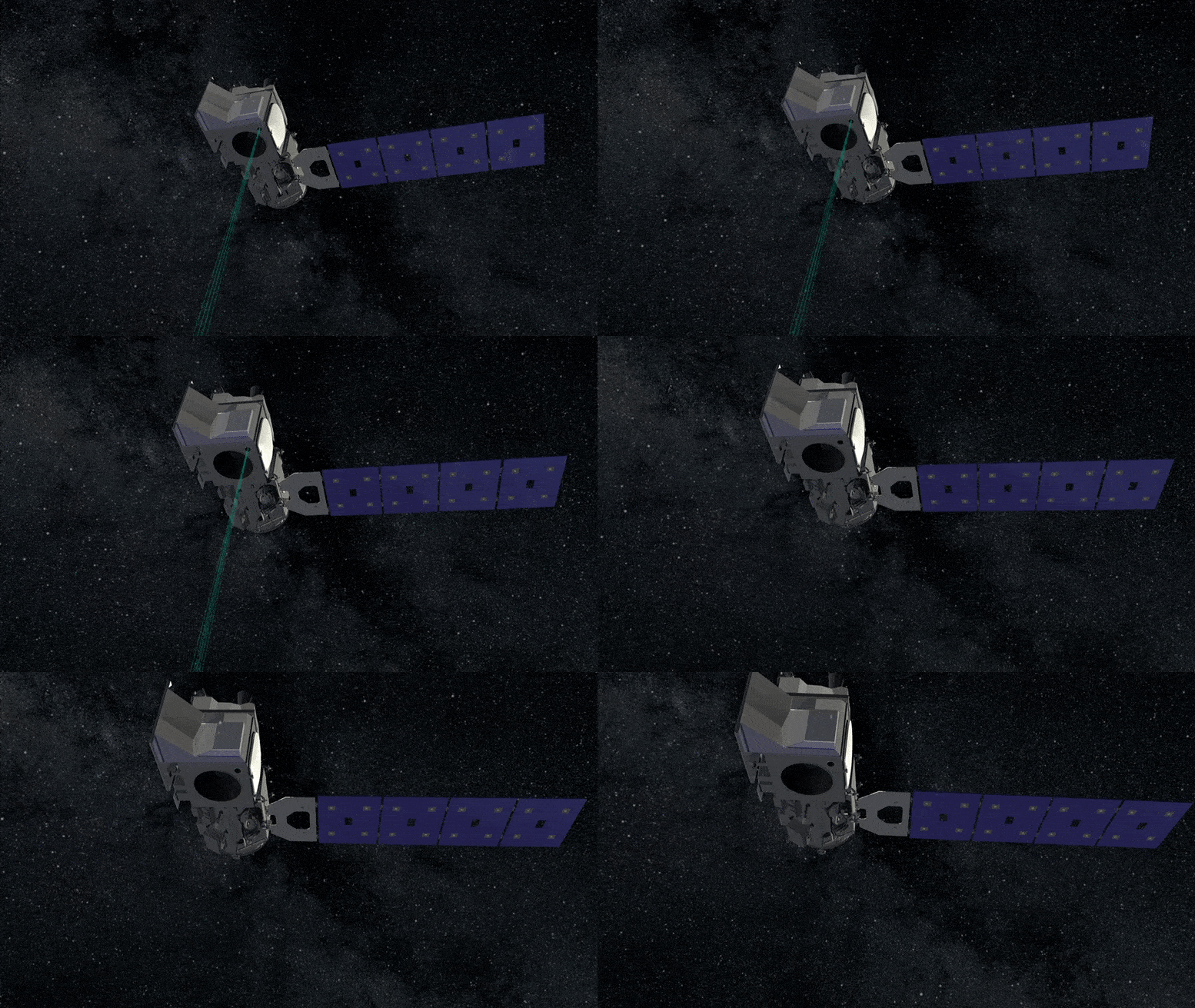
Although the glacier’s front appeared more stable during the 2022 austral winter, satellite laser altimetry data showed the ice was continuing to thin. Measurements from NASA’s ICESat-2 (Ice, Cloud, and Land Elevation Satellite-2) mission revealed ongoing ice loss even during the temporary pause in retreat.

Scientists Identify Buoyancy Driven Calving
Researchers later determined that the remaining ice was still grounded during the 2022 austral spring. Evidence came from earthquakes detected beneath the glacier. Their analysis showed the ice had spread across a broad, relatively flat section of bedrock, creating what scientists call an ice plain.
This type of glacier geometry allows seawater to flow beneath the ice during high tide, temporarily lifting sections of the glacier off the ground. When the ice becomes thin enough, large areas can suddenly detach and break apart all at once.
Scientists believe this process, known as buoyancy-driven calving, caused the second stage of Hektoria’s retreat. During this phase, the glacier lost another 8 kilometers in length.
NASA Satellites Could Improve Glacier Monitoring
Naomi Ochwat, a glaciologist at the University of Innsbruck and lead author of the study, is now investigating whether other glaciers may face similar risks. As warming continues across the Antarctic Peninsula, more glaciers are losing their floating ice tongues and becoming tidewater glaciers, meaning their termini rest directly on the seabed. This type of glacier is also common in Alaska and Greenland.
Ochwat and study co-author Ted Scambos, a senior research scientist at the University of Colorado Boulder, said new satellite technology could help scientists better understand these rapid glacier changes.
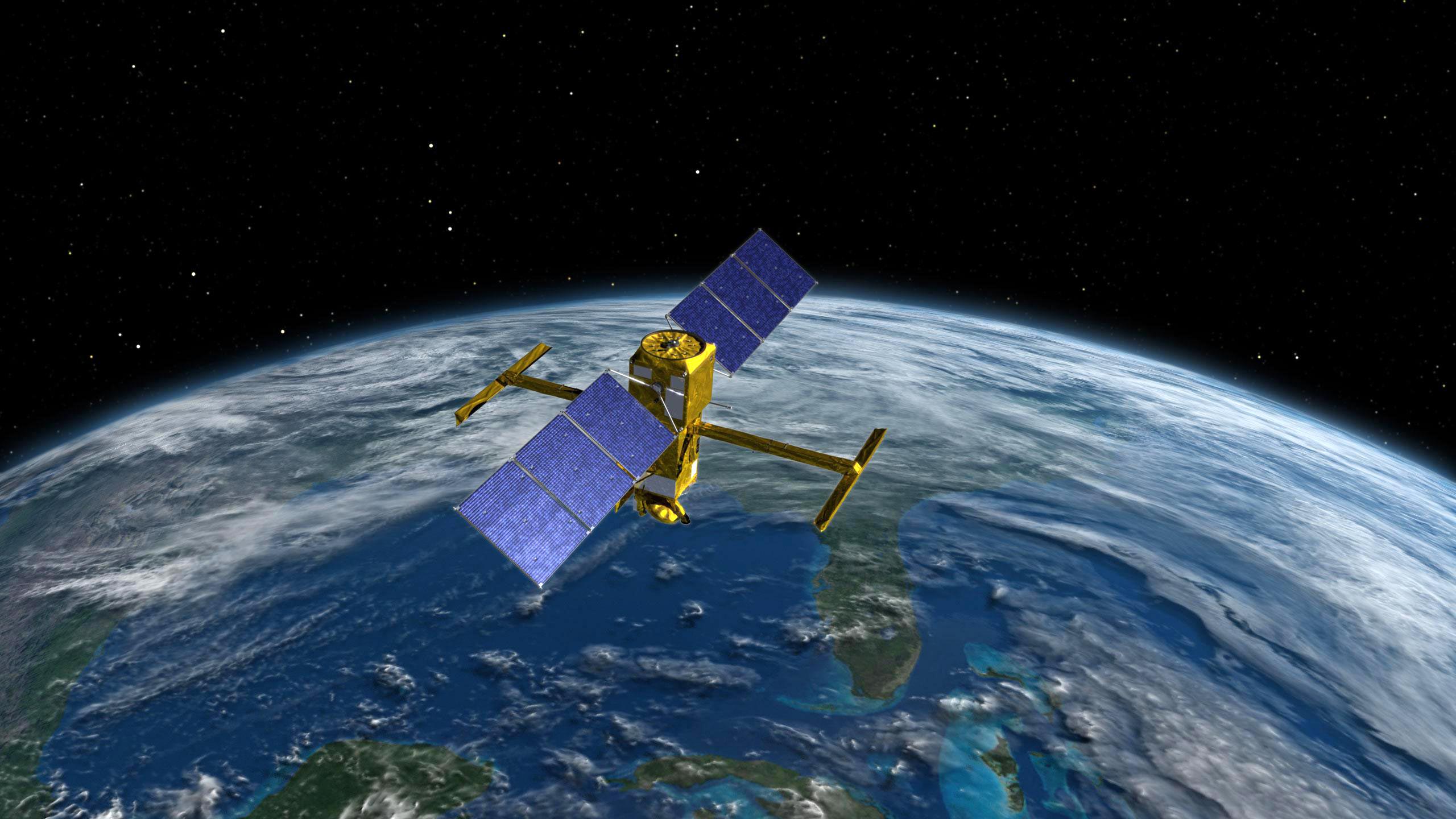
New platforms, such as the NISAR and SWOT satellites developed by NASA and partners, may aid in understanding rapid changes in glaciers.
The NISAR (NASA-ISRO Synthetic Aperture Radar) satellite can detect movement across land and ice surfaces with precision down to the centimeter. According to Scambos, the mission’s data will be “very useful for structural evaluations of Hektoria and other glaciers in the region.”
“In addition to NISAR,” Ochwat added, “I’m particularly interested in learning what SWOT can tell us about rapid glacier changes.”
The SWOT (Surface Water and Ocean Topography) satellite was designed primarily to measure detailed changes in Earth’s water surfaces. Scientists are also exploring how the mission can be used to study the cryosphere, including ice shelves and sea ice.
Hektoria Glacier May Continue Slowing Down
Researchers believe the most dramatic phase of Hektoria Glacier’s collapse is likely over. Future retreat is expected to continue at a slower pace as the glacier loses more elevation and mass.
Scambos said he would not be surprised if the glacier continues slowing in the coming years.
“The glacier has lost so much elevation and mass that it simply can’t continue to maintain the same output,” he said. “It’s on its way to being a fjord, not a glacier.”
Never miss a breakthrough: Join the SciTechDaily newsletter.
Follow us on Google and Google News.
2 Comments
This 4-year-old event isn’t really news. It has been reported here 4 times: https://scitechdaily.com/search/hektoria+/
The article states, “Their analysis showed that Hektoria Glacier’s structure made it especially vulnerable to rapid change.” This implies that the behavior isn’t typical and therefore isn’t a good analogy for future Antarctic glacier behavior, thus my wondering why it warrants 4 articles.
Anyone interested in former criticisms of the research can find them in comments at the above link.
thanks for this