
Close Menu
    Facebook X (Twitter) Instagram
    SciTechDaily
    • Biology
    • Chemistry
    • Earth
    • Health
    • Physics
    • Science
    • Space
    • Technology
    Facebook X (Twitter) Pinterest YouTube RSS
    SciTechDaily
    Home»Biology»Genetic Contamination: Domesticated Chicken DNA Is Tainting Genomes of Wild Red Junglefowl
    Biology

    Genetic Contamination: Domesticated Chicken DNA Is Tainting Genomes of Wild Red Junglefowl

    By SciTechDailyFebruary 15, 2023No Comments3 Mins Read
    Facebook Twitter Pinterest Telegram LinkedIn WhatsApp Email Reddit
    Share
    Facebook Twitter LinkedIn Pinterest Telegram Email Reddit
    Red Junglefowl
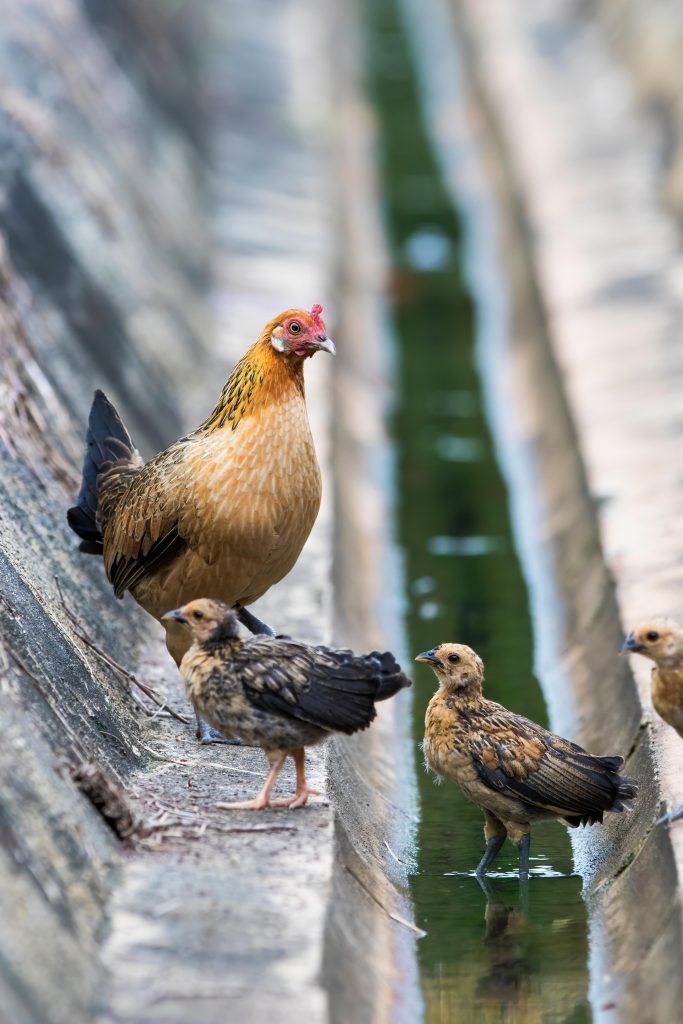
    Red junglefowl are the wild ancestors of the chicken, and the two are known to readily admix. In their study, Wu et al. found evidence of a loss in wild genotype in the red junglefowl across the Anthropocene by comparing contemporary genomes with historic ones from approximately a century ago. In their native range in Southeast Asia, free-roaming red junglefowl exhibit domestic traits indicative of domestic introgression into the wild population (shown here). Credit: Yong Chee Keita Sin, Wu et al, 2023. CC-BY 4.0

    Estimates indicate that wild birds inherited 20% to 50% of their genomes from chickens.

    According to a new study published in the journal PLOS Genetics, the red junglefowl, the wild ancestor of the chicken, is experiencing a loss of genetic diversity due to interbreeding with domesticated birds. The study was led by Frank Rheindt of the National University of Singapore.

    Sometime between 3,000 and 10,000 years ago, humans domesticated the red junglefowl in tropical Asia. Despite this, wild and domestic birds can still interbreed. This interbreeding between wild and domestic red junglefowl is a cause for concern in terms of conservation, as wild populations that gain more DNA from chickens may experience a loss of genetic diversity, making them more vulnerable to changes in their environment.

    Critical Genes in Domestication

    In the new study, researchers contrasted whole genomes from 51 chickens and 63 junglefowl from across the wild bird’s natural range, to find signs of interbreeding. They saw that DNA from domesticated chickens is moving into wild junglefowl, and the scale of that movement has increased over recent decades. By comparing modern wild genomes to genomes of red junglefowl from approximately a century ago, the researchers estimate that the wild birds have inherited 20% to 50% of their genomes from domestic birds, depending on their location. The study also identified eight genes that differed greatly between domestic chickens and their wild ancestors, and which were likely key to developing the chicken as a livestock animal. These genes are involved in development, reproduction, and vision.

    The results of the study bring to light the ongoing loss of genetic diversity in the wild junglefowl, and the researchers suggest that efforts may be needed to protect its genome. Additionally, wild populations have value for agriculture because they can serve as a reservoir of genetic diversity that researchers can tap into to improve domesticated species – for example, finding genetic variants that make an animal more resistant to a particular disease. Losing that genetic diversity in red junglefowl may hinder scientists’ ability to safeguard one of humanity’s most important food sources.

    The authors add: “Genomes of 100-year-old birds show that modern wild junglefowl carries on average more domestic DNA than they used to. The wild genotype is an important reservoir of chickens’ genetic diversity and preserving it is critical.”

    Reference: “Historic samples reveal loss of wild genotype through domestic chicken introgression during the Anthropocene” by Meng Yue Wu, Giovanni Forcina, Gabriel Weijie Low, Keren R. Sadanandan, Chyi Yin Gwee, Hein van Grouw, Shaoyuan Wu, Scott V. Edwards, Maude W. Baldwin and Frank E. Rheindt, 19 January 2023, PLOS Genetics.
    DOI: 10.1371/journal.pgen.1010551

    Never miss a breakthrough: Join the SciTechDaily newsletter.
    Follow us on Google and Google News.

    Birds Domestication Genetics National University of Singapore Wildlife
    Share. Facebook Twitter Pinterest LinkedIn Email Reddit

    Related Articles

    Remarkable Evolutionary Paradox Uncovered: The Ruff’s Mysterious Mating Supergene

    Scientists Say Oriole Hybridization Is a Dead End

    How Gene Flow Between Species Influenced the Evolution of Darwin’s Finches

    Researchers Discover First-Known Hybrid Bird Species from the Amazon

    Princeton Study Finds That New Species Can Develop in as Little as 2 Generations

    FDA Approves AquaBounty Transgenic Fish

    Blood-Thinning Rodenticide is Killing Birds

    “Area X” of Zebra Finch May Provide Insights to Human Speech Disorders

    Bonobo Great Apes Are Domesticating Themselves

    Leave A Reply Cancel Reply

    • Facebook
    • Twitter
    • Pinterest
    • YouTube

    Don't Miss a Discovery

    Subscribe for the Latest in Science & Tech!

    Trending News

    This Experimental Drug Repaired the Gut and Reversed Severe Fatty Liver Disease

    Physicists Just Turned a Black Hole Energy Theory Into Reality

    Stanford Scientists Solve a 252-Million-Year-Old Mass Extinction Mystery

    The Ancient Survival Mechanism Making Weight Loss So Difficult

    Just 3,000 Steps a Day May Help Protect the Brain From Alzheimer’s

    “Weird Clams” Reveal a New Invasion Along the U.S. Northeast Coast

    Archaeologists Decapitated Tutankhamun and Glued His Body Back Together

    New Black Hole Theory Solves a 50-Year-Old Problem

    Follow SciTechDaily
    • Facebook
    • Twitter
    • YouTube
    • Pinterest
    • Newsletter
    • RSS
    SciTech News
    • Biology News
    • Chemistry News
    • Earth News
    • Health News
    • Physics News
    • Science News
    • Space News
    • Technology News
    Recent Posts
    • Quantum Computer Stores Data in Vibrations Like Notes on a Guitar
    • Astronomers Discover Two Super Puff Planets Lighter Than Cotton Candy
    • One Asteroid Collision May Have Rocked Earth, Mars, and the Moon
    • Scientists Restore the Sense of Touch With Electrical Brain Stimulation
    • New Study Reveals Herpesvirus Infection May Accelerate Alzheimer’s Disease
    Copyright © 1998 - 2026 SciTechDaily. All Rights Reserved.
    • Science News
    • About
    • Contact
    • Editorial Board
    • Privacy Policy
    • Terms of Use

    Type above and press Enter to search. Press Esc to cancel.