
Restoring blood flow to the brain seemed a promising way to protect thinking skills, but opening severely narrowed arteries did not deliver the cognitive boost researchers hoped for.
A Columbia-led randomized trial found that people with severe carotid artery narrowing gained no additional cognitive benefit from stenting or surgery compared with medication alone over one year. The findings challenge the idea that reopening these arteries can reverse cognitive decline in patients without associated symptoms.
“We had hoped that improving blood flow in the brain in this way would improve cognition—and there were tantalizing clues from animal studies and case series that it would,” says study leader Randolph Marshall, MD, the Elisabeth K. Harris Professor of Neurology at Columbia University Vagelos College of Physicians and Surgeons. “But when we put it to the test in a randomized clinical trial, comparing cognition after opening the blockage or treatment with medication alone, we did not see a difference.”
Why Opening Carotid Arteries Seemed Promising
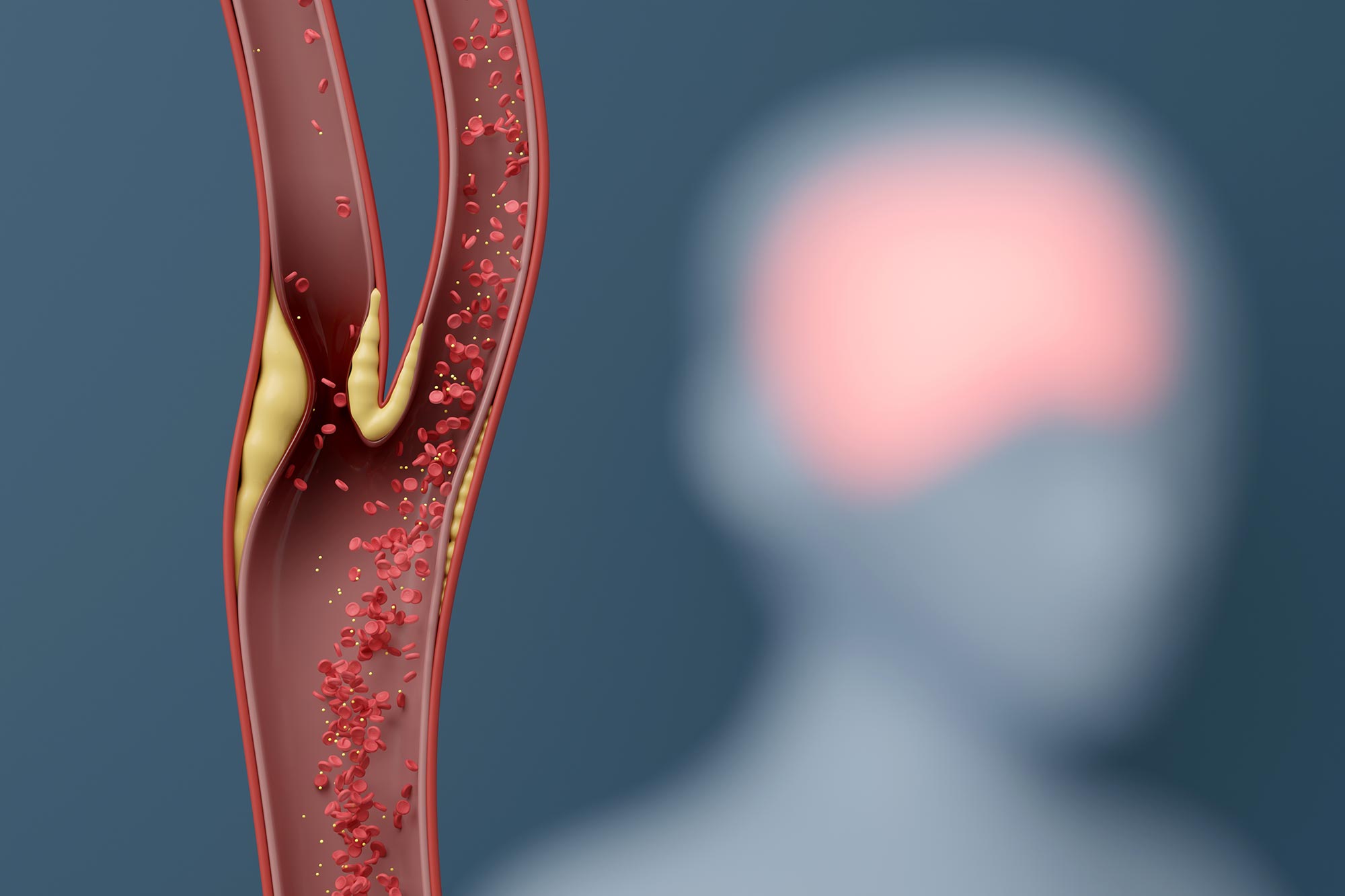
The carotid arteries run through the neck and supply blood to the brain. Severe narrowing, known as carotid stenosis, is associated with cognitive impairment even in people who have never had a stroke. The link is particularly apparent when blood flow to the brain is reduced.
That connection raised a compelling possibility: restoring circulation might help preserve or improve cognition. Stenting holds a narrowed artery open, while surgery removes the material causing the blockage.
“We’ve thought for a long time that improving cognition by restoring blood flow with stenting or surgery could improve cognition, but until our study, the hypothesis had never been tested in a randomized clinical trial.”
To investigate, the researchers enrolled 291 patients in CREST-H, all with carotid artery narrowing of at least 70% but no associated symptoms. They assessed brain blood flow and cognition at enrollment and again one year later. Cognitive scores improved slightly in both groups, but patients who underwent a procedure did no better than those treated with medication alone.
Stroke Prevention Showed a Different Result
CREST-H was part of CREST-2, a larger multicenter trial that Marshall helped design to compare approaches to preventing strokes in people with severe carotid blockages. In that trial, adding stenting to medication cut strokes by about half compared with medication alone. Surgery to remove the blockage did not show the same benefit.
“Those results do appear to have changed practice already, and more of these patients are getting stents,” says Marshall. The cognitive findings, however, suggest that patients should not expect the procedure to improve their thinking skills beyond what medication alone provides.
“We concluded that revascularization to reverse cognitive decline in these patients cannot be expected. Therefore, we need to reinforce the importance of preventing carotid stenosis to avoid its consequences,” says Marshall.
Reference: “Revascularization in Asymptomatic Carotid Artery Stenosis With Hemodynamic Impairment and Cognitive Outcomes: The CREST-H Substudy of the CREST-2 Randomized Clinical Trial” by Randolph S. Marshall, Ronald M. Lazar, James F. Meschia, John Huston, Lloyd J. Edwards, Thomas G. Brott, Brajesh K. Lal, George Howard, Carlos Mena-Hurtado, Donald Heck, Navdeep Sangha, Giuseppe Lanzino, Vikram S. Kashyap, Herbert D. Aronow, Mel Sharafuddin, Jenifer Voeks, Yu Zhang, Kevin Slane and David S. Liebeskind, , JAMA.
DOI: 10.1001/jama.2026.13384
This study is supported by the NIH (R01NS097876). The CREST-2 parent trials are supported by the NIH (U01NS080168, U01NS080165, and U01NS086872), the Centers for Medicare and Medicaid Services, and the Department of Health and Human Services.
Never miss a breakthrough: Join the SciTechDaily newsletter.
Follow us on Google and Google News.