
Close Menu
    Facebook X (Twitter) Instagram
    SciTechDaily
    • Biology
    • Chemistry
    • Earth
    • Health
    • Physics
    • Science
    • Space
    • Technology
    Facebook X (Twitter) Pinterest YouTube RSS
    SciTechDaily
    Home»Health»A Natural Compound Found in Everyday Foods Shows Surprising Power Against Lung Cancer
    Health

    A Natural Compound Found in Everyday Foods Shows Surprising Power Against Lung Cancer

    By Friedrich–Alexander University Erlangen–NurnbergOctober 31, 20261 Comment3 Mins Read
    Facebook Twitter Pinterest Telegram LinkedIn WhatsApp Email Reddit
    Share
    Facebook Twitter LinkedIn Pinterest Telegram Email Reddit
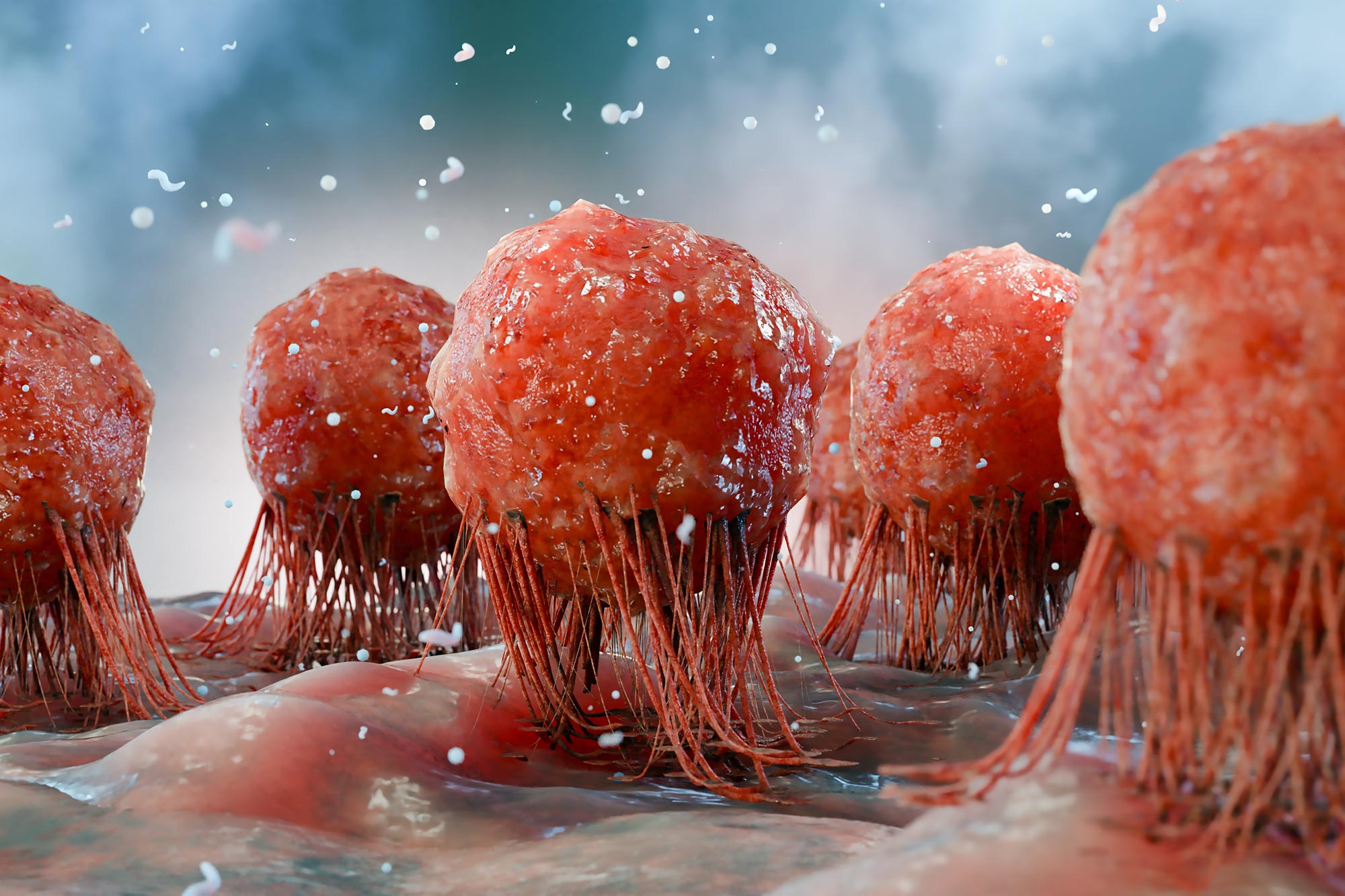
    Cancer Tumor Cells Immune Response
    Quercetin is a naturally occurring plant compound found in foods such as onions, citrus fruits, apples, and buckwheat. Known for its antioxidant and anti-inflammatory properties, this flavonoid has attracted scientific interest for its potential effects on cellular health, immune function, and diseases such as cancer. Credit: Shutterstock

    A natural compound found in common foods has shown promising effects against lung cancer cells.

    Quercetin, a compound found in citrus fruits, onions, and buckwheat, slowed lung cancer cell division and movement in laboratory experiments. At the highest dose tested, cell migration nearly stopped.

    The findings come from researchers at Universitätsklinikum Erlangen at Friedrich-Alexander Universität Erlangen-Nürnberg (FAU), who examined the compound’s effects in laboratory-grown lung cancer cells, mouse lung tissue sections, and living mice. Their study appeared in Cell Death Discovery.

    Lung cancer is the most common cancer worldwide and causes more cancer deaths than any other type. Available treatments do not work for everyone, prompting researchers to investigate additional approaches, including plant compounds such as quercetin, which is known for its anti-inflammatory properties.

    Quercetin Targets Several Cancer Cell Processes

    The team in the hospital’s Department of Molecular Pneumology found that quercetin affected several processes involved in cancer growth. “Many drugs against lung cancer target a single molecule,” explains Prof. Dr. Susetta Finotto. “Quercetin, by contrast, attacked at several points simultaneously in our experiments.”

    Treated tumor cells divided more slowly. In one of the two lung cancer cell types examined, quercetin also lowered oxidative stress. This occurs when reactive oxygen compounds overwhelm cells’ defenses, potentially causing damage that contributes to cancer development.

    The effect on movement was particularly striking because migration helps cancer cells spread and establish new tumors, known as metastases. “The higher the quercetin dose, the fewer cancer cells migrated. At the highest dose, the migration almost completely stopped,” reports Christine Carvalho, the study’s lead author.

    Quercetin also reduced levels of two proteins, EGFR and PD-L1, in the cancer cells studied. EGFR passes growth signals into cells, while PD-L1 can help tumors evade immune defenses.

    Mouse Studies Reveal Immune and Gut Changes

    In mouse lung tissue sections, quercetin increased levels of interferon-alpha-2, a signaling molecule that helps the immune system defend against tumors. The researchers also observed changes beyond the lungs, involving the community of microbes living in the gut.

    “In the mice that received quercetin, the gut microbiome also changed,” explains Prof. Susetta Finotto. “Bacteria that produce certain short-chain fatty acids were more common.” These fatty acids can enter the bloodstream and reach the lungs, where they can inhibit cancer cell growth.

    The mice given quercetin also showed signs of fewer tumor sites. However, only a few animals developed tumors, leaving too little evidence to confirm that finding. Further studies are needed, and whether the effects seen in cells and mice extend to people remains unknown. The experiments also do not establish whether eating quercetin-containing foods would reproduce these results.

    “Our results suggest that a quercetin-rich diet could support treatment for lung cancer,” says Prof. Susetta Finotto. “We also think it may have preventive effects. We want to investigate that next.”

    Reference: “Immunoregulatory role of quercetin in lung cancer” by Christine Carvalho, Elvedina Nendel, Susanne Mittler, Sonja Trump, Adriana Geiger, Jonas Willar, Mircea T. Chiriac, Stefan Wirtz, Carol I. Geppert and Susetta Finotto, 14 September 2026, Cell Death Discovery.
    DOI: 10.1038/s41420-026-03312-7

    Never miss a breakthrough: Join the SciTechDaily newsletter.
    Follow us on Google and Google News.

    Cancer Cell Biology Gut Immune System Lung Cancer Popular
    Share. Facebook Twitter Pinterest LinkedIn Email Reddit

    Related Articles

    Can a Common Vitamin Fight the Most Aggressive Brain Cancer?

    Surprising Finding: Scientists Discover New, Unexpected Mechanism of Cancer Cell Spread

    Using Biodegradable Nanoparticles to Shut Down the Power Stations of Cancer Cells

    Cancer Cells Eat Themselves to Survive Life-Threatening Damage

    Common Antidepressant Medication Helps Fight Cancer in Mice – May Activate Immune System to Shrink Tumors

    Cancer DNA Blood Tests Validated – Fast, Cheap and Less Invasive Method to Diagnose and Monitor Cancer

    Scientists Discover a Way to Control the Immune System’s “Natural Killer” Cells With “Invisible” Stem Cells

    New Method Uses Vitamin D to Treat Diabetes and Protect β Cells

    New Immunotherapy Agents Stimulate the Immune System to Attack Tumor Cells

    1 Comment

    1. Jojo on October 31, 2026 2:44 pm

      Just checked. Quercetin supplements are readily available and cheap.

      So instead of waiting years to decades for plodding researchers to apply for grants to “study” whether this supplement works, I will simply add this to my daily supplement consumption.

      Reply
    Leave A Reply Cancel Reply

    • Facebook
    • Twitter
    • Pinterest
    • YouTube

    Don't Miss a Discovery

    Subscribe for the Latest in Science & Tech!

    Trending News

    A Nutrient Found in Red Meat Could Make Dangerous Inflammation Even Worse

    Scientists Discover How Dead Stars Could Break One of Physics’ Most Famous Limits

    A Natural Compound Found in Everyday Foods Shows Surprising Power Against Lung Cancer

    Do Spiders Dream? Scientists Discover a Mysterious Sleep State

    Eating a Handful of Peanuts Could Change Your Blood in a Surprising Way, Study Finds

    Scientists Create Stunning, Car-Quality Paint Without Using a Single Pigment

    Scientists Challenge a Long-Held Belief About Artificial Sweeteners

    Did Venus Eat Its Own Moon? Scientists Uncover a Shocking Possibility

    Follow SciTechDaily
    • Facebook
    • Twitter
    • YouTube
    • Pinterest
    • Newsletter
    • RSS
    SciTech News
    • Biology News
    • Chemistry News
    • Earth News
    • Health News
    • Physics News
    • Science News
    • Space News
    • Technology News
    Recent Posts
    • Researchers Discover a New Way To Control Magnetism Without Changing a Material’s Chemistry
    • Hubble Uncovers a Mysterious 93-Billion-Mile Structure Hiding in a Nearby Star System
    • Scientists Reveal How 60% of Medieval Stories May Have Disappeared Forever
    • Earth’s Oceans Were Slowly Suffocating Millions of Years Before a Devastating Mass Extinction
    • Scientists Discover a Powerful New Way To Destroy Toxic “Forever Chemicals”
    Copyright © 1998 - 2026 SciTechDaily. All Rights Reserved.
    • Science News
    • About
    • Contact
    • Editorial Board
    • Privacy Policy
    • Terms of Use

    Type above and press Enter to search. Press Esc to cancel.