
Close Menu
    Facebook X (Twitter) Instagram
    SciTechDaily
    • Biology
    • Chemistry
    • Earth
    • Health
    • Physics
    • Science
    • Space
    • Technology
    Facebook X (Twitter) Pinterest YouTube RSS
    SciTechDaily
    Home»Science»The Evolution of Taste: How Early Primates Paved the Way for Our Love of Sugar
    Science

    The Evolution of Taste: How Early Primates Paved the Way for Our Love of Sugar

    By University of OtagoFebruary 12, 2024No Comments3 Mins Read
    Facebook Twitter Pinterest Telegram LinkedIn WhatsApp Email Reddit
    Share
    Facebook Twitter LinkedIn Pinterest Telegram Email Reddit
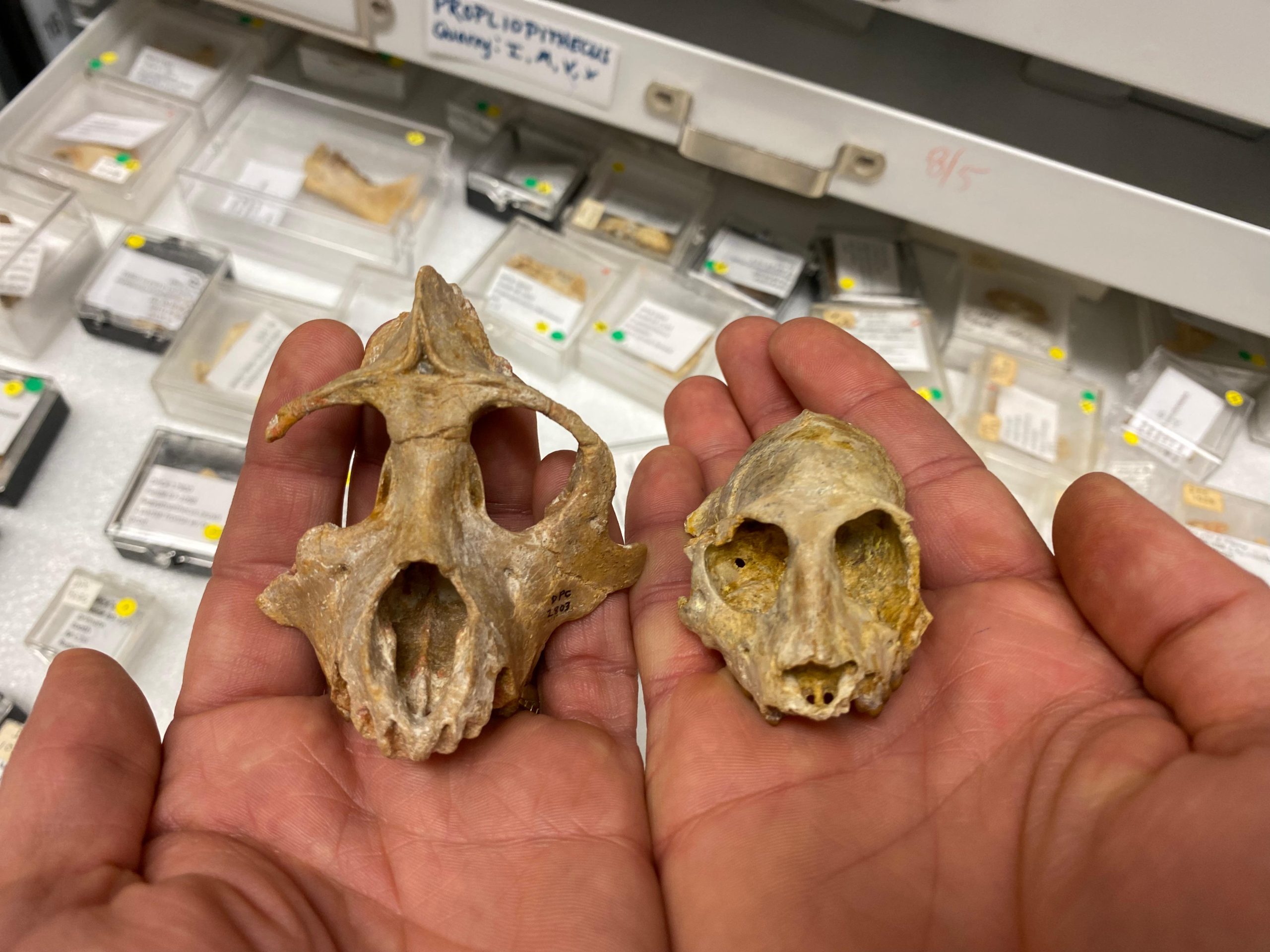
    Skulls of 29 Million Year Old Primates
    Skulls of 29 million-year-old primates used in this study Aegyptopithecus on left Parapithecus on right. Credit: Matt Borths

    A study led by the University of Otago reveals that humans’ preference for sweet flavors traces back to our early primate relatives. This research illuminates the eating behaviors of ancient anthropoids, encompassing extinct monkeys and apes, by examining patterns of tooth chips and cavities.

    Published in the American Journal of Biological Anthropology, the study used fossils from the Fayum Depression in Egypt, an invaluable source for understanding anthropoid evolution spanning from the late Eocene to the early Oligocene period, or 40 to 29 million years ago. Dental chipping patterns in five types of primates were examined and compared with data from living primates.

    Methodology and Findings

    Lead author Dr Ian Towle, of Otago’s Sir John Walsh Research Institute in the Faculty of Dentistry, says the researchers wanted to find out what made up the diet of early primates – hard or soft foods.

    “Close attention was paid to the frequency, severity, and location of dental chips. We were also interested in the presence of dental caries, often linked to the consumption of soft fruits in modern primates,” he says.

    Fayum Depression
    View of a fossil quarry in the Fayum Depression in Egypt. Credit: Matt Borths

    The group, which included Dr Matthew R. Borths of the Duke Lemur Center Museum of Natural History at Duke University, and Otago’s Dr. Carolina Loch from the Faculty of Dentistry, found a remarkably low prevalence of tooth chipping with just 21 of the 421 teeth studied showing fractures.

    “Our findings indicate a predominant consumption of soft fruits among early anthropoids. The low prevalence of tooth chipping, particularly in comparison to modern anthropoids, hints at a preference for soft food sources, like ripe, sugary fruits,” Dr Towle says.

    Evolutionary Insights and Conclusions

    The study adds “substantial support” to the hypothesis of limited dietary diversity among early anthropoids, with diversification in monkey and ape diets coming later in their evolutionary history.

    “These insights into ancient primate diets provide crucial groundwork for understanding the evolutionary trajectories of our primate ancestors.”

    Dr Borths highlights the importance of the Fayum Depression, saying these primates survived “huge climate changes” when the first glaciers formed in Antarctica.

    “The Fayum fossil record captures the critical moment when our lineage adapted to this drier, cooler world, apparently fueling themselves with fruit.”

    Reference: “Tooth chipping patterns and dental caries suggest a soft fruit diet in early anthropoids” by Ian Towle, Matthew R. Borths and Carolina Loch, 13 December 2023, American Journal of Biological Anthropology.
    DOI: 10.1002/ajpa.24884

    Dr Loch adds this study is “another example of the breadth and diversity of dental research at the University of Otago.”

    Never miss a breakthrough: Join the SciTechDaily newsletter.
    Follow us on Google and Google News.

    Anthropology Evolution Primates University of Otago
    Share. Facebook Twitter Pinterest LinkedIn Email Reddit

    Related Articles

    Extinct “Monkey Lemur” Shows Surprising Similarities to Fossil Humans

    Strange Tooth Discovery Prompts Rethink of Human Evolution

    New Findings Provide Further Evidence That Early Anthropoids Were Minuscule Creatures

    Scientists Discover A New Species of Hominin

    DNA Study Reveals Clues about Primate Evolution

    Ancient DNA Reveals the First Detailed Genetic History of Modern Europe

    400,000 Year Old Fossil Helps Shed New Light on Human Evolution

    Examining the Genes of Stone Age Farmers

    Million-Year-Old Ash in South African Cave Yields Evidence of Cooking

    Leave A Reply Cancel Reply

    • Facebook
    • Twitter
    • Pinterest
    • YouTube

    Don't Miss a Discovery

    Subscribe for the Latest in Science & Tech!

    Trending News

    Millions Take This Joint Supplement but Scientists Found a Concerning Alzheimer’s Link

    Why Evolution Stalled for Millions of Years Before Suddenly Exploding

    New Feathered Dinosaur May Have Solved a 120-Million-Year-Old Fossil Mystery

    Ozempic and Similar Drugs Linked to Dramatic Drop in Addiction Rates

    Ancient Meteorite Reveals a Forgotten Planet That Existed 4.5 Billion Years Ago

    Scientists Reveal What Happened When 12 People Were Trapped Together in Antarctica for 10 Months

    The “Impossible” Earthquake Beneath Utah Was Real After All

    A Major Update Just Hit Cholesterol Guidelines – Here’s What Every Adult Needs To Know

    Follow SciTechDaily
    • Facebook
    • Twitter
    • YouTube
    • Pinterest
    • Newsletter
    • RSS
    SciTech News
    • Biology News
    • Chemistry News
    • Earth News
    • Health News
    • Physics News
    • Science News
    • Space News
    • Technology News
    Recent Posts
    • Bumble Bees Solve an Insect Version of a Famous Primate Intelligence Test
    • This Surprising Hair Type Could Hold the Key to Chronic Itch Relief
    • Your Diet Could Be Missing the Key Ingredient for Heart Protection
    • New Study Reveals Unexpected Way To Destroy Pancreatic Cancer Cells
    • Researchers Warn Widely Prescribed Blood Pressure Drugs Could Be Harming Diabetic Kidneys
    Copyright © 1998 - 2026 SciTechDaily. All Rights Reserved.
    • Science News
    • About
    • Contact
    • Editorial Board
    • Privacy Policy
    • Terms of Use

    Type above and press Enter to search. Press Esc to cancel.