
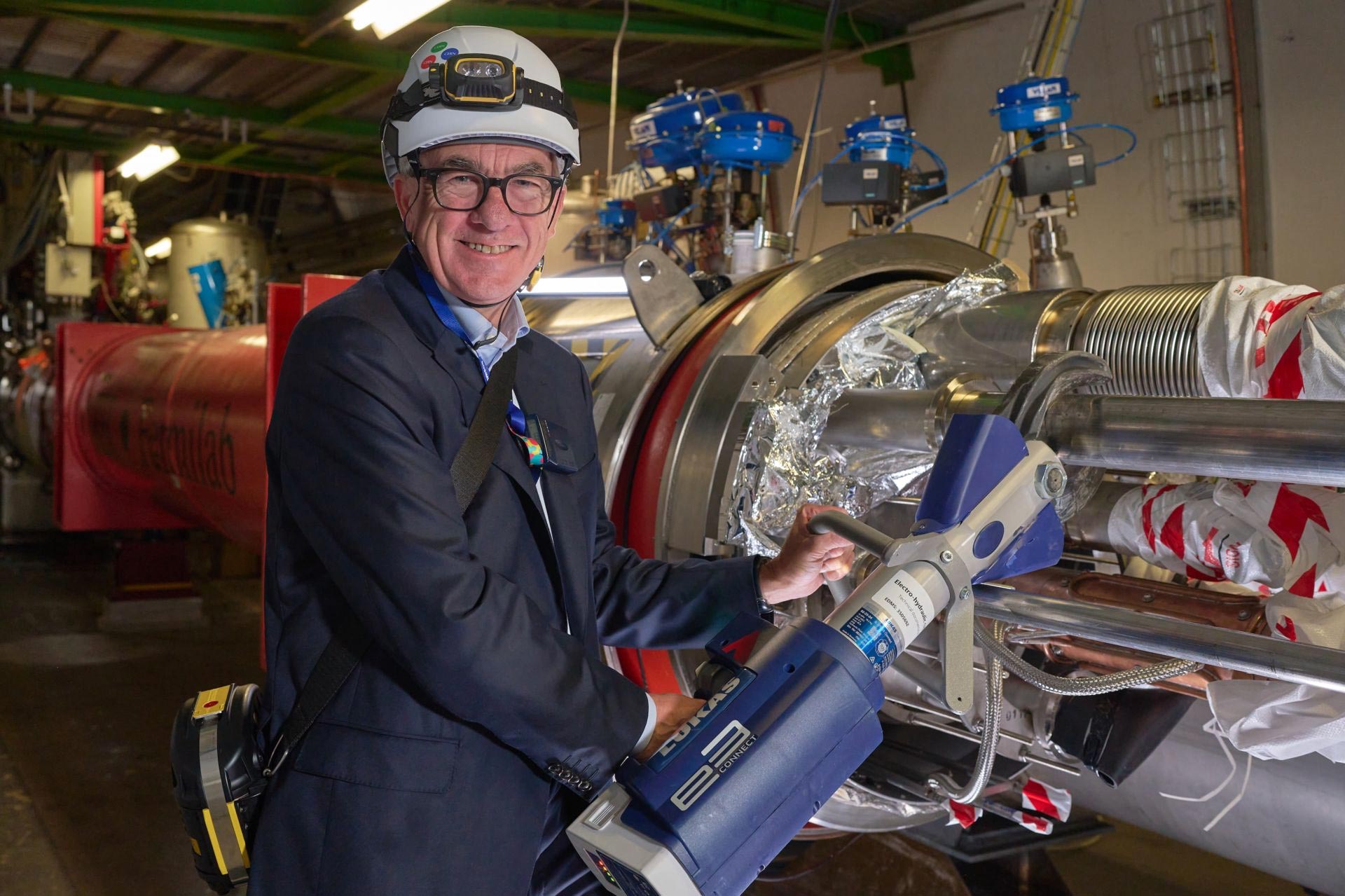
CERN has begun disconnecting parts of the Large Hadron Collider so it can replace aging beam focusing magnets with a much more powerful generation.
The new magnets will be about 40% stronger, helping create more particle collisions and ushering the LHC into its High Luminosity era.
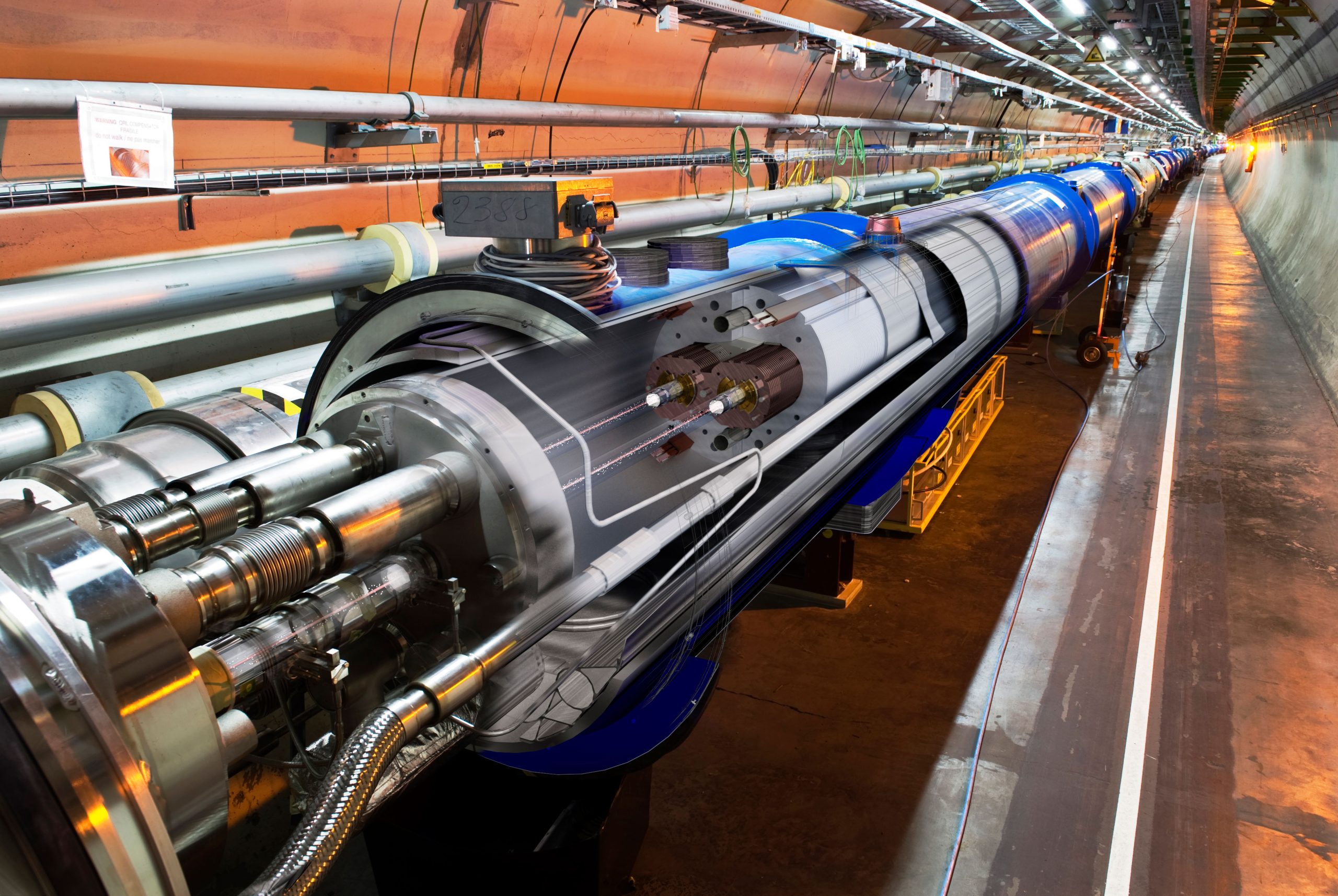
The Large Hadron Collider (LHC) stretches 27 km around and relies on thousands of magnets of different types, including dipoles, quadrupoles, sextupoles, octupoles, decapoles, and others. Each has a specialized job in guiding and controlling the particle beams.
Among the most important are the inner triplets. These are groups of three quadrupole magnets (hence the name) positioned on both sides of the LHC’s four main experiments. Their job is to focus the particle beams extremely tightly just before they meet inside the detectors.
Compressing the beams increases the likelihood that particles will collide. As a result, the inner triplets play a critical role in raising the luminosity of the LHC, which refers to the number of collisions produced over a given period of time. Greater luminosity means the experiments can collect more data.
Preparing the High Luminosity LHC
That capability is central to the future High-Luminosity LHC (HiLumi LHC), which requires the existing inner triplets to be replaced. The large-scale operation is taking place during the third long shutdown (LS3). The first connection between magnets was cut this week, marking the beginning of the replacement process.
Today, CERN Director-General Mark Thomson visited LHC Point 1 (the ATLAS experiment) to recognize the start of the operation.
“The replacement of these magnets with the new HiLumi LHC inner triplets is crucial for the coming high-luminosity years. The first quadrupole of the new triplets should arrive in the tunnel at the start of 2029. In total, 16 cryostats and 28 cryo-assemblies will be installed – a major undertaking,” explains Jean-Philippe Tock, Head of the LS3 Coordination Team.
Magnets About 40% Stronger
Developed through years of research and engineering, the new inner triplets represent a major advance over the niobium-titanium magnets now used in the LHC. Their superconducting coils are made from niobium-tin, allowing the magnets to generate fields reaching 11.3 tesla. That is about 40% stronger than the magnetic fields produced by the current system.
The upgraded magnets will be installed around the ATLAS and CMS experiments. ALICE and LHCb operate with different research programs and experimental conditions, so they do not need the same increase in instantaneous luminosity.
Those two experiments will therefore retain their existing inner triplets. However, the magnets will still receive improvements so that ALICE and LHCb can also take advantage of the broader increase in luminosity.
Removing 28 Superconducting Magnets
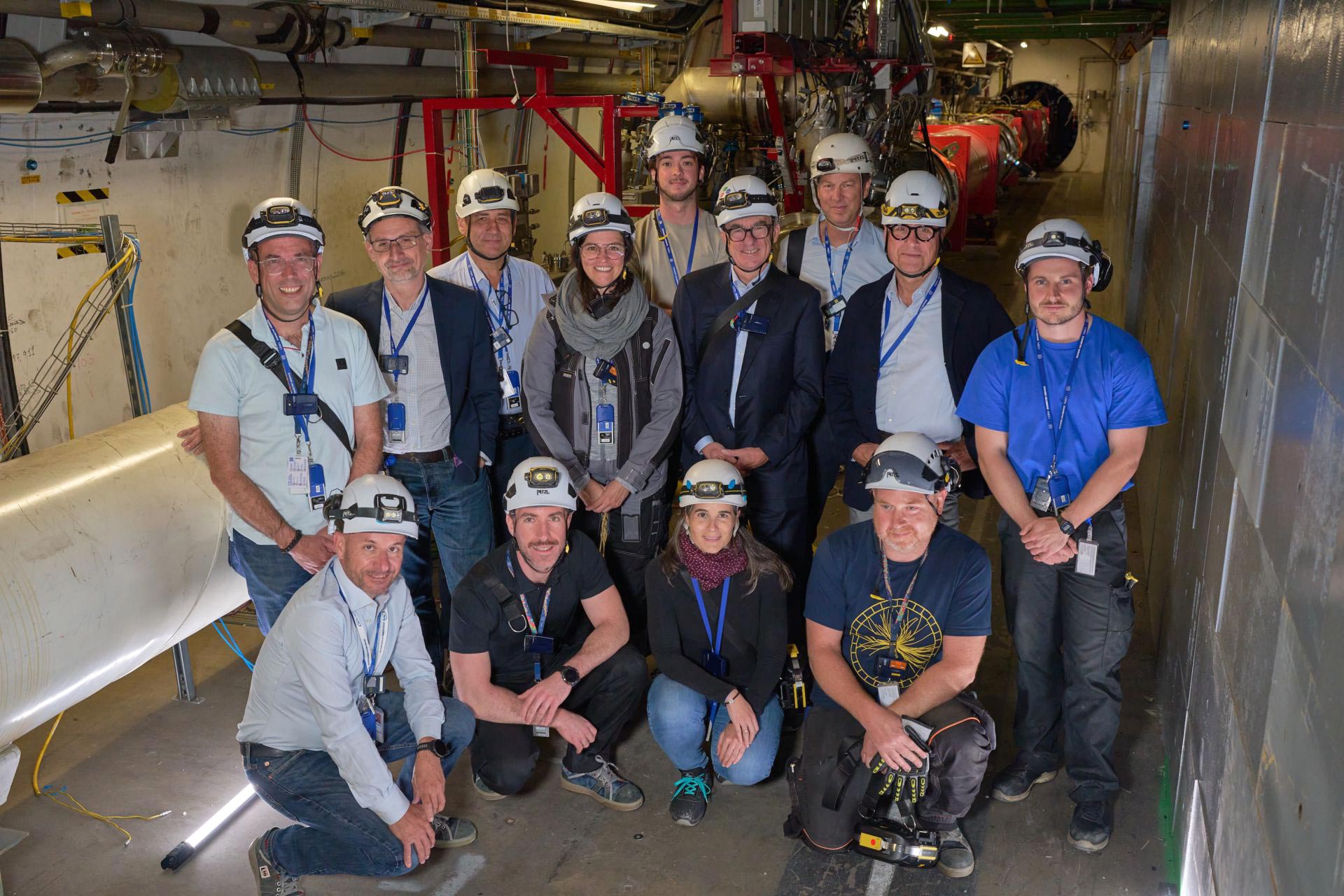
Since September 7, CERN teams have been taking apart sections of the accelerator on both sides of ATLAS and CMS. The work will allow them to remove 28 superconducting magnets (including the inner triplets) that are scheduled to be replaced.
The current inner triplets have been part of the LHC since its original construction. Installed between 2005 and 2007, they have now served the collider for nearly two decades. Their removal marks the transition to a more powerful generation of superconducting technology designed for the High Luminosity LHC.
“Today’s event is a major milestone for CERN, especially for the HiLumi LHC project team. The current inner triplets date back to the LHC construction phase and were installed in the machine between 2005 and 2007. After nearly twenty years of operation, they will give way to a new generation of even more powerful magnets. It’s truly remarkable to witness such a handover from one generation of innovation to the next,” says Markus Zerlauth, the HiLumi LHC Project Leader.
Never miss a breakthrough: Join the SciTechDaily newsletter.
Follow us on Google and Google News.