
Close Menu
    Facebook X (Twitter) Instagram
    SciTechDaily
    • Biology
    • Chemistry
    • Earth
    • Health
    • Physics
    • Science
    • Space
    • Technology
    Facebook X (Twitter) Pinterest YouTube RSS
    SciTechDaily
    Home»Biology»Primordial Beginnings: How Soda Lakes May Have Cradled Early Life
    Biology

    Primordial Beginnings: How Soda Lakes May Have Cradled Early Life

    By PNAS NexusMarch 28, 2024No Comments2 Mins Read
    Facebook Twitter Pinterest Telegram LinkedIn WhatsApp Email Reddit
    Share
    Facebook Twitter LinkedIn Pinterest Telegram Email Reddit
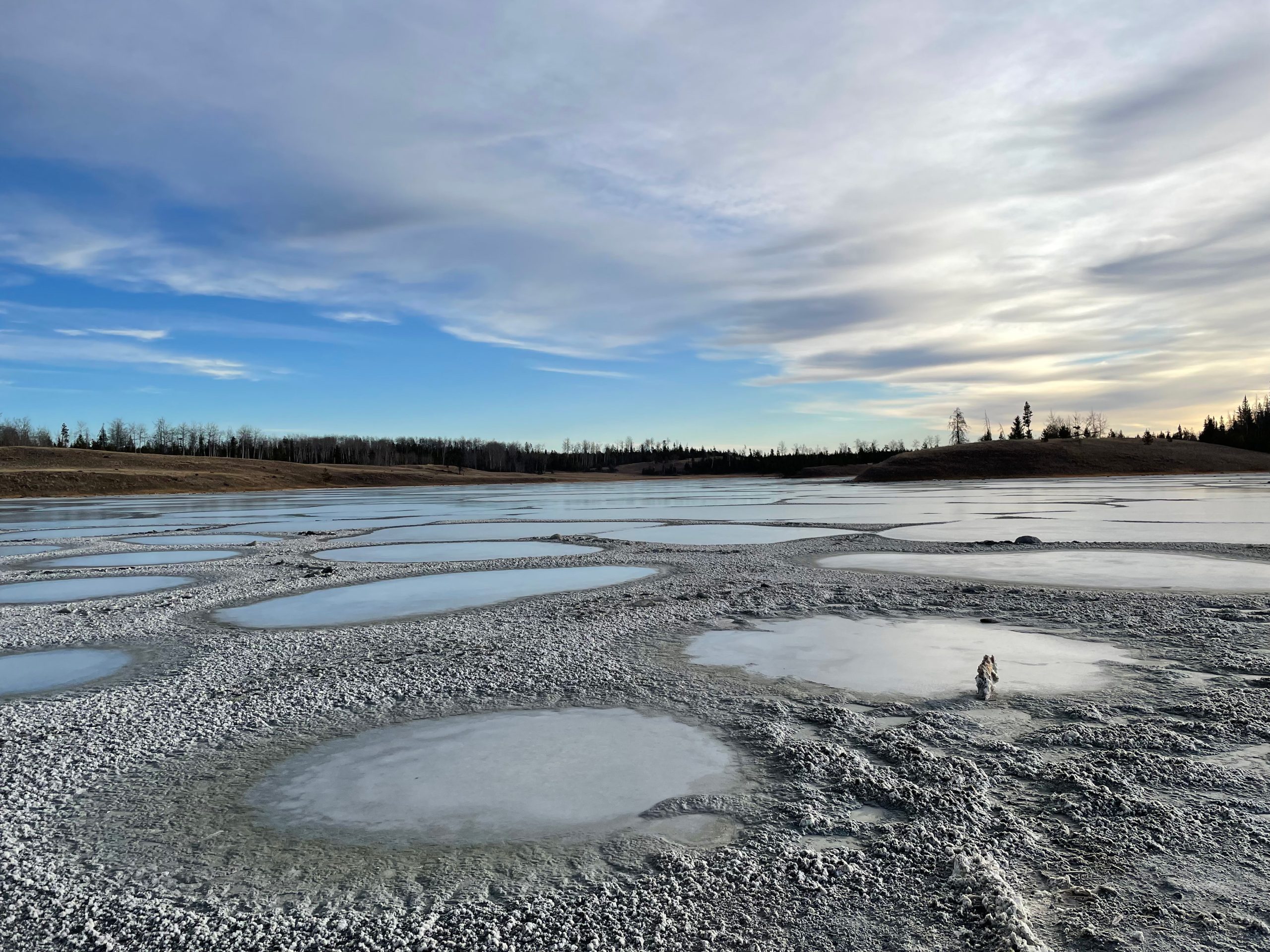
    Last Chance Lake in British Columbia
    Last Chance Lake in British Columbia, Canada is a modern analog for soda lakes that may have supported the emergence of cells on the early Earth. Credit: Zachary R. Cohen

    A study suggests that soda lakes, characterized by high levels of dissolved sodium and carbonate, might have provided the right conditions for the first cells. These early cells may have been composed of RNA inside lipid membranes.

    But RNA function requires divalent cations such as Mg2+, which disrupt primitive membranes made of fatty acids. The question arises whether the relatively low concentrations of Mg2+ found in soda lakes may have allowed both RNA and membranes to function together.

    Exploring the Viability of Early Life in Soda Lakes

    To explore this possibility, Zachary Cohen and colleagues collected water from Last Chance Lake and Goodenough Lake in Canada after seasonal evaporation. These soda lakes each contained ~1 M Na+ and ~1 mM Mg2+ at pH 10.

    The authors found that spontaneous extension of short RNA primers occurred in lake water at a rate comparable to the rates in standard laboratory conditions. The authors added fatty acids, which could have been available on the early Earth, to the lake water to see if the molecules would assemble into membranes.

    Findings and Implications

    The membranes formed in dilute water that simulates a rainfall event, and the membranes persisted even when surrounded by concentrated lake water from the dry season.

    According to the authors, soda lakes on the early Earth could have supported key features of protocell development, with RNA copying and ribozyme activity taking place in the dry season and vesicle formation occurring during the wet season.

    Reference: “Natural soda lakes provide compatible conditions for RNA and membrane function that could have enabled the origin of life” by Zachary R Cohen, Dian Ding, Lijun Zhou, Saurja DasGupta, Sebastian Haas, Kimberly P Sinclair, Zoe R Todd, Roy A Black, Jack W Szostak and David C Catling, 19 March 2024, PNAS Nexus.
    DOI: 10.1093/pnasnexus/pgae084

    Never miss a breakthrough: Join the SciTechDaily newsletter.
    Follow us on Google and Google News.

    Astrobiology Biochemistry Cells Evolution Popular
    Share. Facebook Twitter Pinterest LinkedIn Email Reddit

    Related Articles

    Memory Without a Brain: How a Single Cell Slime Mold Makes Smart Decisions

    Stromatolites – Fossils of Earliest Life on Earth – May Owe Their Very Existence to Viruses

    A Surprisingly Simple Biochemistry Rule Drives the Evolution of Useless Complexity

    Alien Microorganism Research Shows Humans and Other Mammals Could Struggle to Fight Space Germs

    Snake-Like Venom Glands Discovered Along the Teeth of Amphibians

    Rutgers Scientists Have Discovered the Origins of the Building Blocks of Life

    Breakthrough in Understanding Evolution – Mitochondrial Division Conserved Across Species

    Experiment Creates an Essential Component of Life – Finds Deep Sea Vents Had Ideal Conditions for Origin of Life

    Cost-Effective 3-D RNA Modeling Technique

    Leave A Reply Cancel Reply

    • Facebook
    • Twitter
    • Pinterest
    • YouTube

    Don't Miss a Discovery

    Subscribe for the Latest in Science & Tech!

    Trending News

    After 50 Years, Astronomers Finally Found What the Milky Way’s Black Hole Was Hiding

    The Most Powerful Drug of All Isn’t Found in a Pill Bottle

    Scientists Capture Immune Cells Eating Live Cancer Cells for the First Time

    Why Older Adults Need To Pay Closer Attention to Vitamin B12

    Scientists Say a Daily Probiotic May Help Fight Depression in Older Adults

    This Deadly Disease Was Wiping Out Humans 5,500 Years Ago

    Beyond DNA: Scientists Discover Inheritance That Breaks the Rules of Genetics

    Scientists Just Discovered the Eye Defies a Long-Held Rule of Vision

    Follow SciTechDaily
    • Facebook
    • Twitter
    • YouTube
    • Pinterest
    • Newsletter
    • RSS
    SciTech News
    • Biology News
    • Chemistry News
    • Earth News
    • Health News
    • Physics News
    • Science News
    • Space News
    • Technology News
    Recent Posts
    • A Plastic Motor Just Defied a Century of Engineering Assumptions
    • Interstellar Visitor 3I/ATLAS Is Bursting With an Unexpected Chemical
    • Scientists Just Found All 5 Genetic “Letters” of DNA and RNA on an Asteroid
    • After Decades of Mystery, Researchers Locate a Missing Page of the Archimedes Palimpsest
    • The 4,000-Year-Old City That Defied History’s Rules on Wealth and Power
    Copyright © 1998 - 2026 SciTechDaily. All Rights Reserved.
    • Science News
    • About
    • Contact
    • Editorial Board
    • Privacy Policy
    • Terms of Use

    Type above and press Enter to search. Press Esc to cancel.