

Close Menu
    Facebook X (Twitter) Instagram
    SciTechDaily
    • Biology
    • Chemistry
    • Earth
    • Health
    • Physics
    • Science
    • Space
    • Technology
    Facebook X (Twitter) Pinterest YouTube RSS
    SciTechDaily
    Home»Health»Researchers Reverse Autism-Related Behaviors in Mice by Targeting Brain Blood Vessels
    Health

    Researchers Reverse Autism-Related Behaviors in Mice by Targeting Brain Blood Vessels

    By The Ottawa HospitalOctober 7, 2026No Comments4 Mins Read
    Facebook Twitter Pinterest Telegram LinkedIn WhatsApp Email Reddit
    Share
    Facebook Twitter LinkedIn Pinterest Telegram Email Reddit
    Boy Drawing Colored Autism Symbol
    Autism is relatively common, although prevalence estimates vary by country and age group. In the United States, recent CDC surveillance estimates suggest that about 1 in 31 eight-year-old children are identified with autism spectrum disorder, while global estimates generally place prevalence at around 1% of the population. Credit: Shutterstock

    A study in mice suggests that cells lining the brain’s blood vessels may play an important role in autism-related symptoms.

    Researchers have reversed several autism related behavioral symptoms in adult mice by correcting a problem in the blood vessels that supply the brain. The findings point to an unexpected treatment target: endothelial cells, which line blood vessels and help control how quickly blood reaches active regions of the brain.

    The study, published in Neuron, focused on mice carrying a 16p11.2 deletion, a genetic change associated with autism in humans. Activating a receptor called P2Y2 restored blood vessel function, increased blood flow in the brain, and reversed hyperactivity, repetitive movements, and impaired motor learning in the animals.

    A Vascular Problem Inside the Brain

    Autism is a neurodevelopmental condition with a wide range of characteristics and support needs. Some associated behavioral symptoms can make daily life more challenging, and there are currently no drug treatments that broadly address those symptoms.

    The same researchers had previously discovered that brain blood vessels function abnormally in mice with the 16p11.2 deletion. Their work suggested that the problem begins early in development within endothelial cells, which form the inner lining of blood vessels.
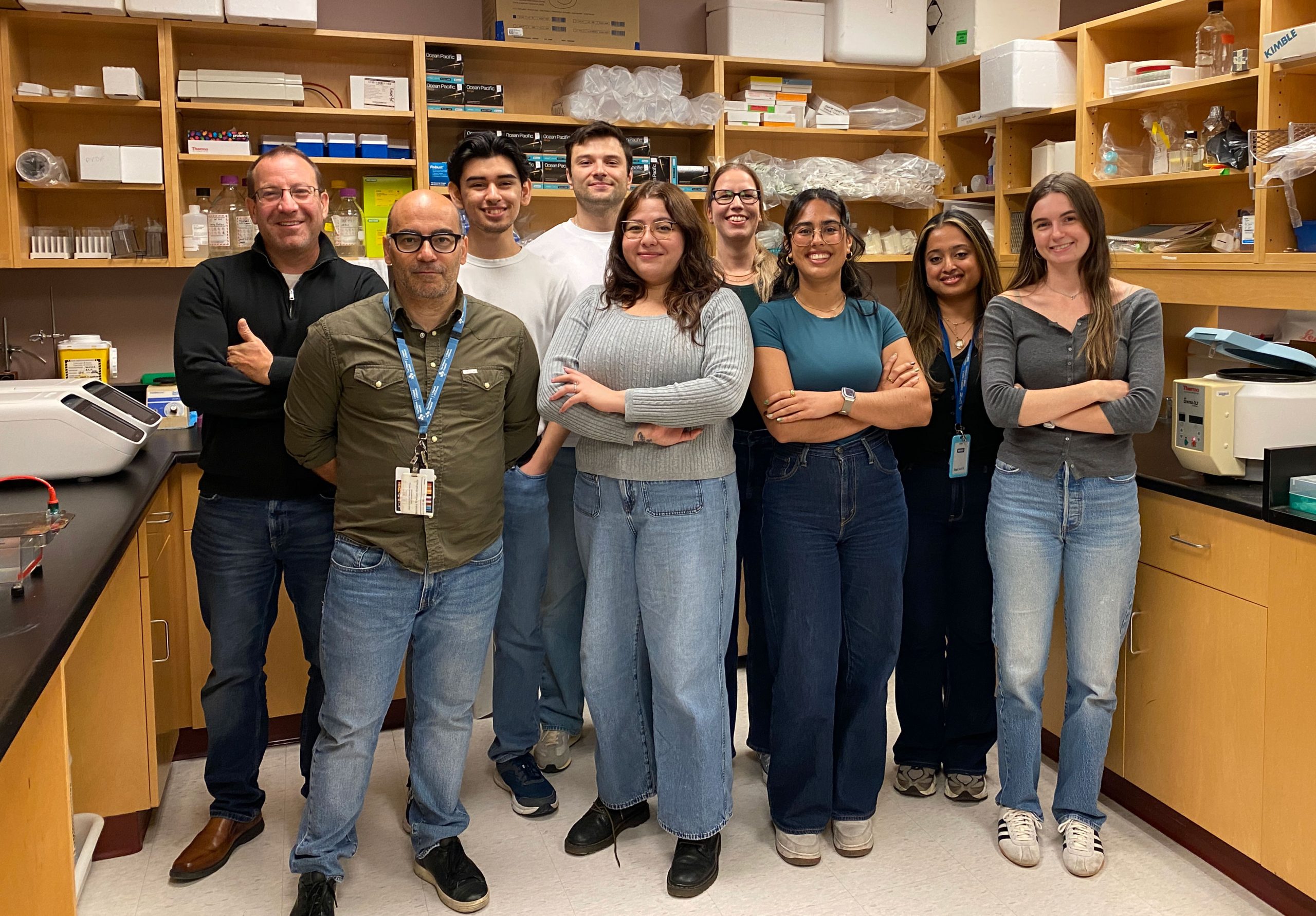
    Dr. Baptiste Lacoste’s Research Team
    Researchers from Dr. Baptiste Lacoste’s research team at The Ottawa Hospital and the University of Ottawa were able to reverse certain behavioural symptoms in a mouse model of autism by fixing a problem in the brain blood vessels. Their findings, published in Neuron, present a promising new treatment target for these symptoms. Credit: The Ottawa Hospital

    These cells help regulate blood delivery to active brain tissue. When neurons become more active, nearby blood vessels normally respond by increasing local blood flow so the tissue receives enough oxygen and nutrients. In the mice studied by the team, that vascular response was too slow.

    A Missing Signal in Blood Vessel Cells

    In the new study, led by former PhD student Dr. Julie Ouellette, the researchers investigated what was preventing the endothelial cells from responding normally.

    They found that the cells had about half the normal level of ATP. Although ATP is best known as the molecule cells use to store and transfer energy, it can also act as a signaling molecule outside cells. In this case, the researchers traced the defect to reduced signaling through P2Y2, a receptor found on the cell surface.

    Stimulating P2Y2 restored endothelial cell function. Blood flow in the brain improved, and several behavioral abnormalities that were already established in adult mice were reversed.

    An Existing Drug Points to a Possible Route Forward

    The researchers achieved the effect using a drug that activates P2Y2. The compound is already approved in Japan and South Korea for the treatment of dry eye syndrome.

    “It’s as if these cells are asleep, and now we can wake them up,” says Dr. Lacoste. “And we may only need to treat them once to wake them up permanently. We will test that further, but it’s an encouraging feature for a future treatment.”

    Testing Whether Earlier Treatment Changes the Outcome

    The team now plans to activate P2Y2 earlier in development to determine whether treatment at a younger age produces different or additional effects.

    “The road from discovery to clinical trials is long, but we’re excited by the possibility that our findings might one day improve the daily lives of people with autism,” said senior author Dr. Baptiste Lacoste, senior scientist at The Ottawa Hospital and professor at the University of Ottawa.

    The researchers have also filed a patent application covering the use of P2Y2 activation in blood vessels to treat autism related symptoms.

    Reference: “Purinergic receptor activation rectifies autism-associated endothelial dysfunction” by Julie Ouellette, Sareen Warsi, Phinea Romero, Purva Khare, Shama Naz, Leya Aubert-Tandon, Moises Freitas-Andrade, Chantal Pileggi, Sozerko Yandiev, Joanna Raman-Nair, James Yee, Nicole Blakeley, Balaji Govindaswamy, Cesar Henrique Comin, Mary-Ellen Harper, Devika Soundara Manickam, Fabrice Dabertrand, Armen Saghatelyan and Baptiste Lacoste, 30 September 2026, Neuron.
    DOI: 10.1016/j.neuron.2026.09.009

    Funding: Canadian Institutes of Health Research

    Never miss a breakthrough: Join the SciTechDaily newsletter.
    Follow us on Google and Google News.

    Autism Spectrum Disorder Brain Genetics Neurology
    Share. Facebook Twitter Pinterest LinkedIn Email Reddit

    Related Articles

    Scientists Uncover Hidden Link Between Cholesterol Flow and Alzheimer’s Disease

    Groundbreaking Study Identifies Four Biologically Distinct Autism Subtypes

    Scientists Discover Hidden Cause of Alzheimer’s Hiding in Plain Sight

    New Study Reveals Genetic Link Between Autism and Epilepsy

    Scientists Discover Genetic Changes Linked to Autism, Schizophrenia

    Stanford Scientists Discover New Class of Neurological Diseases

    8 New Genetic Mutations Linked to Rare Cognitive Disorder Discovered by Mayo Clinic

    New Clues to Autism Mystery: Different Risk Genes With Same Effects on Brain Development

    New Autism Marker Discovered in Kids: Could Lead to New Treatment for Autism and Epilepsy

    Leave A Reply Cancel Reply

    • Facebook
    • Twitter
    • Pinterest
    • YouTube

    Don't Miss a Discovery

    Subscribe for the Latest in Science & Tech!

    Trending News

    Study Finds Natural Dairy Trans Fats Behave Very Differently From Industrial Fats

    Your Voice May Reveal How Fast Your Brain Is Aging

    These Fingernail-Sized Animals Are Moving Astonishing Amounts of California Beach Sand

    NASA’s Perseverance Rover Finds Mars Had a Far More Complicated Water History Than Expected

    Why Do Muscles Weaken With Age? Scientists May Have Found an Important Missing Piece

    Cancer’s “Obesity Paradox” May Have a Surprising Explanation

    Engineers Have Created the World’s First Floating Titanium

    More Than 1 in 3 Adults Had High Blood Pressure – Most Didn’t Know It

    Follow SciTechDaily
    • Facebook
    • Twitter
    • YouTube
    • Pinterest
    • Newsletter
    • RSS
    SciTech News
    • Biology News
    • Chemistry News
    • Earth News
    • Health News
    • Physics News
    • Science News
    • Space News
    • Technology News
    Recent Posts
    • Researchers Reverse Autism-Related Behaviors in Mice by Targeting Brain Blood Vessels
    • Scientists Tested This Tropical Fruit for Diabetes – and Found an Unexpected Blood Pressure Effect
    • Rare Mutation May Shield the Brain From Alzheimer’s Damage
    • A Strange New Material Breaks the Usual Rules of Heat and Stiffness
    • Scientists Detect a Major Shift Beneath the Sun’s Surface
    Copyright © 1998 - 2026 SciTechDaily. All Rights Reserved.
    • Science News
    • About
    • Contact
    • Editorial Board
    • Privacy Policy
    • Terms of Use

    Type above and press Enter to search. Press Esc to cancel.