

Collaborative research is driving the development of future treatments to ease symptoms of autism and epilepsy.
The neuropilin-2 gene encodes a receptor critical for cell-to-cell communication in the brain and plays a vital role in shaping neural circuit development. Neuropilin-2 regulates the migration of inhibitory neurons and the formation and maintenance of synaptic connections in excitatory neurons—both essential processes for normal brain function.
A recent study led by neuroscientist Viji Santhakumar at the University of California, Riverside, in collaboration with researchers from Rutgers University in Newark, New Jersey, provides new insights into how this gene influences behavioral changes linked to autism spectrum disorder and epilepsy. Published in Nature Molecular Psychiatry, the study identifies potential pathways for developing treatments to ease some of the challenging symptoms commonly associated with these co-occurring conditions.
Investigating the Mechanisms of Neuropilin2
Previous research has linked mutations in neuropilin2 to neurological disorders like autism and epilepsy, but the mechanisms involved have remained largely unclear. In the current study, Santhakumar and her collaborators created an “inhibitory neuron selective knockout” mouse model to examine the consequences of deleting the neuropilin2 gene.
They found the absence of neuropilin2 impairs the migration of inhibitory neurons, disrupting the delicate balance between excitatory and inhibitory signals in the brain.
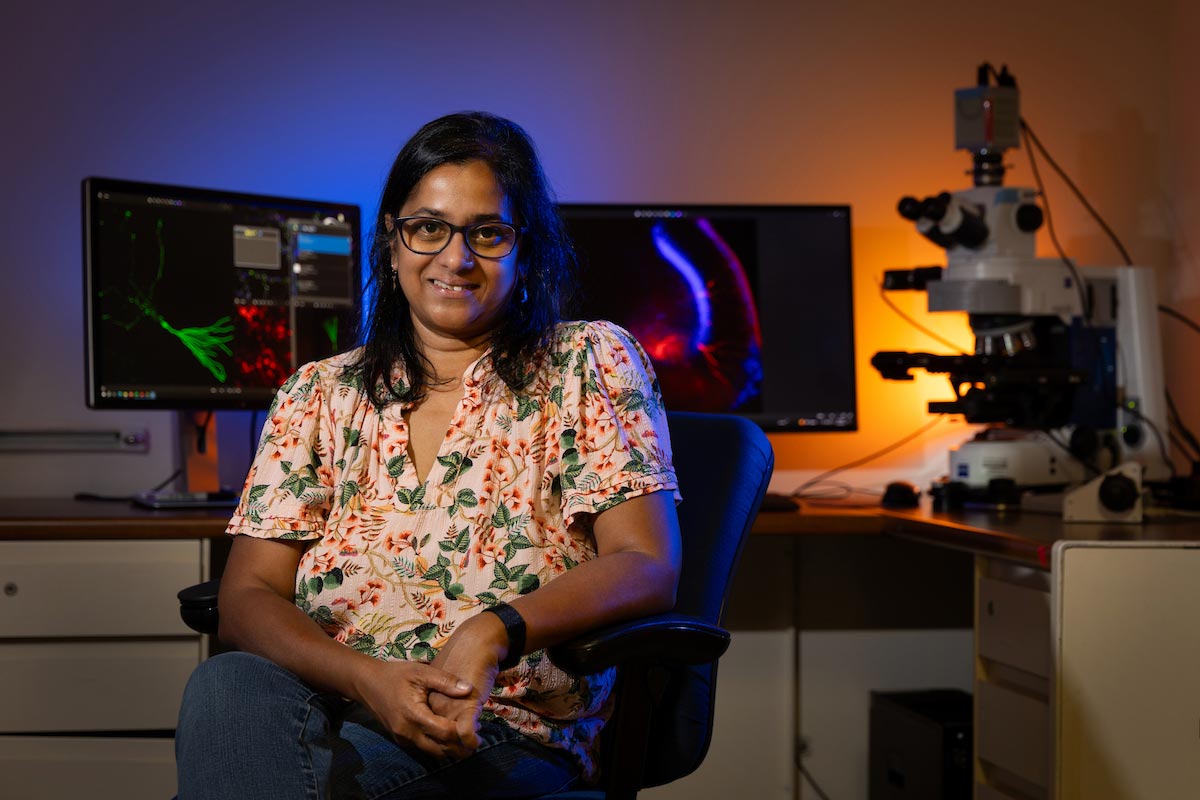
“This imbalance leads to autism-like behaviors and an increased risk of seizures,” said Santhakumar, lead investigator of the study and a professor of molecular, cell, and systems biology. “Our study results highlight how a single gene can influence both the excitatory and inhibitory systems in the brain. We show that disrupting inhibitory circuit development is sufficient to cause autism-related behaviors and epilepsy to co-occur. By better understanding how neuropilin2 works in the formation of the brain’s circuitry, we may be able to develop more targeted therapies for different features of these disorders.”
Disruptions in Inhibitory Neuron Migration
A unique aspect of the research is the focus on the migration of inhibitory neurons, a process in which neuropilin2 plays a crucial role. By selectively deleting neuropilin2 during a key developmental window, the researchers found impairments in inhibitory regulation of the circuit, which led to deficits in behavioral flexibility, social interactions, and an increased risk for seizures.
The study findings suggest that targeting specific phases of neuronal development could open new doors for therapeutic interventions, potentially preventing the onset of these disorders if detected early.
“By isolating the role of inhibitory circuit formation, we may be able to develop therapeutic strategies that could improve outcomes for individuals with autism, particularly those who experience seizures,” Santhakumar said.
Santhakumar came to UCR in 2018 from Rutgers University to expand her research vision of developing a multi-level understanding of brain circuit function in health and disease and uncover the biological processes contributing to developmental brain disorders. The current collaborative study employed cutting-edge techniques in both behavioral and physiological assessments. The team’s research was funded by the Rutgers Brain Health Institute and the New Jersey Council for Autism Spectrum Disorders.
“This study is a step forward in understanding the genetic and circuit underpinnings of autism and epilepsy,” Santhakumar said. “It is crucial we continue to explore the precise mechanisms that govern circuit development and maintenance because this knowledge could ultimately help us develop new interventions for a range of developmental disorders, from autism to attention-deficit/hyperactivity disorder and schizophrenia.”
Reference: “Dysregulation of neuropilin-2 expression in inhibitory neurons impairs hippocampal circuit development and enhances risk for autism-related behaviors and seizures” by Deepak Subramanian, Carol Eisenberg, Andrew Huang, Jiyeon Baek, Haniya Naveed, Samiksha Komatireddy, Michael W. Shiflett, Tracy S. Tran and Vijayalakshmi Santhakumar, 22 November 2024, Molecular Psychiatry.
DOI: 10.1038/s41380-024-02839-4
Never miss a breakthrough: Join the SciTechDaily newsletter.
Follow us on Google and Google News.
4 Comments
My sister died from an epileptic seizure back in 2006. I believe she also had a number of autistic traits but for some reason was never diagnosed. I myself have recently been diagnosed with asd, my 2 children are autistic and 1 also adhd. My mother has autistic traits, and her nephew is also autistic (diagnosed), with cerabral palsy, partially blind and has a shunt in his head. So there is definitely genetic links to this disorder.
My kids dad had epilepsy and my son has asd
My son has epilepsy and his compulsive and perseverative behaviours increase with onset of focal onset tonic clonic seizures. His epileptologist insists on sending him to a behavioural therapist because he doesn’t want anything to do with autism. Please research a way to a CRSPR this gene! We are on a wait list for a new epileptologist (it’s been years).
I’m autistic. MY IQ is 180 which is higher than yours whomever you are. And I founded a company to monetize an invention I patented and will sell when the USPTO registers two of three trademarks – altogether. It’s valuation exceeds the worth of the US South.
SOMEONE SAVE ME FROM THIS HORRIBLE DISORDER!
Author, meet reader: The research consisted of damaging rat brains. You need to state that rather thsn purposefully mislead people into thinking rats are people.
Congratulations to every blessedly NORMAL person who will never do anything even they find interesting in their entire lives.
And author, meet reader: Epilepsy and autism are not correlated IN HUMANS.
This study on rats seems like a step toward human studies. They’ve already been done, and your hypothesis is invalid.
Idiot.