
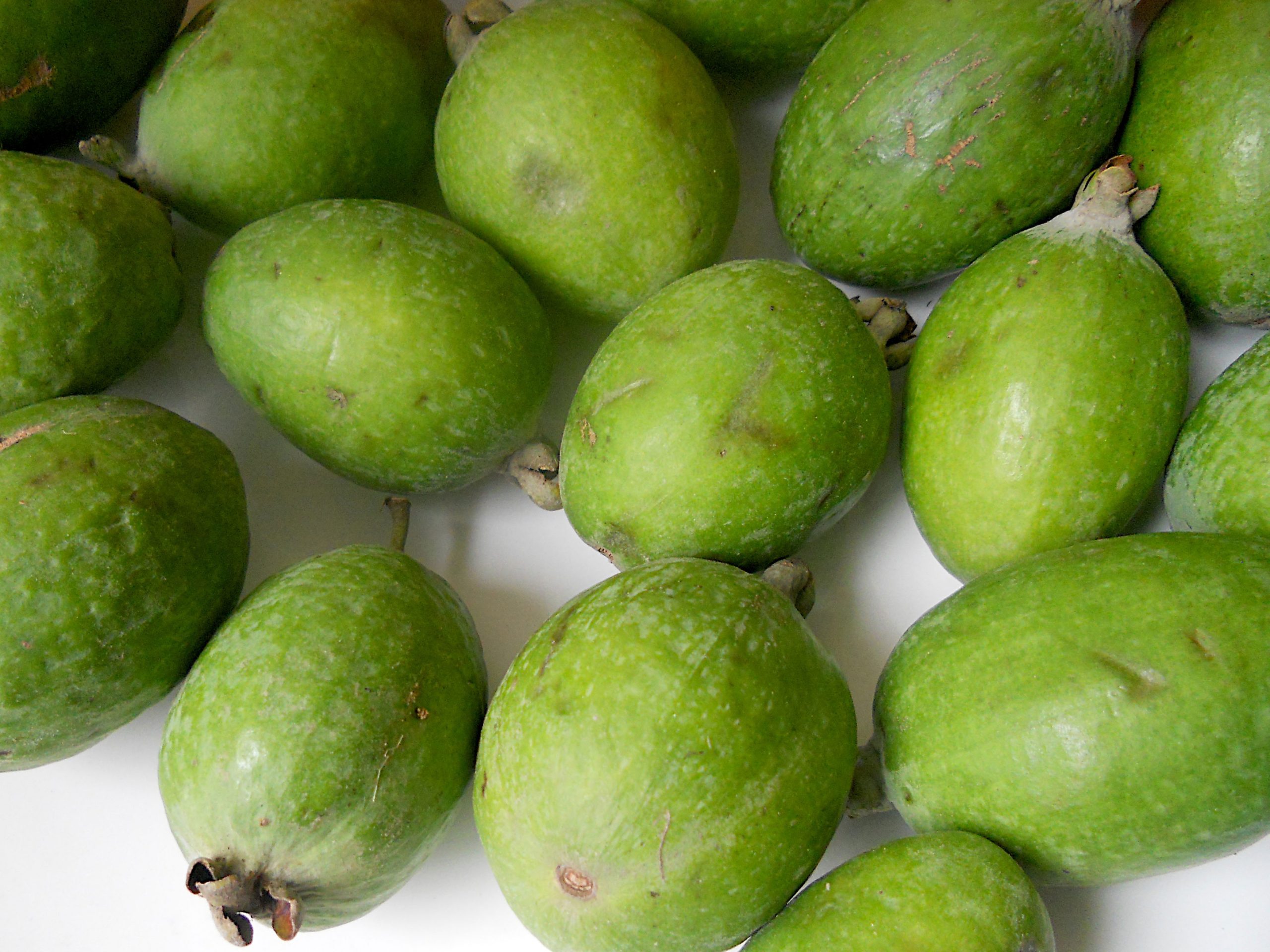
Researchers studying whether feijoa could help prevent type 2 diabetes unexpectedly found a possible benefit for blood pressure.
Each morning for six months, adults with prediabetes stirred about a gram of feijoa powder into water or breakfast while trying to lose weight. Researchers were watching their blood sugar, hoping the tropical fruit might help reduce the risk of type 2 diabetes. Instead, one of the clearest signals appeared somewhere they had not expected: blood pressure.
Researchers at the University of Auckland’s Human Nutrition Unit discovered the effect during FERDINAND, the world’s first long-term clinical trial of feijoa powder supplementation in humans. The six-month study tested whether a whole-fruit feijoa powder could improve weight loss or blood sugar control in people with elevated blood sugar.
“It’s not what we set out to find, but it’s interesting and certainly warrants more research,” said Dr. Ibrahim Mohamed of the University of Auckland.

A six-month test in prediabetes
Ninety-seven adults took part in the trial, receiving either about 1 gram of feijoa powder or a placebo each day. The powder, supplied by Anagenix Ltd. under the product name Feiolix, was made from whole feijoa fruit and could be mixed into a glass of water or eaten with breakfast.
For the first two months, participants followed a free meal replacement program designed to reduce their weight. The next four months shifted to maintaining that loss, giving researchers a six-month window to see whether daily feijoa supplementation produced additional metabolic benefits.
Blood pressure breaks from the pattern
Blood sugar and weight, however, did not respond in the way researchers had hoped. The feijoa powder produced no meaningful improvement in either measure compared with the placebo, offering little evidence that the supplement enhanced weight loss or improved this marker of diabetes risk during the trial.
Systolic blood pressure told a different story. Participants consuming the feijoa powder showed a greater improvement in the top number of their blood pressure readings than those taking the placebo. Systolic pressure reflects the force exerted against artery walls when the heart contracts.
That signal remains preliminary. The blood pressure finding was not consistent across every analysis, and with only 97 participants, the study was too small to establish that feijoa powder itself caused the improvement.
“Further studies in larger cohorts are warranted to fully evaluate the contribution that whole fruit feijoa powder may make to improved blood pressure,” Mohamed and his co-authors wrote in the paper, published in Diabetes, Obesity and Metabolism.
Feijoa carries a complex chemical mix
Feijoas have attracted scientific interest because their fruit contains several biologically active compounds, including polyphenols, flavonoids, vitamin C, and abscisic acid, or ABA. These compounds have antioxidant and anti-inflammatory properties and may also influence metabolic processes, giving researchers several possible reasons to investigate the fruit in controlled human studies.
An earlier short-term clinical study in Iran had already pointed to potential benefits of feijoa for people with type 2 diabetes. FERDINAND extended that line of research over a much longer period, while also testing the fruit in people with prediabetes who were actively losing weight.
Reference: “Evaluating Whole Fruit Feijoa Powder for Type 2 Diabetes Risk Prevention: A Randomised Controlled Trial” by I. A. Mohamed, I. R. Sequeira-Bisson, J. J. Lim, L. D. Plank, R. Murphy, S. D. Poppitt and J. L. Miles-Chan, 1 September 2026, Diabetes, Obesity and Metabolism.
DOI: 10.1111/dom.71270
This work was supported by New Zealand National Science Challenge High Value Nutrition (NSC-HVN) Program, Ministry for Business, Innovation and Employment (MBIE, grant no. 3710040).
Never miss a breakthrough: Join the SciTechDaily newsletter.
Follow us on Google and Google News.