
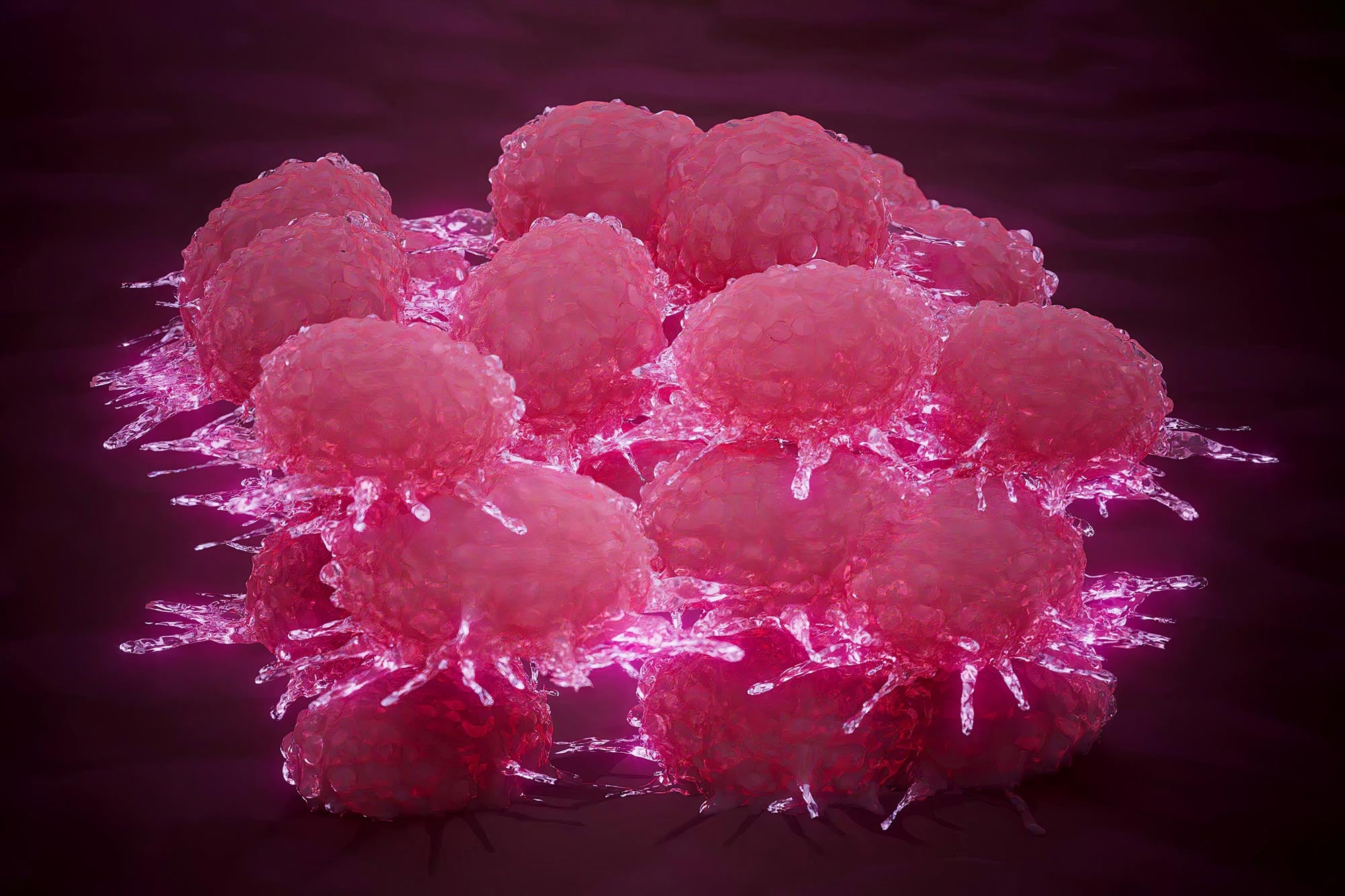
A new approach to engineering immune cells has shown remarkable success against a deadly childhood brain cancer in mice.
An experimental immune cell therapy has completely eliminated an aggressive childhood brain cancer in mice, succeeding where conventional treatments have struggled. Developed by scientists at the University of California, San Francisco (UCSF), the approach uses genetically engineered CAR-T cells that activate their cancer-fighting receptors only after entering the brain.
The treatment, called B-SYNC, cleared tumors in every mouse tested across two models of diffuse midline glioma (DMG). It also provided lasting protection, with treated mice rejecting a second introduction of cancer cells nearly seven weeks later. Researchers are now preparing for human clinical trials that could begin as early as April 2027.
Targeting One of the Deadliest Childhood Brain Cancers
DMG is particularly difficult to treat because it infiltrates healthy brain tissue, often growing within the brainstem. This region regulates essential functions such as breathing, heart rate, and swallowing, making surgical removal extremely dangerous or impossible. Children diagnosed with the disease almost always die within a year.
CAR-T therapy offers a different strategy. It involves modifying immune T cells to recognize specific proteins on cancer cells and attack them. Although this approach has transformed treatment for certain blood cancers, conventional CAR-T therapies have not successfully controlled brain tumors such as DMG.
“It’s been a struggle to make CAR-T cells that overcome DMG without causing unacceptable side effects,” said Hideho Okada, MD, PhD, a UCSF professor of Neurological Surgery and co-corresponding author of the study, published October 28 in Science Translational Medicine. “By limiting B-SYNC’s CAR expression to when and where it matters — in the brain — we saw consistent, total shutdown of DMG tumors in the lab.”
Engineering Immune Cells That Activate Inside the Brain
B-SYNC uses a molecular switch that responds to brevican, a protein widely distributed throughout the brain. The researchers equipped T cells with a synthetic sensor called synNotch that detects brevican and triggers the production of cancer-targeting chimeric antigen receptors (CARs).
Once activated, these receptors allow the T cells to attack cells carrying either of two proteins, EphA2 or IL13Rα2, which are found on many brain tumor cells. Because brevican controls when the receptors are produced, the therapy is designed to restrict its tumor-targeting activity to the brain rather than allowing the engineered receptors to remain active throughout the body.
The technology builds on an earlier UCSF treatment called E-SYNC, developed by Okada and Wendell Lim, PhD, a professor of Cellular and Molecular Pharmacology. Announced in 2021, E-SYNC used synNotch to recognize EGFRvIII, a mutant protein associated with glioblastoma, before activating receptors targeting EphA2 and IL13Rα2. However, only about 20% of glioblastoma patients have tumors carrying EGFRvIII, and cancer cells can lose this marker as treatment eliminates those that express it.
Replacing EGFRvIII with brevican gave the researchers a more broadly available activation signal within the brain. Since DMG cells also frequently express EphA2 and IL13Rα2, the redesigned system could potentially target this childhood cancer without depending on a mutation present in only a subset of tumors.
Tumors Disappear in Mouse Experiments
To investigate the treatment, UCSF postdoctoral researcher Senthilnath Lakshmanachetty, PhD, administered B-SYNC CAR-T cells intravenously (IV) to mice implanted with human DMG cells. Some of the engineered cells entered the brain, activated their receptors, and attacked the tumors.
Tests showed that B-SYNC cells circulating elsewhere, including in the blood and spleen, did not produce the cancer-targeting receptors. This confirmed that their activation was restricted to the intended tissue, “just as we designed it,” Lakshmanachetty said.
The researchers next delivered the cells directly into the brain’s fluid-filled ventricles through an intracerebroventricular (ICV) injection. This method produced stronger results, completely clearing tumors in every treated mouse across two human DMG models. Conventional CAR-T cells, tested for comparison, again failed to control the cancer.
Engineered T Cells Provide Lasting Protection
The scientists also investigated whether the modified immune cells could remain functional after the original tumors disappeared. Nearly seven weeks after treatment, they introduced another round of DMG cells into the mice. Every animal previously treated with B-SYNC rejected the new cancer cells.
One possible explanation involves T cell exhaustion, a condition in which prolonged stimulation gradually weakens the ability of immune cells to function. By restricting CAR production to the brain, B-SYNC may prevent the cells from becoming exhausted before reaching their targets. The researchers have not yet established whether this mechanism accounts for the treatment’s improved performance.
“We didn’t expect B-SYNC CAR-T cells to necessarily persist,” Lakshmanachetty said. “But they are still patrolling for cancer over 70 days out — and they’re still very functional.”
Preparing to Test the Therapy in Patients
Following these laboratory results, the UCSF team is working with clinical oncologists to bring B-SYNC into human trials at UCSF Health. The first study, potentially beginning in April 2027, will evaluate the therapy in children and young adults with brain tumors. Each patient’s own T cells will be genetically modified to produce the B-SYNC treatment.
The trial, led by Marie Jaeger-Krause, MD, and Sabine Mueller, MD, PhD, will investigate different combinations of intravenous and intracerebroventricular delivery. For direct administration into the brain ventricles, patients will receive an implanted shunt connected to a reservoir beneath the scalp, allowing repeated treatments.
Although the mouse experiments demonstrated complete tumor clearance and durable protection, researchers still need to establish whether B-SYNC is safe and effective in humans.
“Diffuse midline glioma is a heartbreaking diagnosis for patients and their families,” said Mueller, director of the UCSF Pediatric Brain Tumor Center and co-founder of the Pediatric Neuro-Oncology Consortium (PNOC). “This preclinical data is very promising. Mice with DMG are being cured, and we are incredibly excited to bring this therapy to the children and young adults we care for. This is exactly the kind of innovative approach they deserve.”
Reference: “Brain-sensing synNotch–CAR T cells enable precise targeting and clearance of diffuse midline glioma in multiple preclinical models” by Senthilnath Lakshmanachetty, Milos S. Simic, Payal B. Watchmaker, Robert Zhu, Takahide Nejo, Maggie Colton Cove, Jeffrey Haegelin, Haoyu Long, Aishi Zhao, Alejandra Bergquist, Wei Yu, Brianna Wong, Marco Gallus, Ricardo Almeida, Joanna P. Phillips, Wendell A. Lim and Hideho Okada, 28 October 2026, Science Translational Medicine.
DOI: 10.1126/scitranslmed.aed9994
This work was supported by the National Institutes of Health (R35NS142982, P50CA097257, P30CA082103); ARPA-H (D24AC00084-00); Botha-Chan Project Fund; Valhalla Foundation; UCSF Cell Design Institute and the German Research Foundation.
Never miss a breakthrough: Join the SciTechDaily newsletter.
Follow us on Google and Google News.