
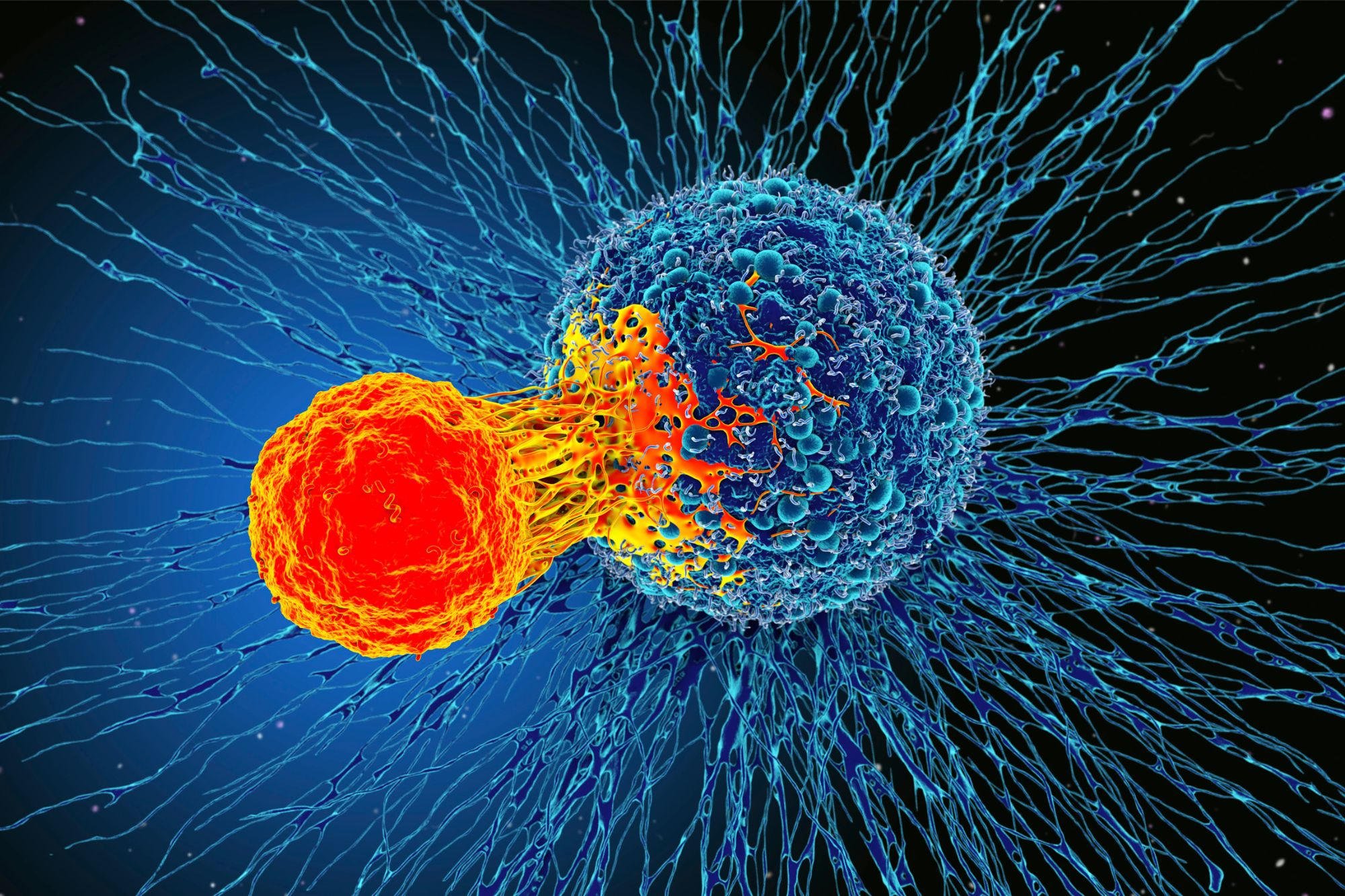
The scientists show that a specially engineered antibody can significantly enhance a group of medications that, despite early excitement, has had difficulty delivering on its initial potential.
For two decades, cancer therapies known as CD40 agonist antibodies have raised hopes while repeatedly falling short. In laboratory animals, these drugs strongly stimulated immune attacks on tumors, but results in human trials were far less encouraging. Patients often saw little benefit and experienced serious side effects, including widespread inflammation, reduced platelet levels, and liver damage, even when the drugs were given at low doses.
In 2018, researchers led by Jeffrey V. Ravetch at Rockefeller University reported a potential way forward. His team showed that a redesigned CD40 agonist antibody could be made more effective while also being delivered in a way that reduced dangerous side effects. These results were based on studies in mice that were genetically engineered to reflect key human immune pathways. With those findings in hand, the researchers moved toward testing the approach in people.
Results from the phase 1 clinical trial of the experimental drug, known as 2141-V11, have now been published in Cancer Cell. Among the 12 patients enrolled, tumors shrank in six individuals, and in two cases the cancer disappeared entirely.
“Seeing these significant shrinkages and even complete remission in such a small subset of patients is quite remarkable,” says first author Juan Osorio, a visiting assistant professor in Ravetch’s Leonard Wagner Laboratory of Molecular Genetics and Immunology and a medical oncologist at Memorial Sloan Kettering Cancer Center.
Importantly, the benefits were not confined to the tumors that received direct injections. Tumors in other parts of the body also became smaller or were eliminated altogether, suggesting that the treatment activated a broader immune response.
“This effect—where you inject locally but see a systemic response—that’s not something seen very often in any clinical treatment,” Ravetch notes. “It’s another very dramatic and unexpected result from our trial.”
Engineering enhancements
CD40 is a cell surface receptor and member of the tumor necrosis factor (TNF) receptor superfamily, proteins that are largely expressed by immune cells. When triggered, CD40 prompts the rest of immune system to spring into action, promoting antitumor immunity and developing tumor-specific T cell responses.
In 2018, Ravetch’s lab—which has been supported in this line of research by Rockefeller’s Therapeutic Development Fund, founded by trustee Julian Robertson and continued by the Black Family Foundation—engineered 2141-V11, a CD40 antibody that binds tightly to human CD40 receptors and is modified to enhance its crosslinking by also engaging a specific Fc receptor. It proved to be 10 times more powerful in its capacity to elicit an antitumor immune response.
They then changed how they administered the drug. The long-time approach had been to give it intravenously. But CD40 receptors are widespread, so too many non-cancerous cells pick it up, leading to the well-known toxic side effects. Instead, they injected the drug directly into tumors.
“When we did that, we saw only mild toxicity,” Ravetch says.
Those findings became the basis of the phase 1 clinical trial described in the current study, which aimed to determine a starting clinical dose of the drug and better understand the mechanisms underlying its effectiveness.
Inducing remission
The trial included 12 patients representing myriad metastatic cancer types: melanoma, renal cell carcinoma, and different types of breast cancer. Of those 12, none suffered the serious side effects seen with other CD40 drugs. Six experienced systemic tumor reduction, of which two had a complete response—meaning their cancer disappeared entirely.
The two patients who experienced complete remission had melanoma and breast cancer, respectively—both notoriously aggressive and recurring.
“The melanoma patient had dozens of metastatic tumors on her leg and foot, and we injected just one tumor up on her thigh,” Ravetch says. “After multiple injections of that one tumor, all the other tumors disappeared. The same thing happened in the patient with metastatic breast cancer, who also had tumors in her skin, liver, and lung. And even though we only injected the skin tumor, we saw all the tumors disappear.”
Tissue samples from the tumor sites revealed the immune activity that the drug stimulated. “We were quite surprised to see that the tumors became full of immune cells—including different types of dendritic cells, T cells, and mature B cells—that formed aggregates resembling something like a lymph node,” Osorio says. “The drug creates an immune microenvironment within the tumor, and essentially replaces the tumor with these tertiary lymphoid structures.”
The presence of tertiary lymphoid structures (TLS) is associated with improved prognosis and response to immunotherapy, Osorio notes.
They also found TLS in the tumors they didn’t inject. “Once the immune system identifies the cancer cells, immune cells migrate to the non-injected tumor sites,” he says.
Improving immunotherapy
The findings have sparked a number of other clinical trials that the Ravetch lab is currently collaborating on with researchers at Memorial Sloan Kettering and Duke University. Now in either phase 1 or phase 2 study, the trials are investigating 2141-V11’s effect on specific cancers, including bladder cancer, prostate cancer, and glioblastoma—all aggressive and hard to treat. Collectively, nearly 200 people are enrolled in the studies.
These studies will help to illuminate why some patients respond to 2141-V11 and others do not—and how to potentially change that.
For example, the two patients in the clinical trial whose cancer disappeared both had a high clonality of T cells—key cancer-cell killers—when they began the study. “This suggests there are some requirements from the immune system in order for this drug to work, and we’re in the process of dissecting these characteristics in more granular detail in these larger studies.”
“As a general rule, only 25 to 30% of patients will respond to immunotherapy, so the biggest challenge in the field is to try to determine which patients will benefit from it. What are the indicators or predictors of response? And how can we convert non-responders into responders?”
Reference: “Fc-optimized CD40 agonistic antibody elicits tertiary lymphoid structure formation and systemic antitumor immunity in metastatic cancer” by Juan C. Osorio, David A. Knorr, Polina Weitzenfeld, Lucas Blanchard, Ning Yao, Maria Baez, Carlo Sevilla, Meghan DiLillo, Jahan Rahman, Ved P. Sharma, Jacqueline Bromberg, Michael A. Postow, Charlotte Ariyan, Mark E. Robson and Jeffrey V. Ravetch, 14 August 2025,Cancer Cell.
DOI: 10.1016/j.ccell.2025.07.013
Never miss a breakthrough: Join the SciTechDaily newsletter.
Follow us on Google and Google News.
15 Comments
My Squamous Cell Carcinoma was cured in 2005 using this experimental medicine by Dr. Leslie Moretti in San Francisco and seemed to take care of a lymph node in my lung. I am still going strong to date here in Fort Lauderdale Florida and am now being cared for by Dr. Azzi of Holy Cross Hospital. I get regular MRI and PetCT exams and extensive blood tests. I did have to get hospitalized
Amazing 👏 stay well!
I have been to several Dr’s. and they keep pawning me off to another. I have history of carcinoid tumors and have symptoms now but cant find masses. Next stop is Duke University…please help me.
[email protected] thank you.
Jay, please take a look if you can be included in clinical trials of Leronlimab.
Hi,In reference to Don Bartones comment,I too have squamous cell carcinoma,is there anywhere in UK forme to go.?, theirs have stopped all treatents,im afraid now.
Thank you and im so glad you were treated so successfully.
Look up Joe Tippens cancer protocol
Very exciting to read about these trials. As a patient of former Doctors at Cornell, I’m not surprised at the excellence of ongoing research. Kudos to all of you.
Ca you help my daughter who has pelvic cancer, and given 1 year to live she is only 47 with 2 boys.
Please can any help be given to her please.
Well, don’t let big pharma know about it. They’ll do everything they can to block it. Find a cure for cancer., they can’t make money off of you.
To everyone with cancer.
I wish you well.
She needs to go to a major cancer treatment center like MD ANDERSON IN Hughston or Memorial Sloan Kettering in NYC. Hopefully one is close to where you live
I’m interested in the process of of medical part. I have stage 4 Colin cancer
MAY GOD BLESS YOU ALL WHO HAVE THIS AWFUL DISEASE,I LOST MY AUNT AND MY DAD TO THIS AWFUL DISEASE,PLEASE HELP THESE PEOPLE WHO ARE STILL GOING THOUGH THIS 🙏 THANK YOU GOD!!🙏🙏🙏💕💕
Yes I am ready for the treatment I am not sure if colorectal cancer is on the CD/40 2141-V11 hit list but I am not joking I was diagnosed with stage three went through chemotherapy and radiation to be told that it didn’t shrink enough and they have to do surgery and that was a year ago. I refused to surgery, hoping of something like this, possibly in the future and now you’re my future.
Look at some videos on you tube from a Dr John Campbell about the potential from ivermectin and fenbendezole. From thst look st other sources with other stories. Nothing to loose just take a look. Make your own mind up. Good luck
Has anyone tried taking Graviola in your drinks and on your foods. It’s all Natural and can be found at all Hispanic grocery stores!