
New research suggests that a breast cancer vaccine developed decades ago may have triggered a lasting immune memory response that can now be significantly boosted by a newly developed antibody.
More than two decades ago, a small group of women with advanced breast cancer took part in a clinical trial testing a vaccine. All of them are still alive today.
Researchers say survival lasting this long is extremely rare in metastatic breast cancer, which is why the group has drawn renewed scientific interest.
Decades later, immune memory endures
Researchers at Duke Health examined the immune systems of the women who participated in the trial, which was led by Herbert Kim Lyerly, M.D., George Barth Geller Distinguished Professor of Immunology at Duke University School of Medicine. Their analysis revealed a striking finding: the women continued to carry powerful immune cells that could still recognize their cancer many years later.
These immune cells expressed a marker known as CD27, which plays a key role in helping the immune system remember past threats and respond to them again. The results, published in Science Immunology, indicate that focusing on CD27 could greatly enhance the performance of cancer vaccines.
“We were stunned to see such durable immune responses so many years later,” said Zachary Hartman, Ph.D., senior author of the study and associate professor in the Departments of Surgery, Integrative Immunology, and Pathology at Duke University School of Medicine. “It made us ask: What if we could boost this response even more?”
Boosting immune memory changes outcomes
To explore that possibility, the researchers tested a stimulatory antibody designed to activate CD27 alongside a vaccine targeting HER2 (a protein on the surface of some cells, including breast cancer) in several mouse models. Nearly 40% of mice that received the combined treatment showed complete tumor regression, compared with just 6% of those given the vaccine on its own.
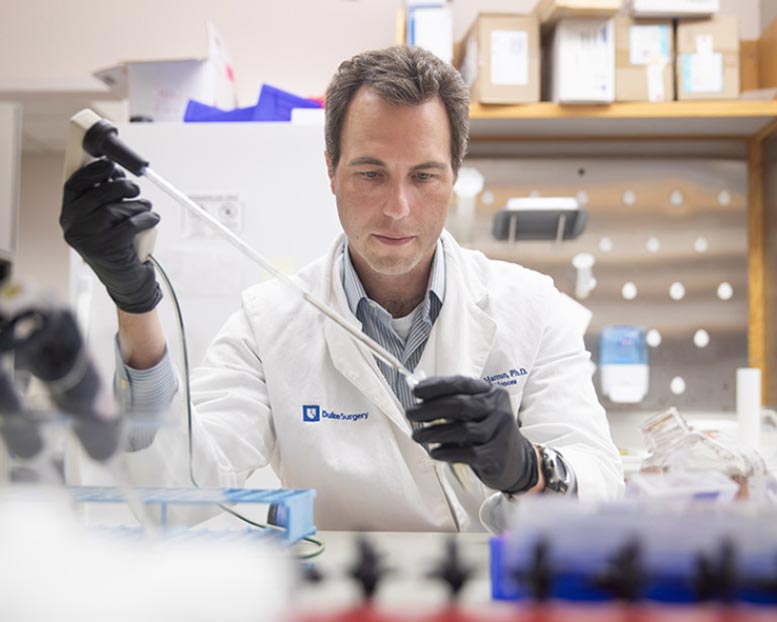
The researchers found that the antibody worked by supercharging a type of immune cell called CD4+ T cells.
Hartman said these “helper” CD4+ cells are often overlooked in cancer research, which tends to focus on CD8+ “killer” T cells. Hartman said the study indicates the CD4+ cells are playing a starring role in this application, driving long-term immune memory and helping other immune cells do their job better.
Helper T cells take center stage
Moreover, the subsequent addition of a different antibody that helps CD8+ T cells further improved tumor rejection rates in mice to nearly 90%.
“This study really shifts our thinking,” Hartman said. “It shows that CD4+ T cells aren’t just supporting actors; they can be powerful cancer fighters in their own right and are possibly essential for truly effective anti-tumor responses.”
The team also found the CD27 antibody only needed to be given once, at the same time as the vaccine, to have a lasting effect. This could make it easier to combine with existing cancer treatments, including immune checkpoint inhibitors and antibody-drug conjugates already used in patients.
Hartman believes this approach could help unlock the full potential of cancer vaccines.
“We’ve known for a long time that vaccines can work against cancer, but they haven’t lived up to the hype,” he said. “This could be a missing piece of the puzzle.”
Reference: “CD27 agonism enhances long-lived CD4 T cell vaccine responses critical for antitumor immunity” by Bin-Jin Hwang, Erika J. Crosby, David T. Severson, Timothy N. Trotter, Jason McBane, Li-Chung Tsao, Tao Wang, Cong-Xiao Liu, Xiao-Yi Yang, Gangjun Lei, Junping Wei, Xingru Ma, Bushanqing Liu, Amy Hobeika, Michael Morse, Jesuchristopher Joseph, Ethan Agritelley, Elishama Kanu, Karrie Comatas, Tibor Keler, Li-Zhen He, Herbert Kim Lyerly and Zachary C. Hartman, 19 December 2025, Science Immunology.
DOI: 10.1126/sciimmunol.adz2294
The study was supported by funding from the National Institutes of Health (117 R01CA238217-01A1/02S1) and the Department of Defense (W81XWH-20-1-034618 and W81XWH-21-2-0031).
Never miss a breakthrough: Join the SciTechDaily newsletter.
Follow us on Google and Google News.
4 Comments
Why was the vaccine dropped for 20 years? Or has it been used, but other trials had different results?
Why are there few if any studies on manipulating cancer metabolic pathways ie ketosis to starve the cancer. Thought to be immortal with uncontrollable cell division and mechanisms to inhibit apoptosis, why can’t cancer itself and metastasis be inhibited by metabolic starvation ie ketosis? Dr. Seyfried of Boston University has advocated this for years. Cancer like all living organisms can be starved to death without killing the patient.
May I join the study?
Has any of the original participants donated blood over the last 20 years ? Can a vaccine that becomes a permanent presence in the body be passed thru donation ?