
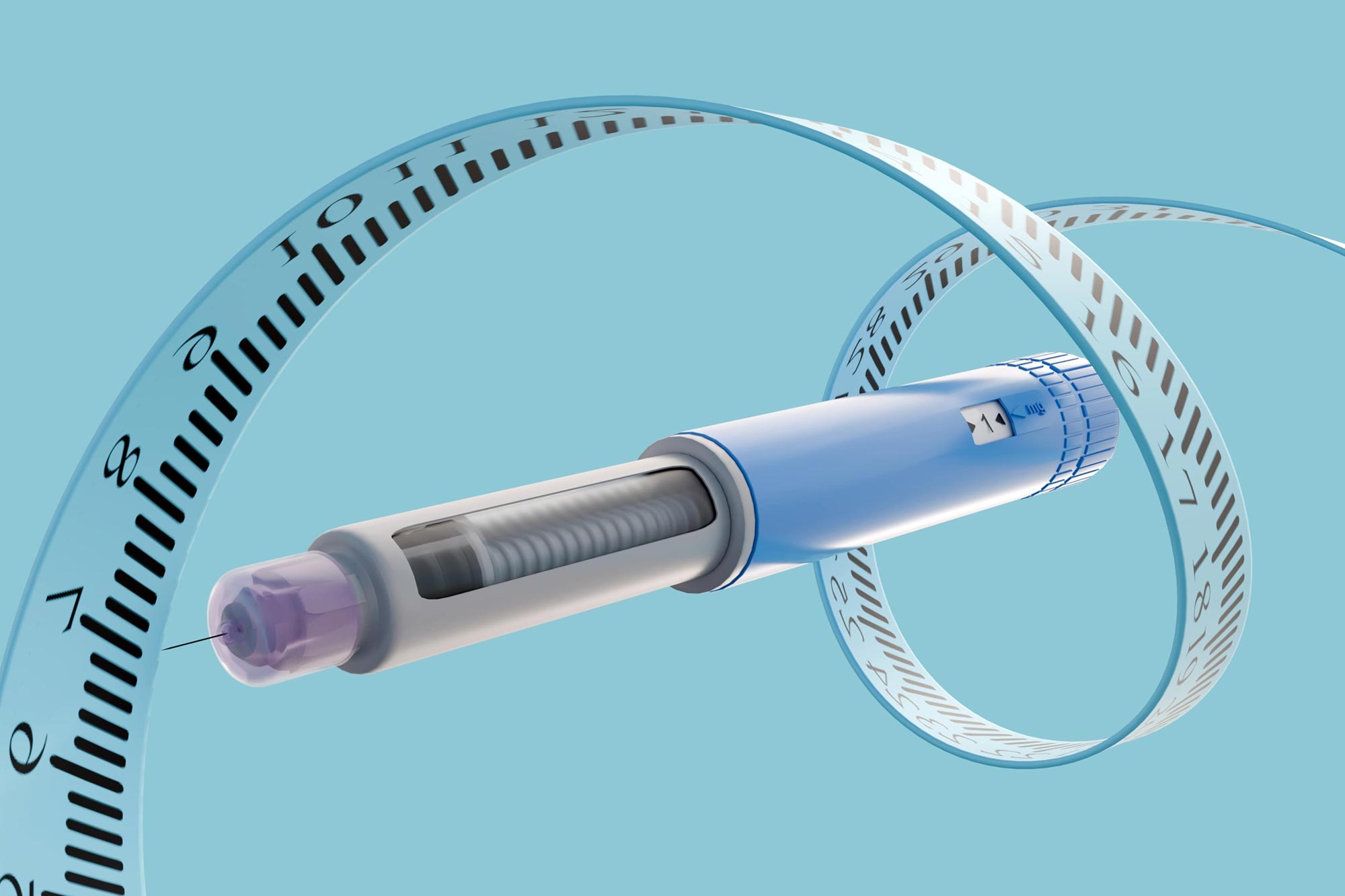
New research indicates that maintaining meaningful weight loss after starting GLP-1-based therapies could play an important role in reducing the risk of multiple obesity-related diseases.
Popular weight loss drugs such as semaglutide (Ozempic, Wegovy, and Rybelsus) and tirzepatide (Mounjaro and Zepbound) may do more than help people lose weight. New research suggests the amount of weight patients lose after starting these medications could strongly influence their future risk of serious obesity-related diseases.
The findings, presented at the European Congress on Obesity (ECO 2026) in Istanbul, Turkey, come from a large real-world analysis led by Professor John Wilding of the University of Liverpool in the UK.
Researchers found that patients who achieved the greatest reductions in body weight after starting GLP-1-based medications had substantially lower risks of conditions including obstructive sleep apnea, chronic kidney disease, osteoarthritis, and heart failure. By contrast, patients who gained weight after starting treatment generally faced worse outcomes.
The results add to growing evidence that the health benefits of GLP-1 drugs extend beyond the number on a scale. Scientists increasingly believe that sustained weight reduction can improve metabolic health across multiple organ systems, including the heart, kidneys, joints, and airways.
In clinical trials, medications such as semaglutide, liraglutide, and tirzepatide consistently produce significant weight loss. But outside controlled studies, long-term treatment can be difficult to maintain because of cost, side effects, medication shortages, or limited insurance coverage.
Researchers Analyzed Real-World Patient Outcomes
The team used Optum Market Clarity, a US electronic health record and insurance claims database, to analyze patients who started liraglutide, semaglutide, or tirzepatide between January 2021 and June 2024. They tracked body mass index (BMI) changes during the first year after treatment began and compared them with later health outcomes through June 2025.
First-year BMI change was measured using the difference between baseline BMI and the average BMI recorded between 275 and 455 days after treatment started. Researchers then evaluated how BMI changes related to the risk of developing osteoarthritis, chronic kidney disease (CKD), obstructive sleep apnea (OSA), and heart failure. Patients who developed one of these conditions before follow-up BMI measurements were excluded.
The study included 67,841 patients taking semaglutide (75.6%), 15,661 taking tirzepatide (17.5%), and 6,216 taking liraglutide (6.9%). At the start of treatment, the average age was 57.5 years, the mean BMI was 34.7 kg/m2, and 61% had type 2 diabetes.
Weight Loss Varied Widely Among Patients
About half of all participants (50.1%) stopped GLP-1-based treatment within one year, defined as a gap of at least 60 days without medication. Researchers analyzed outcomes across the entire group regardless of whether patients stayed on therapy.
During the first year after treatment began, 27.0% of patients reduced their BMI by less than 5%, 22.4% lost between 5% and less than 10%, 14.1% lost between 10% and less than 15%, and 15.8% reduced BMI by at least 15%. Meanwhile, 20.8% experienced an increase in BMI.
Over the following average follow-up period of 11 months, incidence rates per 1,000 person-years were 21.4 for osteoarthritis, 21.1 for CKD, 20.3 for OSA, and 3.9 for heart failure.
Greater Weight Loss Was Linked to Lower Risk
Compared with patients whose BMI fell by 0% to less than 5%, those who reduced their BMI by at least 15% had a 37% lower risk of osteoarthritis, a 30% lower risk of CKD, a 69% lower risk of OSA, and a 32% lower risk of heart failure. All results were statistically significant except the heart failure finding.
Patients whose BMI increased had worse outcomes than those with a BMI reduction of 0% to less than 5%. They had a 10% higher risk of osteoarthritis, a 14% higher risk of CKD, a 22% higher risk of OSA, and a 69% higher risk of heart failure. The increases for OSA and heart failure were statistically significant, while the osteoarthritis result was not statistically significant and the CKD result was borderline significant.
The authors conclude: “In this real-world study where half of patients discontinued GLP-1-based treatment within a year after initiation, not losing weight was associated with worse clinical outcomes while larger reductions were associated with decreased risks. These findings highlight the potential clinical importance of achieving and maintaining weight loss after GLP-1-based treatment initiation.”
Meeting: European Congress on Obesity 2026 (ECO2026)
Never miss a breakthrough: Join the SciTechDaily newsletter.
Follow us on Google and Google News.
6 Comments
Reduced risk from weight loss is not surprising. The question is whether there is more improvement than that amount of weight loss usually produces.
Do higher dose makyou lose weight faster
You don’t want to go too fast with this medication due to multiple side effects such as stomach problems. Follow your doctor’s instructions. They know what the risks are and you should be able to ask them what the recommended dosage is for you and why you need to go at the pace they recommend.
Weight loss lowers those risks not glp 1. Most people gain 50 to 100lbs after stopping the drug do to NOT CHANGING HABITS. It’s the same as claiming bankruptcy or consolidation for debt. If you dont change your behavior it’ll keep getting worse
I lost 20% over a year and then reduced my dose from 7 to 2.5 and I’m losing a little. The biggest gain for me is my prostate shrunk a little and so did the symptoms. They should look into that. I’m currently using Wegovy because I can’t get Zep on my crappy Navitus Insurance I have to be type 2 Diabetic to get it. I buy the Wegovy out of pocket.
Oh yea, Also, Semiglutide makes me nauseous and Zep does not. If I stimulate my vagus nerve by sneezing or tapping the nausea goes away.