
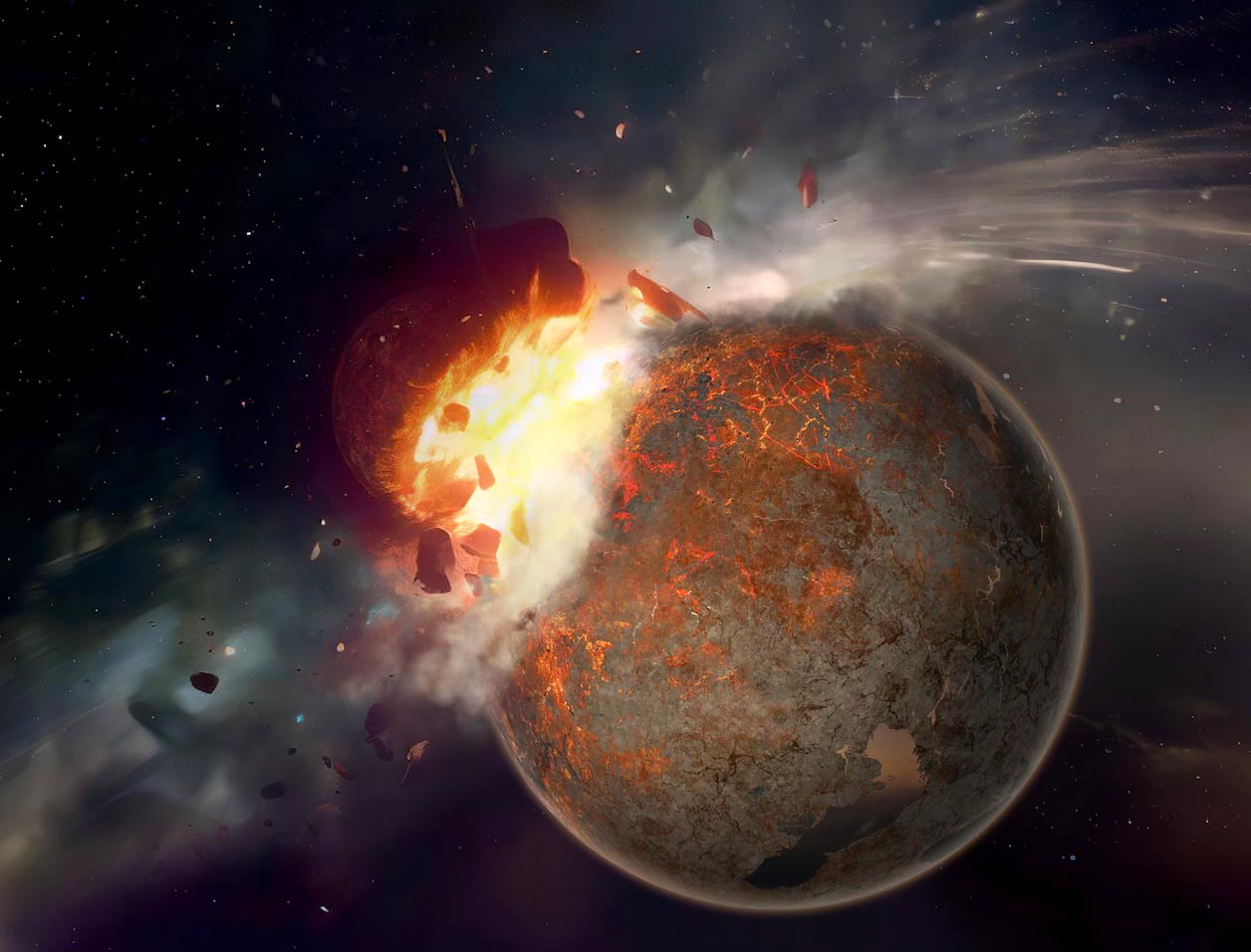
A provocative new study suggests Dante’s Inferno may have secretly doubled as a giant cosmic impact scenario centuries before modern science understood asteroids.
Dante Alighieri’s Inferno has long been celebrated as one of the greatest works of literature ever written. But according to new research, the famous epic poem may also contain an astonishingly early vision of asteroid impact science. A new analysis argues that Dante effectively imagined a massive planetary collision more than 500 years before modern meteoritics emerged as a scientific field.
The study connects Dante’s descriptions of Hell, Satan’s fall, and Earth’s structure to concepts now associated with giant impact craters, shockwaves, and planetary deformation.
Dante’s Satan as a Cosmic Impactor
For centuries, Satan’s descent in the Divine Comedy has mainly been interpreted as a symbolic spiritual event. Timothy Burbery of Marshall University, however, believes Dante may have envisioned something far more physical.
Using ideas from modern impact physics, Burbery proposes that Dante portrayed Satan as a high-speed impactor striking the Southern Hemisphere and driving toward the center of Earth. In this interpretation, the violent collision displaced huge amounts of material, forcing the Northern Hemisphere upward and forming Hell as a vast crater stretching down toward the planet’s core. The displaced earth behind Satan’s path then rises to create Mount Purgatory as a central peak.
A Chicxulub-Scale Planetary Collision
The research compares the scale of this imagined event to the Chicxulub (K-Pg) impact that contributed to the extinction of the dinosaurs. Burbery suggests viewing Satan as an elongated asteroid-sized object similar in shape to the interstellar visitor Oumuamua.
Like the asteroid linked to the K-Pg extinction event, this impact is described as powerful enough to penetrate deep into the planet and trigger a global geological transformation. The study also draws comparisons to the Hoba meteorite, a 60-ton meteorite that remained largely intact after impact. In Dante’s vision, Satan functions not merely as a spiritual figure, but as a physical impactor that survives the collision and permanently reshapes Earth itself.
The Circles of Hell and Real Impact Basins
Burbery’s interpretation also reframes the famous nine circles of Hell. Rather than existing solely as symbolic levels of sin, they may resemble the concentric terraced rings found in massive impact basins across the solar system.
Similar structures can be seen on the Moon, Venus, and other planetary bodies shaped by ancient collisions. According to the research, Dante intuitively described features resembling multi-ring crater systems long before scientists understood how they formed.
The study further argues that Dante anticipated ideas related to terminal velocity and crustal penetration, describing the conditions needed for a massive object to reach maximum compression near Earth’s core. Burbery also links these ideas to the unusual non-Euclidean geometry later explored in the Paradiso.
Ancient Literature Meets Planetary Science
Beyond literary interpretation, the research suggests that stories and myths can sometimes preserve observations about natural dangers before science formally explains them. Burbery argues that Dante effectively recognized meteors as real geological forces at a time when Aristotelian beliefs still portrayed the heavens as perfect and unchanging.
By presenting Satan’s fall as a destructive physical event rather than simply a spiritual allegory or visual illusion, Dante may have contributed to a broader shift in Western thinking about celestial objects and their ability to alter Earth.
The study also highlights the value of literary geomythology in discussions about planetary defense. Ancient narratives, Burbery argues, may contain insights into catastrophic natural phenomena that modern science is only beginning to fully understand.
Ultimately, the Divine Comedy can now be viewed not only as a literary masterpiece, but also as a geophysical gedankenexperiment that unexpectedly parallels aspects of modern meteoritics while still differing from contemporary scientific models.
Meeting: EGU General Assembly 2026
Never miss a breakthrough: Join the SciTechDaily newsletter.
Follow us on Google and Google News.
3 Comments
well that was totally unclear. a very confused and ranting diatribe. better luck next time.
Heh, heh. Nice work, Doctor – still chuckling…
Agreed.