
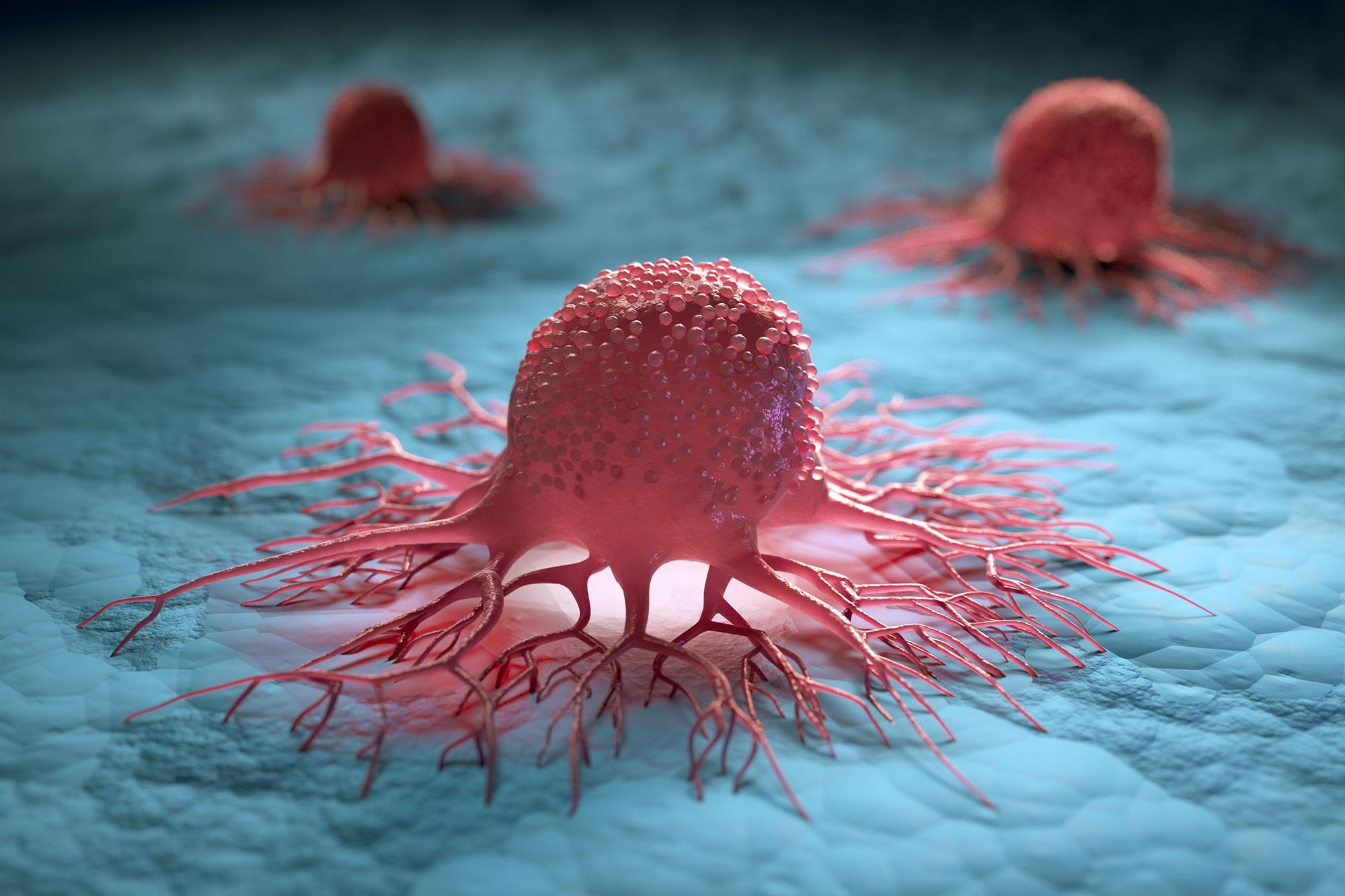
Scientists have uncovered a previously overlooked mechanism that may help melanoma cells become effectively “immortal.”
Cancer cells face a major problem before they can become deadly: They have to figure out how to stop aging.
Scientists have uncovered one of melanoma’s key tricks for solving that problem. Researchers at the University of Pittsburgh School of Medicine report that the skin cancer uses a previously overlooked genetic partnership to keep its cells effectively immortal, allowing tumors to continue dividing long after normal cells would shut down.
The findings, published in Science, help explain why melanoma often develops unusually long telomeres, the protective DNA caps at the ends of chromosomes that normally wear down over time. The study also points to a possible new weakness in cancer cells that future treatments could target.
“We did something that was, in essence, obvious based on previous basic research and connected back to something that is happening in patients,” said Jonathan Alder, Ph.D., assistant professor in the Division of Pulmonary, Allergy and Critical Care Medicine at Pitt’s School of Medicine.

The built-in lifespan limit of human cells
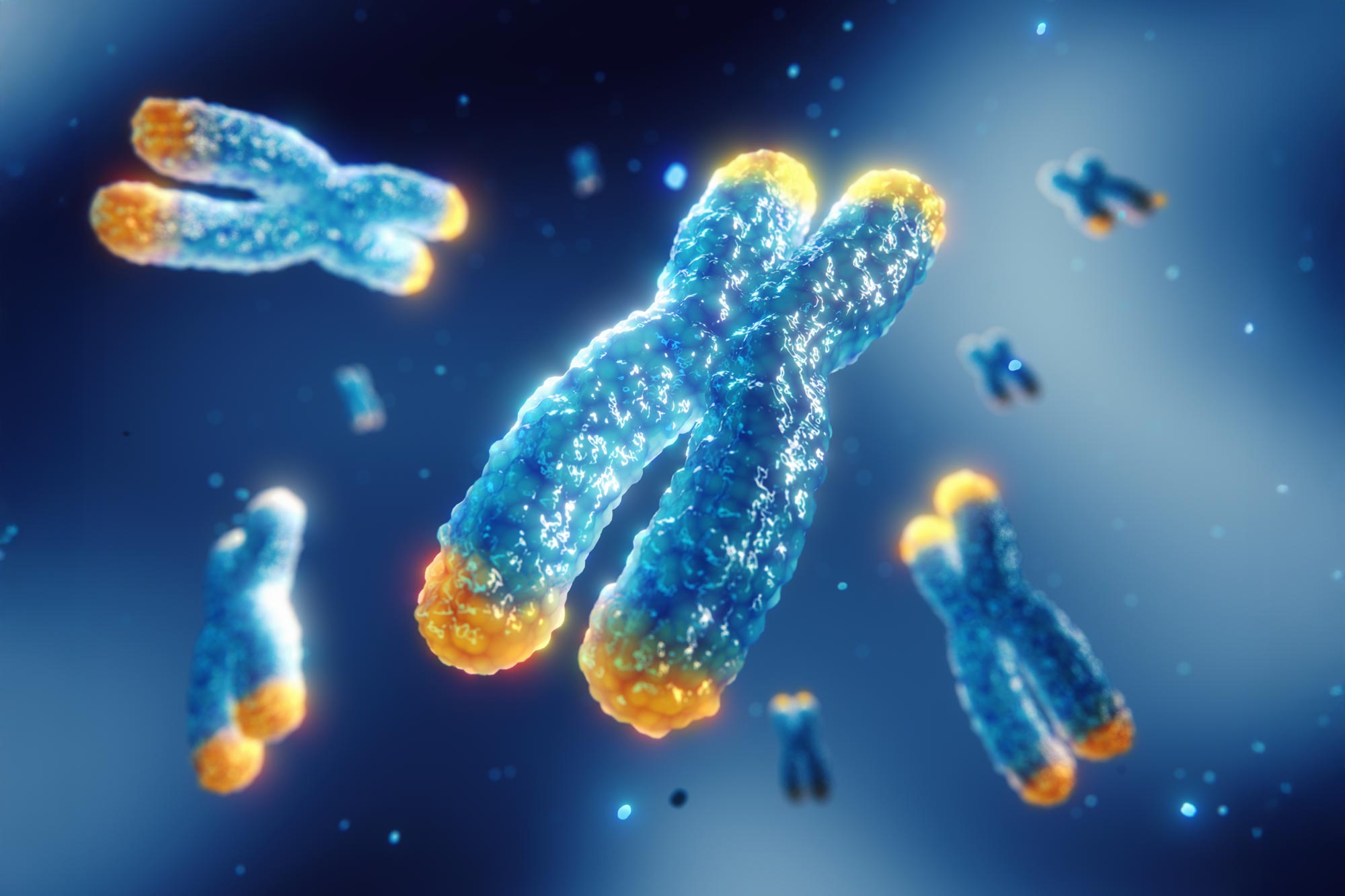
Every time a healthy cell divides, its telomeres become slightly shorter. Scientists often compare telomeres to the plastic tips on shoelaces because they help protect chromosomes from fraying or breaking apart.
Eventually, telomeres shrink to a critical length, triggering a process called replicative senescence. At that point, the cell can no longer divide. This natural limit acts as one of the body’s important defenses against cancer.
Tumors must bypass that barrier to survive.
Many cancers accomplish this by reactivating telomerase, an enzyme that rebuilds telomeres and extends a cell’s lifespan. In melanoma, mutations in the TERT gene, which produces telomerase, are especially common. About 75% of melanoma tumors carry these mutations.
But there was a puzzle researchers could not explain.
Even though TERT mutations increase telomerase activity, they did not fully account for the exceptionally long telomeres seen in melanoma tumors. When scientists recreated those mutations in laboratory cells, the telomeres still did not match what was observed in patients.
That suggested melanoma had another mechanism helping it preserve its chromosomes.
The missing partner hiding in plain sight
The breakthrough came when Pattra Chun-on, M.D., an internist and Ph.D. student in Alder’s lab, focused on another gene called ACD, which produces a telomere-binding protein known as TPP1.
TPP1 is part of the “shelterin” complex, a group of proteins that protects telomeres and helps control access to them. One of TPP1’s jobs is recruiting telomerase to chromosome ends.
While studying melanoma mutation databases, the researchers discovered recurring mutations in the promoter region of the ACD gene. Promoters are stretches of DNA that control how strongly a gene is turned on or off.
The mutations resembled the same type of promoter alterations already known to activate TERT. Both created new docking sites for ETS transcription factors, proteins that boost gene activity.
In effect, melanoma cells had evolved a two-part strategy. One mutation increased telomerase production through TERT, while the other improved the cell’s ability to bring telomerase directly to telomeres through TPP1.
Together, the effects were far stronger than either mutation alone.
When the researchers introduced both mutated genes into cells, telomeres lengthened dramatically, closely matching the unusually long telomeres seen in melanoma tumors.
“Biochemists more than a decade before us showed that TPP1 increases the activity of telomerase in a test tube, but we never knew that this actually happened clinically,” he said.
A discovery driven by persistence
Alder credited much of the breakthrough to Chun-on’s determination.

“The fun part of this story is when Pattra joined my lab,” Alder said. “She contacted me and told me that she was interested in studying cancer. I told her that I study short telomeres and not long telomeres. This went on until I realized that Pattra would never take ‘no’ for an answer.”
Chun-on, who is also part of a Ph.D. program in the Department of Environmental and Occupational Health at Pitt’s School of Public Health, ultimately helped identify the missing factor scientists had been searching for.
Lead author Pattra Chun-on later expanded on the findings in her 2023 Ph.D. dissertation at the University of Pittsburgh, which examined how melanoma cells use mutations in the TPP1 gene to maintain telomeres and bypass cellular aging. Her dissertation explored in greater detail how TPP1 mutations may cooperate with telomerase-related TERT mutations to help drive melanoma immortality.
Why melanoma may depend so heavily on telomeres
Melanoma develops from melanocytes, the pigment-producing cells in skin. These cells are routinely exposed to ultraviolet radiation from sunlight, which causes DNA damage over time.
Researchers believe melanocytes may face particularly intense pressure to maintain chromosome stability as mutations accumulate, making telomere control especially important in melanoma development.
“There’s some special link between melanoma and telomere maintenance,” said Alder. “For a melanocyte to transform into cancer, one of the biggest hurdles is to immortalize itself. Once it can do that, it’s well on its way to cancer.”
The study found that mutations in the TPP1 promoter appear in about 5% of cutaneous melanoma cases and frequently occur alongside TERT mutations instead of replacing them. That pattern suggests the mutations cooperate to help cancer cells overcome the normal limits on cell division.
A potential new target for cancer therapy
The discovery could eventually influence cancer treatment strategies.
Most healthy adult cells keep telomerase activity switched off, while cancer cells often depend on it for survival. By identifying a second component that helps melanoma sustain telomeres, researchers may have uncovered another potential therapeutic target.
Reference: “TPP1 promoter mutations cooperate with TERT promoter mutations to lengthen telomeres in melanoma” by Pattra Chun-on, Angela M. Hinchie, Holly C. Beale, Agustin A . Gil Silva, Elizabeth Rush, Cindy Sander, Carla J. Connelly, Brittani K.N. Seynnaeve, John M. Kirkwood, Olena M. Vaske, Carol W. Greider and Jonathan K. Alder, 10 November 2022, Science.
DOI: 10.1126/science.abq0607
The study was funded by the National Institutes of Health.
Never miss a breakthrough: Join the SciTechDaily newsletter.
Follow us on Google and Google News.
1 Comment
thanks for this