
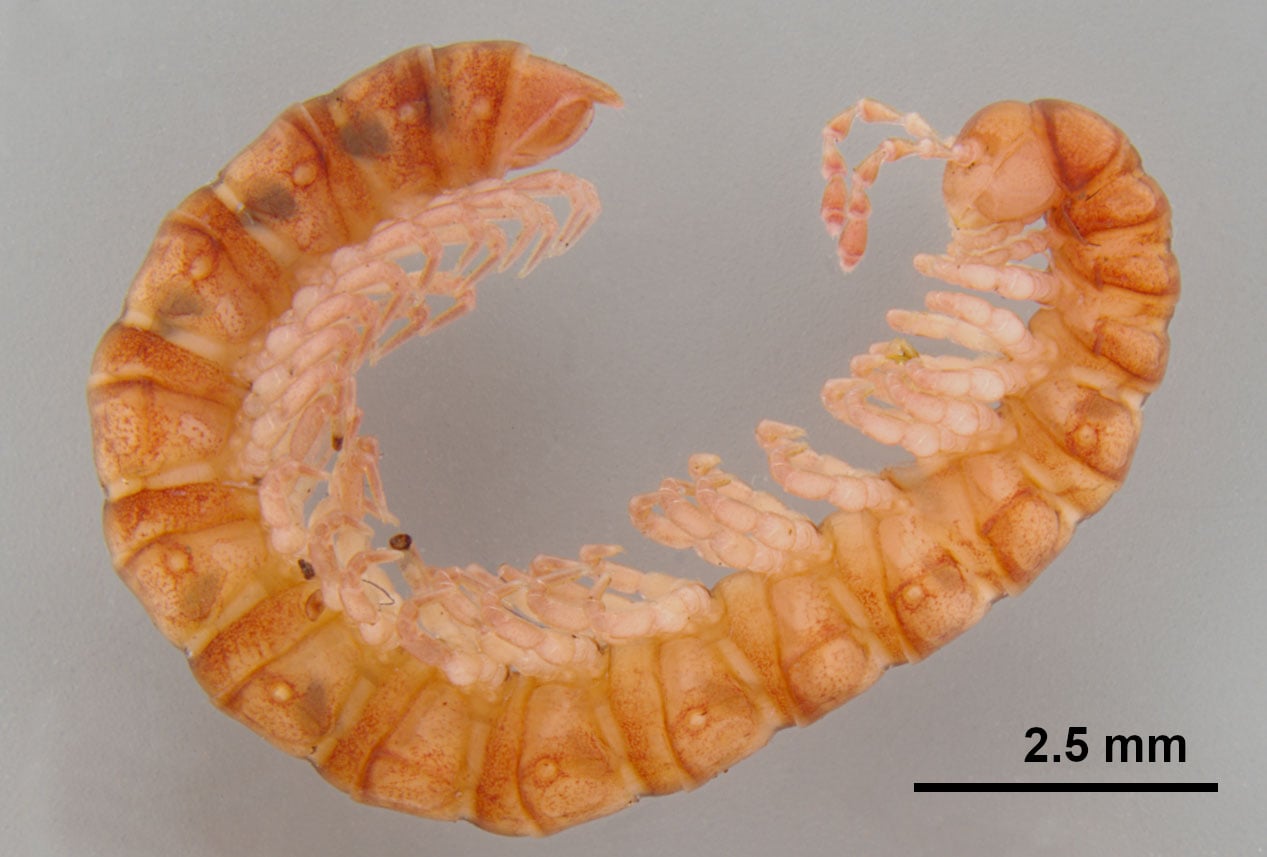
A mysterious millipede first collected nearly 90 years ago has resurfaced in South Australia.
A millipede first collected nearly 90 years ago in South Australia has finally been identified as a new species, challenging assumptions about where its moisture-loving relatives can survive. Named Colobothrix deckeri, the species belongs to the family Dalodesmidae, which typically inhabits damp environments. Yet its original collection site receives just 400 to 500 millimeters (15.7 to 19.7 inches) of annual rainfall, making it the first member of its family recorded from such a dry region of Australia.
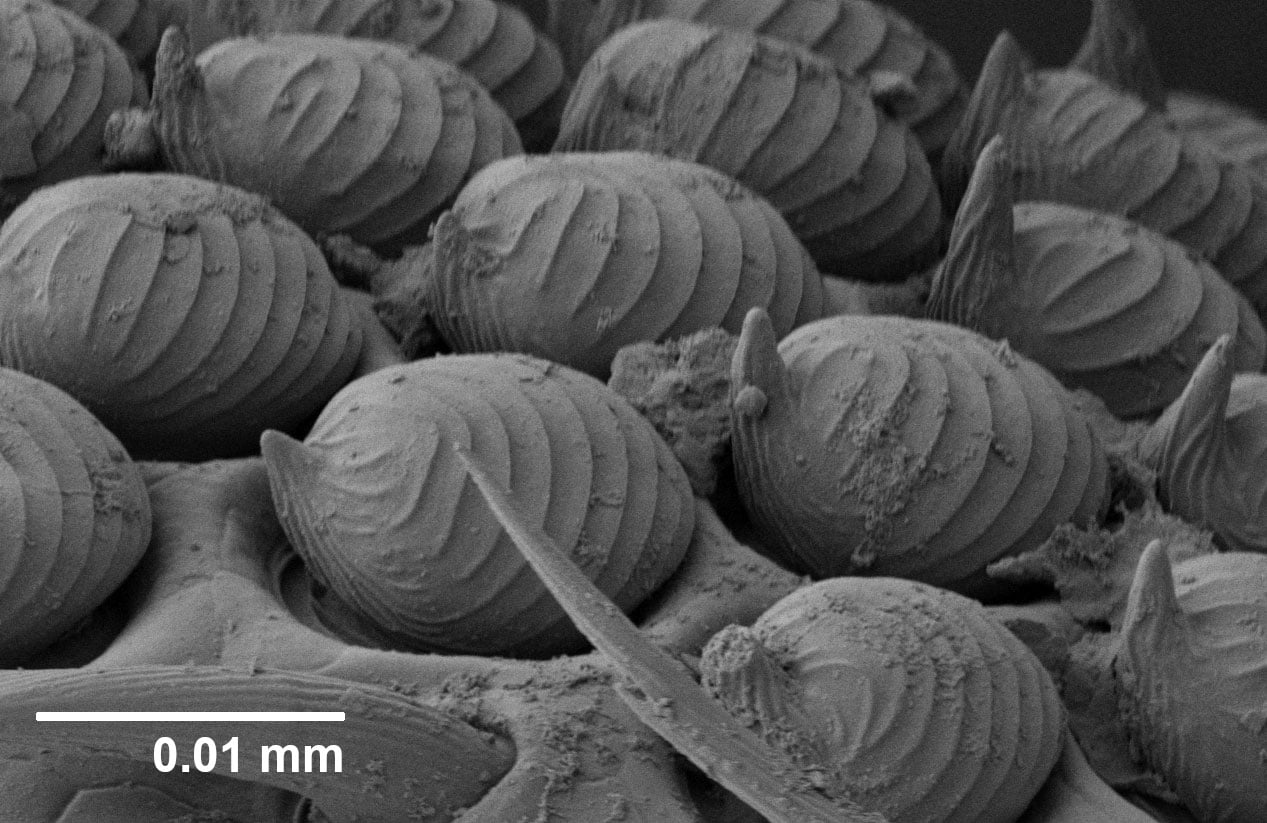
The new species also possesses an unusual microscopic feature. Mature males in Dalodesmidae and certain other millipede families have tiny, ball-shaped structures on their legs called sphaerotrichomes, normally topped by a long, pointed bristle known as a seta. In C. deckeri, that bristle is reduced to a short, blunt rod. This distinctive anatomy inspired the new genus name Colobothrix, meaning “stunted hair.”
A Museum Specimen Overlooked for Decades
The discovery began with a specimen collected in 1936 on South Australia’s lower Yorke Peninsula. It remained unidentified in the South Australian Museum (SAMA) until 2015, when German researcher Peter Decker encountered it while examining borrowed museum specimens for his doctoral research on a different millipede family, Paradoxosomatidae.
Recognizing that the animal belonged to Dalodesmidae, Decker sent photographs of its microscopic features to Australian millipede specialist Robert Mesibov. The specimen provided the first evidence that this family occurred in dry South Australia. Mesibov searched the original collection area in 2016 and 2017, but neither expedition located another specimen. He later named the species in Decker’s honor, publishing the description in the peer-reviewed, open-access journal ZooKeys.
An Unexpected Connection to Kangaroo Island
Unknown to the researchers at the time, additional specimens had already been collected about 50 kilometers (31 miles) south of the original location. In 2010, arachnologists Michael Rix and Danilo Harms were surveying spiders and leaf-litter invertebrates on Kangaroo Island when they discovered a remarkable new assassin spider species in the island’s relatively wet northwestern region. Their collections also included several unidentified millipedes, which were deposited in the Western Australian Museum (WAM).
The island’s devastating 2020 bushfires later destroyed the original collection site, raising fears that the rare assassin spider might be approaching extinction. During a follow-up survey in 2021, arachnologist Jessica Marsh found the spider at additional locations several kilometers (a few miles) away. Her collections of other invertebrates also contained specimens of the unidentified millipede.
A Rediscovery Nearly 90 Years in the Making
In early 2026, Mesibov discovered the Western Australian Museum’s millipede record online and contacted curator Mark Harvey. Close-up photographs supplied by Harvey confirmed that the Kangaroo Island specimens belonged to the same species collected on the Yorke Peninsula in 1936.
Mesibov subsequently visited Kangaroo Island and successfully located living specimens near the earlier collection sites. “Third time lucky!” said Mesibov. “I found the new millipede alive and well this year at relatively wet sites not far from its 2010 and 2021 localities.”
He collected several specimens for the formal species description and future genetic research. The specimens collected in 1936, 2021, and 2026 are now housed at the South Australian Museum.
Could the Millipede Be Hiding Beneath the Limestone?
Although C. deckeri has been confirmed on Kangaroo Island, researchers still do not know whether it survives at its original Yorke Peninsula location. That mainland site receives considerably less rainfall than the species’ known habitats in northwestern Kangaroo Island.
Mesibov suspects that the peninsula’s underlying limestone could provide a possible explanation for how the millipede survives in such a dry environment.
“The 1936 locality is underlain by limestone,” said Mesibov, “and the rock is broken where it is exposed at the ground surface. I wonder if the species survives in small voids in this bedrock, as a relict from wetter periods in South Australia’s past. That might explain why I couldn’t find it in 2016 and 2017, and how it could persist in such a dry climate.”
Reference: “Two new millipede genera and species from Kangaroo Island, South Australia (Polydesmida, Dalodesmidae, Spirostreptida, Cambalidae)” by Robert Mesibov, 23 October 2026, ZooKeys.
DOI: 10.3897/zookeys.1295.214938
Never miss a breakthrough: Join the SciTechDaily newsletter.
Follow us on Google and Google News.