
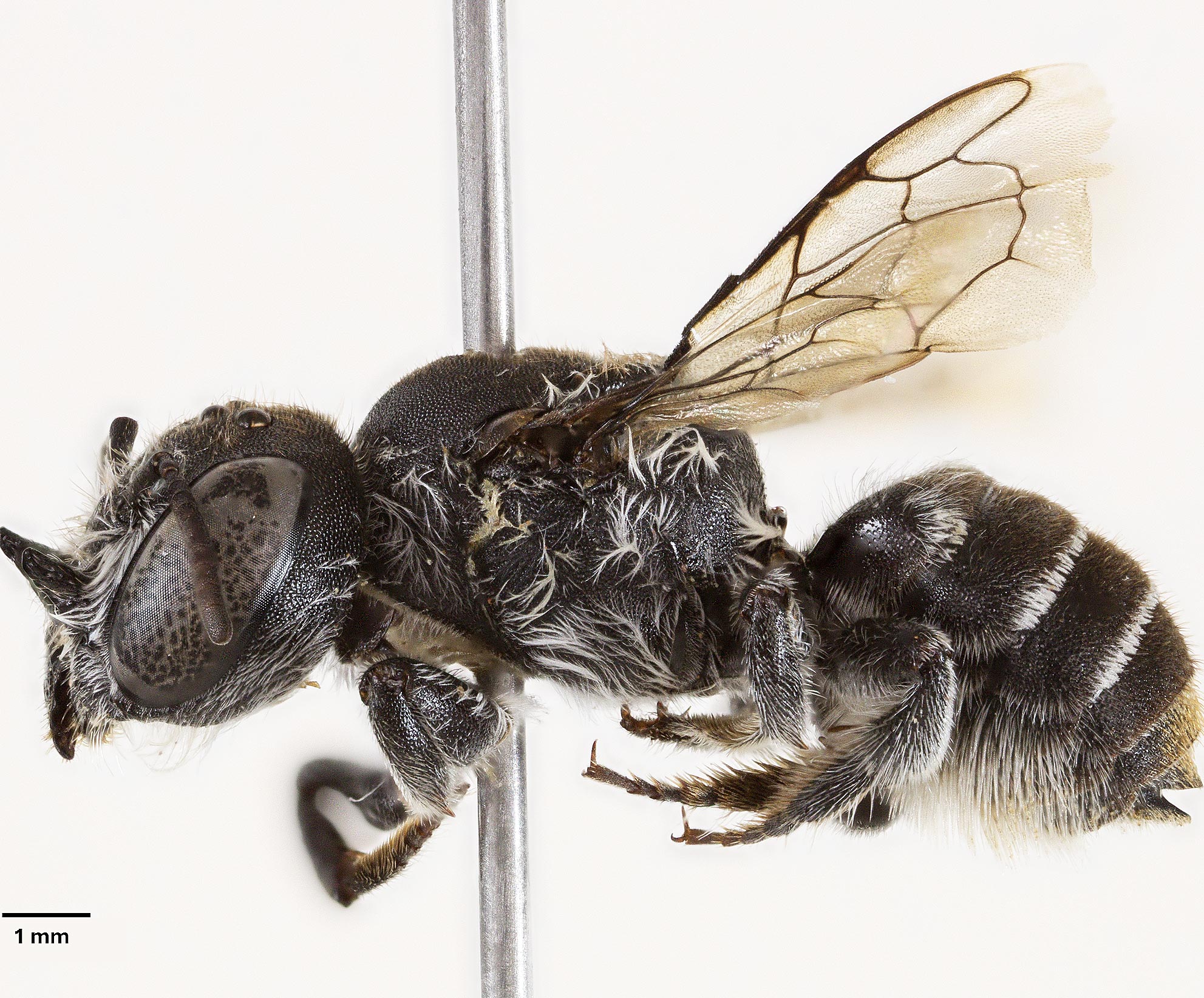
A devil-horned bee discovered in Western Australia sheds light on how little we still know about native pollinators.
A newly identified native bee with tiny, horn-like projections on its face has been named Megachile (Hackeriapis) lucifer, marking an exciting addition to Western Australia’s Goldfields biodiversity. The discovery highlights how much remains to be learned about Australia’s native pollinators.
The distinctive species was discovered during fieldwork focused on the critically endangered wildflower Marianthus aquilonarius, which is found only in the Bremer Range region between the towns of Norseman and Hyden.
Inspiration behind the “Lucifer” name
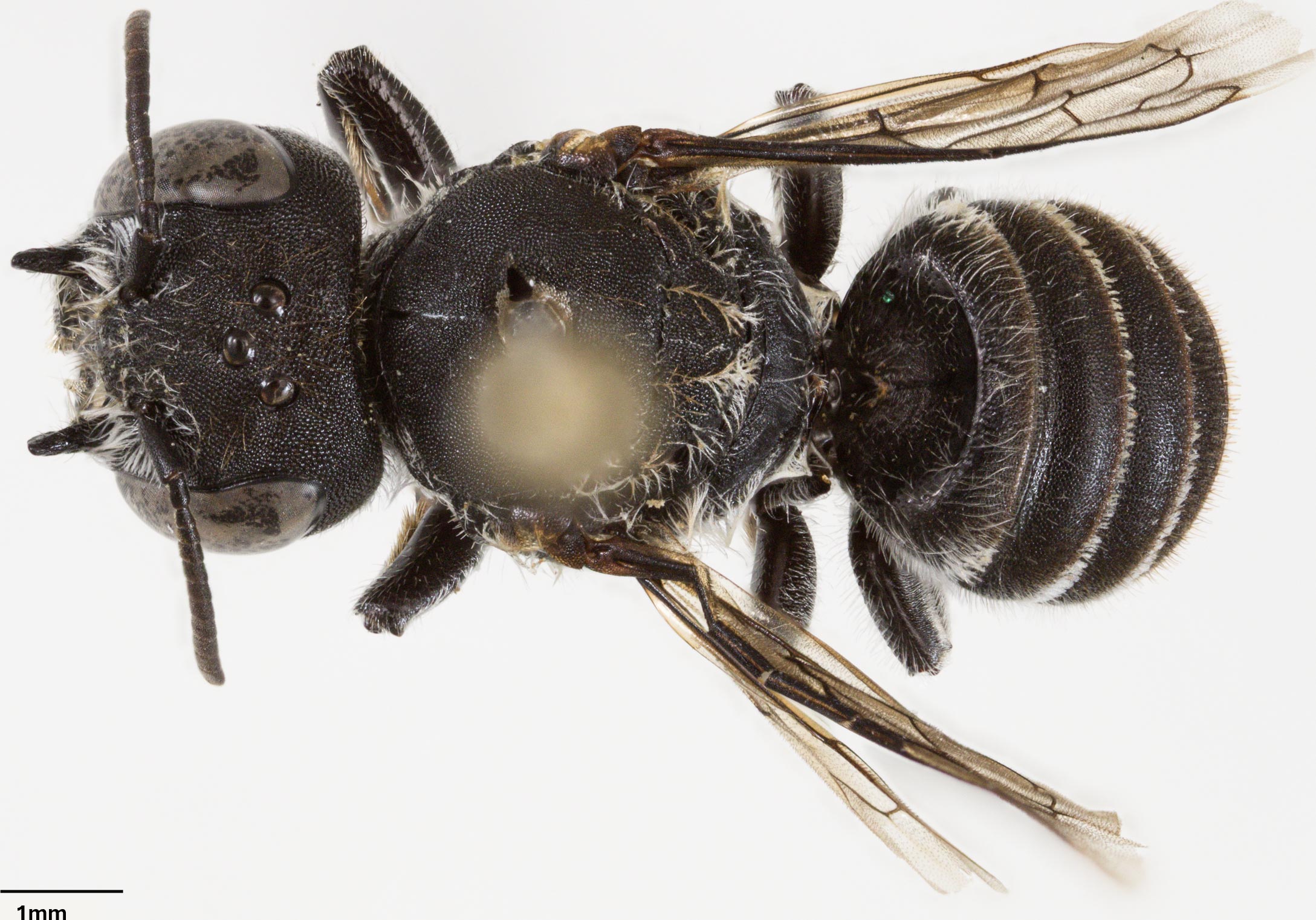
Curtin Adjunct Research Fellow Dr. Kit Prendergast, from the Curtin School of Molecular and Life Sciences, explained that the female bee’s unusual horned appearance inspired its name lucifer—a Latin term meaning “light-bringer,” chosen partly as a playful reference to its devil-like features.
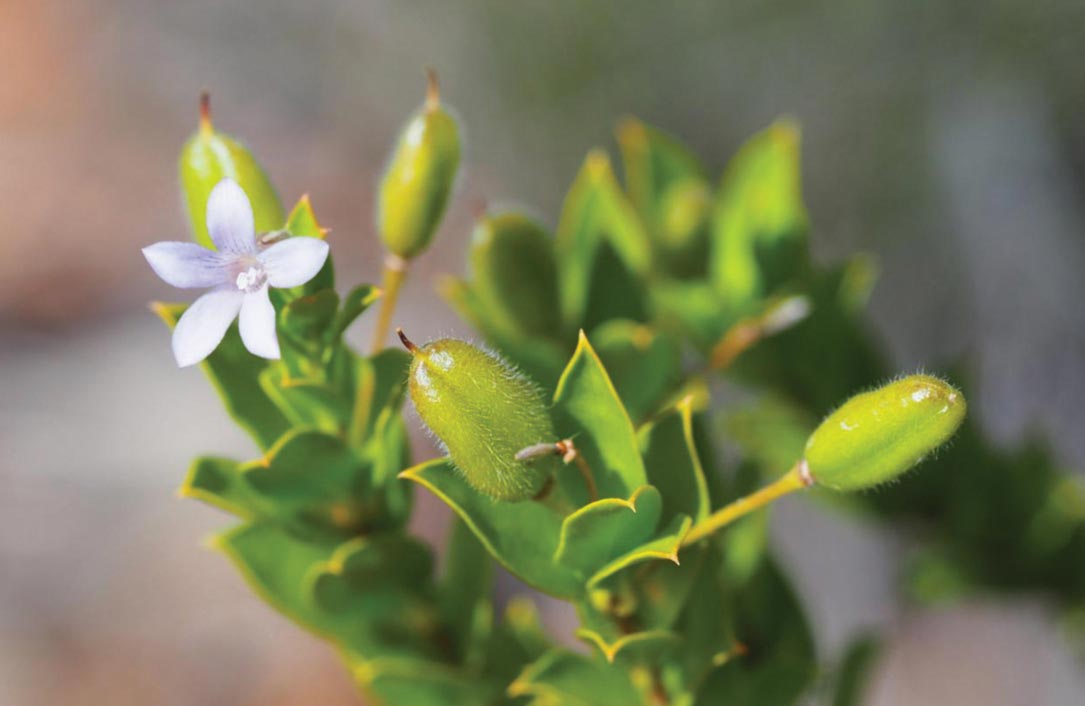
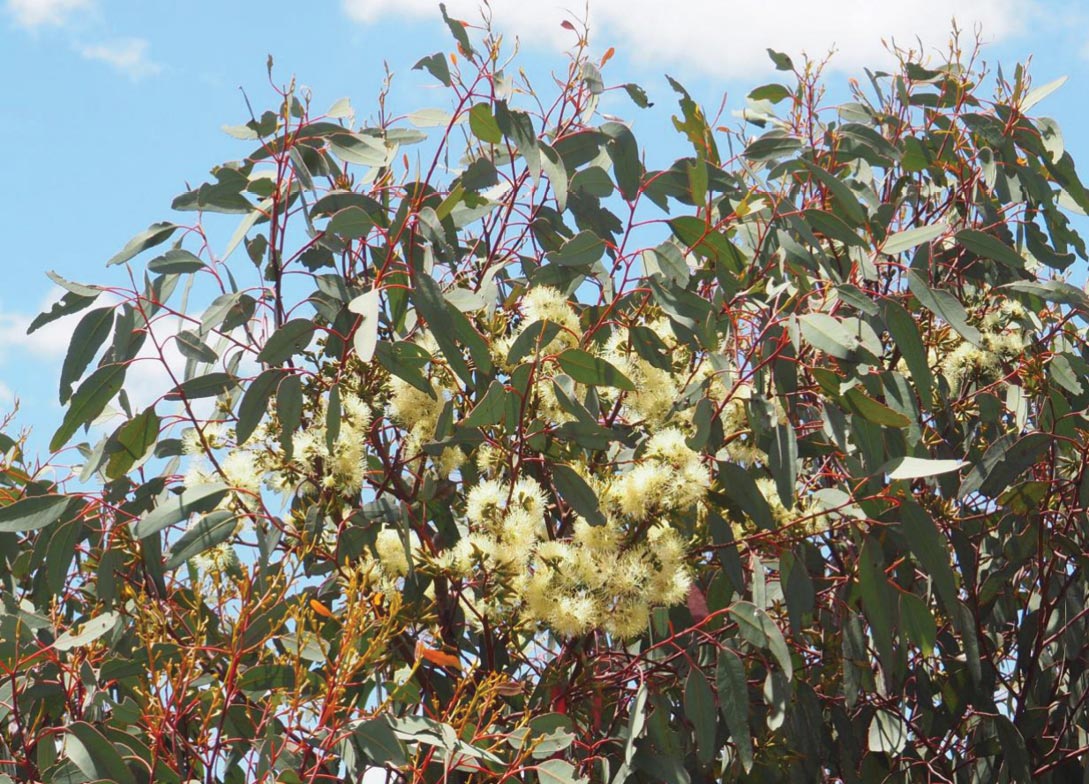
“I discovered the species while surveying a rare plant in the Goldfields and noticed this bee visiting both the endangered wildflower and a nearby mallee tree,” Dr. Prendergast said.
“The female had these incredible little horns on her face. When writing up the new species description I was watching the Netflix show Lucifer at the time, and the name just fit perfectly. I am also a huge fan of the Netflix character Lucifer so it was a no-brainer.
“DNA barcoding confirmed the male and female were the same species and that it didn’t match any known bees in DNA databases, nor did the specimens I had collected morphologically match any in museum collections.
“It’s the first new member of this bee group to be described in more than 20 years, which really shows how much life we still have to discover – including in areas that are at risk of mining, such as the Goldfields.”
Conservation implications for native bees and habitats
Dr. Prendergast said the discovery highlighted the importance of understanding native bees before their habitats are disturbed.
“Because the new species was found in the same small area as the endangered wildflower, both could be at risk from habitat disturbance and other threatening processes like climate change,” Dr. Prendergast said.
“Many mining companies still don’t survey for native bees, so we may be missing undescribed species, including those that play crucial roles in supporting threatened plants and ecosystems.
“Without knowing which native bees exist and what plants they depend on, we risk losing both before we even realise they’re there.”
Reference: “Megachile (Hackeriapis) lucifer (Hymenoptera, Megachilidae), a new megachilid with demon-like horns that visits the Critically Endangered Marianthus aquilonaris (Pittosporaceae)” by Kit S. Prendergast and Joshua W. Campbell, 10 November 2025, Journal of Hymenoptera Research.
DOI: 10.3897/jhr.98.166350
The research was supported by the Atlas of Living Australia, the Goldfields Environmental Management Group and the USDA Agricultural Research Service.
Never miss a breakthrough: Join the SciTechDaily newsletter.
Follow us on Google and Google News.
2 Comments
The author was intrigued by a vid of “Lucifer” – which is commonly associated with ‘The Devil’ – unfortunately this was simply a misunderstanding on the part of the gangs of 14 year-olds, called the ‘Christian Zealots,’ running amok after the fall of Rome – when, during their raids, thievery, rapings and skinning alive of any intellectual they found, they saw the Moon crescent crown of Luna, Goddess of the Moon and Night – and seeing the points of the crescent said it was the devil worship of the Pagan Romans – which is wasn’t.
Luna is the Moon Goddess – not different from anyone’s erstwhile sister – a good woman who does good things. The end, not the devil.
They should have called it the Muhammad bee, we have to keep up with modern times and seeing how Muslims are doing that to this day it fits better.