
Close Menu
    Facebook X (Twitter) Instagram
    SciTechDaily
    • Biology
    • Chemistry
    • Earth
    • Health
    • Physics
    • Science
    • Space
    • Technology
    Facebook X (Twitter) Pinterest YouTube RSS
    SciTechDaily
    Home»Biology»New Green Pit Viper From India Named After Salazar Slytherin From Harry Potter
    Biology

    New Green Pit Viper From India Named After Salazar Slytherin From Harry Potter

    By Pensoft PublishersApril 21, 2020No Comments2 Mins Read
    Facebook Twitter Pinterest Telegram LinkedIn WhatsApp Email Reddit
    Share
    Facebook Twitter LinkedIn Pinterest Telegram Email Reddit
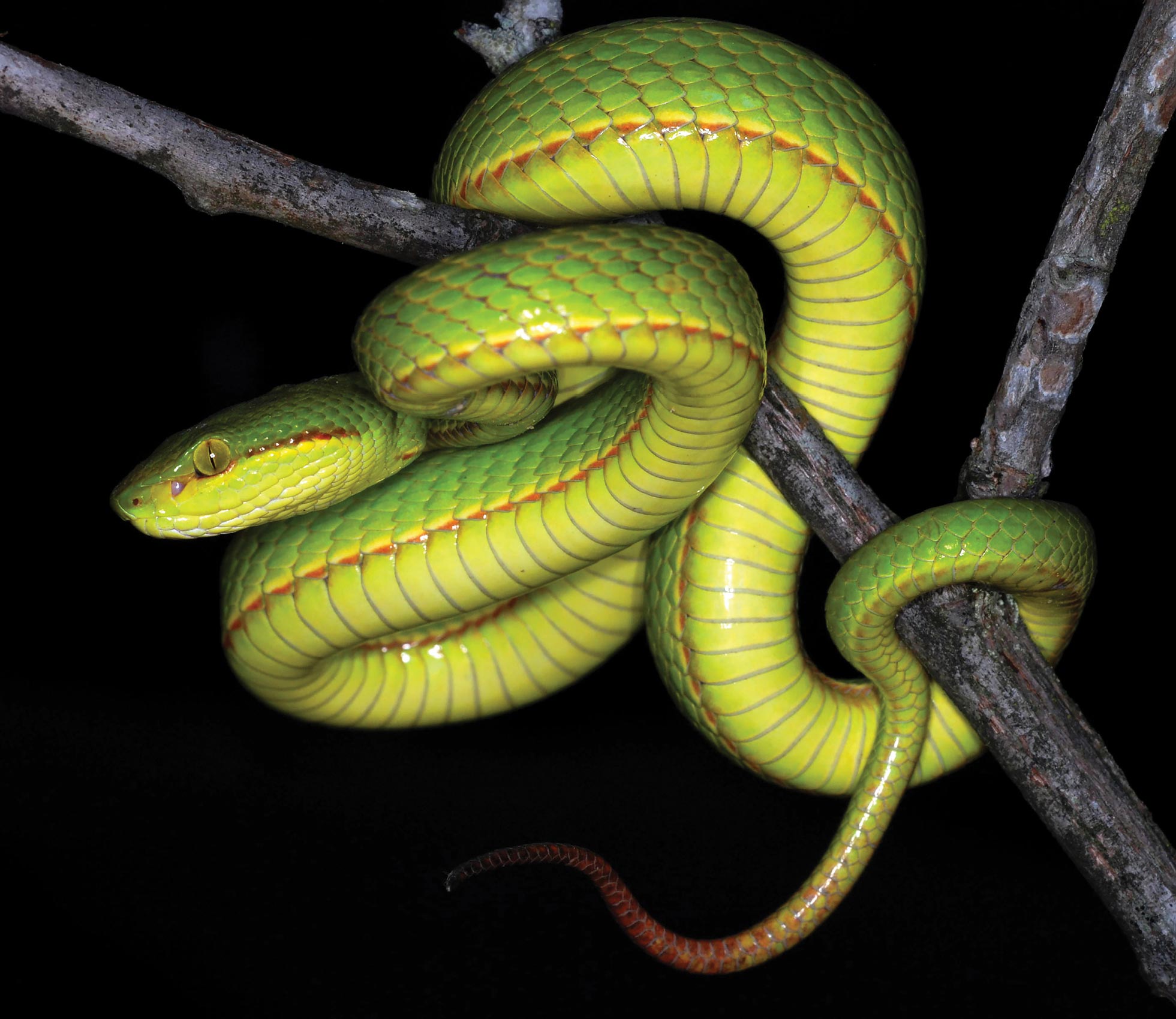
    Trimeresurus salazar Green Pit Viper
    Trimeresurus salazar sp. nov. juvenile male from Pakke Tiger Reserve. Credit: Aamod Zambre and Chintan Seth, Eaglenest Biodiversity Project

    A new green pit viper species of the genus Trimeresurus was discovered during the herpetological expedition to Arunachal Pradesh in India, part of the Himalayan biodiversity hotspot. The scientists named the newly-discovered snake Trimeresurus salazar after a Parselmouth (able to talk with serpents) wizard, co-founder of Hogwarts School of Witchcraft and Wizardry and the founder of the House of Slytherin — Salazar Slytherin, the fictional character of J.K. Rowling’s saga “Harry Potter”. The discovery, authored by Zeeshan Mirza of the National Centre for Biological Sciences, Bengaluru, Mr. Harshal and Mr. Mandar of the Bombay Natural History Society, Mumbai, Mr. Gowande of Pune’s Fergusson College and Mr. Phansalkar of the Wildlife Institute of India, Dehradun, is published in the open-access journal Zoosystematics and Evolution.

    The pit vipers in the genus Trimeresurus are charismatic venomous serpents, distributed widely across east and southeast Asia. In total, the genus includes at least 48 species, with fifteen representatives occurring in India. The species belonging to the genus are morphologically cryptic, which makes it difficult to distinguish them in the field. As a result, their real diversity could be underestimated.

    Arunachal Pradesh, where the new species was found, belongs to the Himalayan biodiversity hotspot, which explains the diverse flora and fauna being continuously discovered there.

    The new green pit viper demonstrates a unique orange to reddish stripe, present on the head and body in males.

    Explaining the name of the new species, the scientists suggest that it is colloquially referred to as the Salazar’s pit viper.

    This is already the second species discovered within the course of the expedition to Arunachal Pradesh, which reflects the poor nature of biodiversity documentation across north-eastern India.

    “Future dedicated surveys conducted across northeastern India will help document biodiversity, which is under threat from numerous development activities that include road widening, agriculture, and hydro-electric projects”, shares the lead researcher Dr. Zeeshan A. Mirza from National Centre for Biological Science of Bangalore, India.

    Reference: “A new species of green pit vipers of the genus Trimeresurus Lacépède, 1804 (Reptilia, Serpentes, Viperidae) from western Arunachal Pradesh, India” by Zeeshan A. Mirza, Harshal S. Bhosale, Pushkar U. Phansalkar, Mandar Sawant, Gaurang G. Gowande and Harshil Patel, 15 April 2020, Zoosystematics and Evolution.
    DOI: 10.3897/zse.96.48431

    Never miss a breakthrough: Join the SciTechDaily newsletter.
    Follow us on Google and Google News.

    Biodiversity New Species Pensoft Publishers Popular Snake Zoology
    Share. Facebook Twitter Pinterest LinkedIn Email Reddit

    Related Articles

    “An Astounding 20 Feet Long”– Scientists Discover New Species of Giant Snake in the Remote Amazon

    “Baffling” New Species of Snake Discovered in Myanmar

    Web of Wonders: Expedition Discovers Four New Tarantula Species in Colombia’s Biodiversity Hotspot

    New Miniature Trap-Jaw Ant Ant Species Discovered – Named in Recognition of Gender Diversity

    Large New Amphibious Centipede Species Discovered in Okinawa and Taiwan

    Scientists Discover Bizarre New Mode of Snake Locomotion – “Nothing I’d Ever Seen Compares to It”

    Remarkable New Species of Snake Found Hidden in a Biodiversity Collection – Occupies Its Own Branch on Snake Tree of Life

    New Centipede Discovered on Top of Food Chain in Hellish Ecosystem of a Sulfur-Soaked Romanian Cave

    New Species Found in the Hottest Place on Earth

    Leave A Reply Cancel Reply

    • Facebook
    • Twitter
    • Pinterest
    • YouTube

    Don't Miss a Discovery

    Subscribe for the Latest in Science & Tech!

    Trending News

    Could Low Vitamin D Be Making Your Pain Worse?

    Scientists Discover Once-Weekly Workout That Melts Belly Fat Surprisingly Effectively

    Scientists Just Tested a Thruster Powerful Enough for Human Missions to Mars

    Doctors Say Your Ice Pack Might Be Making Injuries Worse

    Scientists Discover 43-Foot Sea Reptile Twice the Size of a Great White Shark

    Bees and Birds Are Drinking Alcohol From Flowers

    Scientists Discover How Obesity May Trigger Alzheimer’s Disease

    Scientists Confirm Alcohol Causes Widespread Health Damage

    Follow SciTechDaily
    • Facebook
    • Twitter
    • YouTube
    • Pinterest
    • Newsletter
    • RSS
    SciTech News
    • Biology News
    • Chemistry News
    • Earth News
    • Health News
    • Physics News
    • Science News
    • Space News
    • Technology News
    Recent Posts
    • Scientists Discover Sperm Seem To Bypass a Fundamental Law of Physics
    • The Secret Behind Indigenous Andeans’ “Digestive Superpower” May Be Potatoes
    • Archaeologists Discover Mysterious Artificial Island Older Than Stonehenge in Scotland
    • Magnon Breakthrough Could Shrink Quantum Computers to the Size of a Penny
    • NASA Finds a “Goldilocks” Giant Planet Wrapped in Methane
    Copyright © 1998 - 2026 SciTechDaily. All Rights Reserved.
    • Science News
    • About
    • Contact
    • Editorial Board
    • Privacy Policy
    • Terms of Use

    Type above and press Enter to search. Press Esc to cancel.