
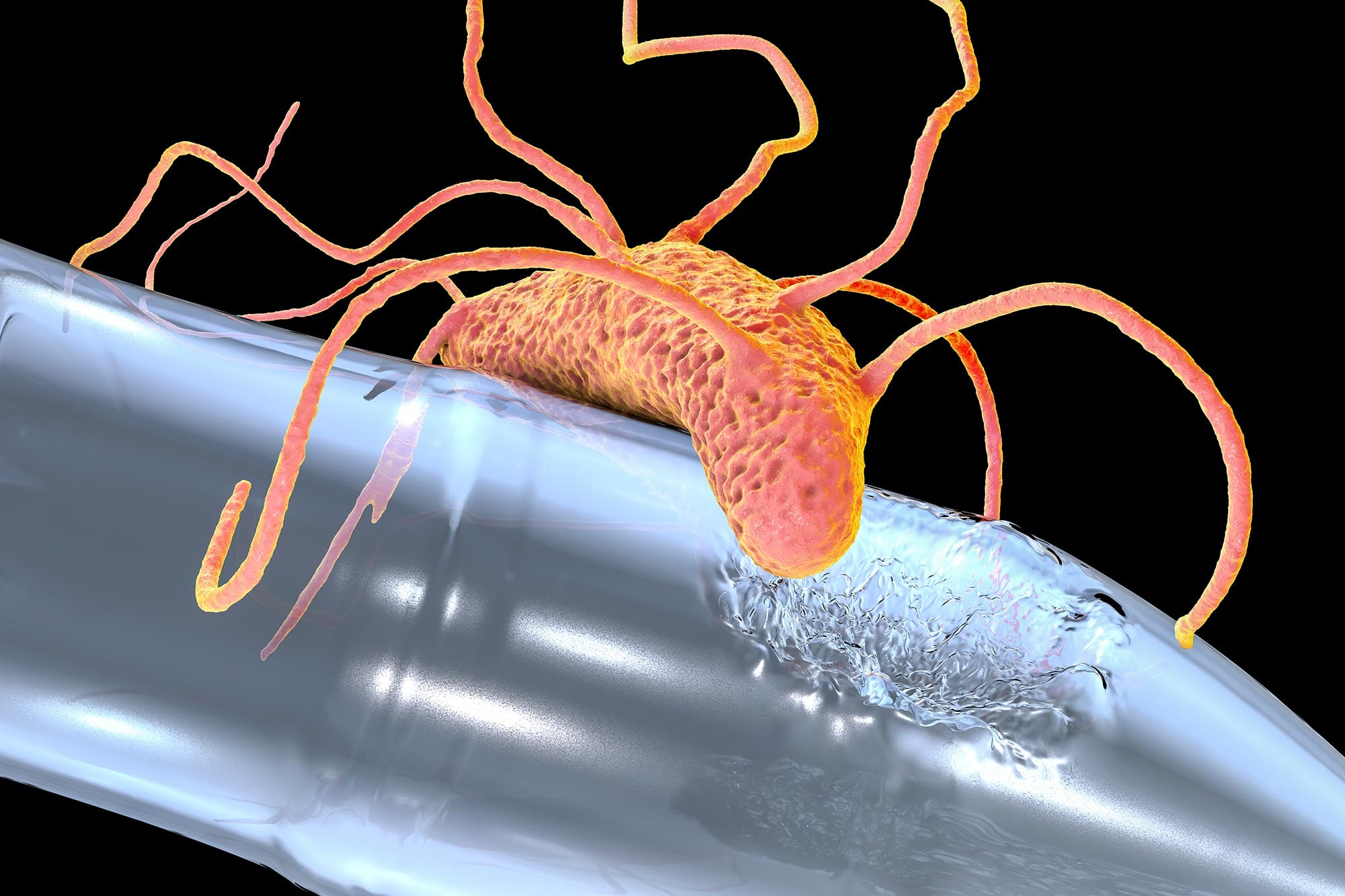
A newly identified bacterial enzyme can break down certain polyesters and penicillin, suggesting a possible link between plastic digestion and antibiotic resistance.
For decades, synthetic plastic waste has been collecting in vast oceanic garbage patches and fragmenting into hazardous microplastics and nanoplastics simply because the biological world cannot rapidly digest it.
Microorganisms do colonize these synthetic materials in the environment to form biofilms, creating a unique microbial habitat that researchers call the “plastisphere.” The problem is not a lack of microbial appetite, but rather a profound chemical mismatch between modern synthetic polymers and the enzymes bacteria naturally possess.
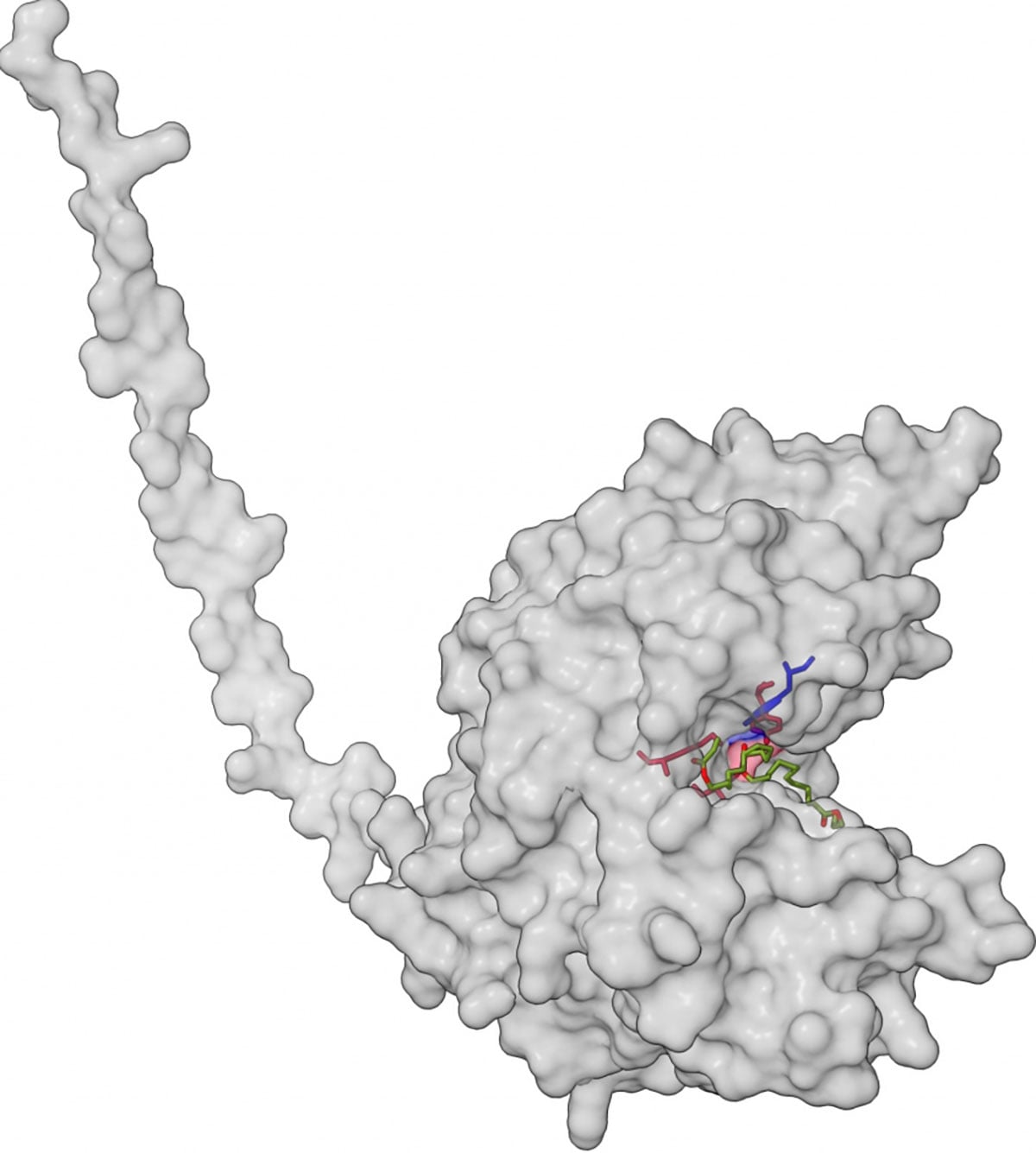
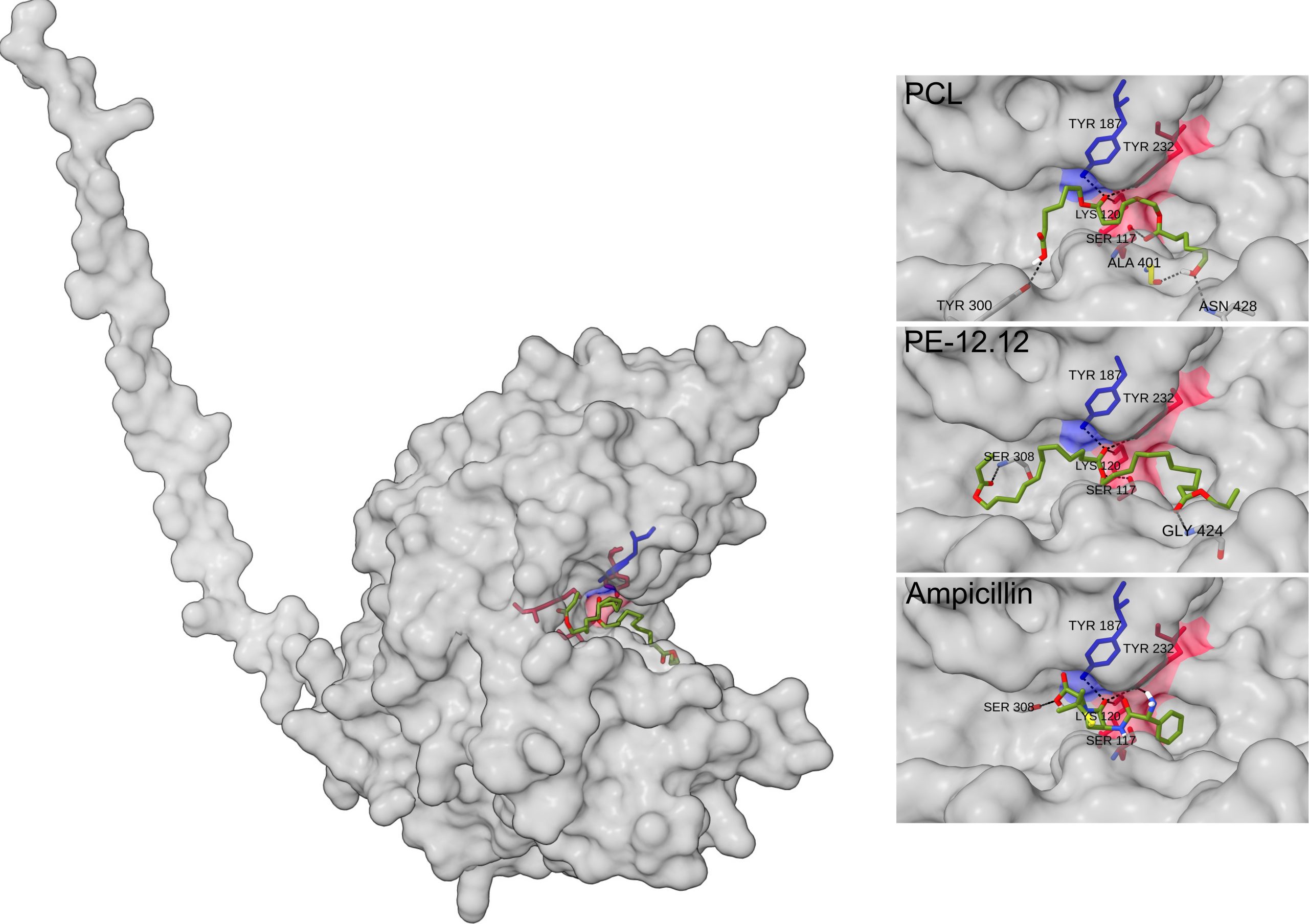
Researchers at the University of Konstanz have now identified an enzyme that attacks certain polyesters and bioplastics. Its wide-open active site inspired the team to call it the “Pac-Man enzyme.” Laboratory tests also showed that the same enzyme can cleave penicillin, raising the possibility that it could help bacteria resist some antibiotics.
Bioplastics break down, but conventional plastic persists
Biologists Harry Lerner and David Schleheck uncovered the enzyme while investigating whether microbial communities could completely degrade long-chain aliphatic polyesters, or LCAPs. The materials were developed by chemist Stefan Mecking’s team, which collaborated on the study published in The ISME Journal.
“We buried small pieces of LCAP bioplastic film in the upper humus layer in the forest at the university’s botanical garden, about ten centimeters deep,” Lerner explains. “This layer is where the breakdown of cellulose and other natural polymers, such as cutin – a plant-based polyester – takes place.”
The researchers left the forest samples undisturbed for an entire year, buried roughly 4 inches below the surface. In a parallel laboratory experiment, they mixed powdered bioplastic into samples of the same forest soil and closely tracked carbon dioxide production over a year. Because microbial respiration releases carbon dioxide, those measurements allowed the team to follow the materials as microbes consumed them.
“Cellulose, other types of bioplastics such as PHBV and PCL, as well as high-density plastic (HDPE) and untreated soil were used as controls in the laboratory. We found that all bioplastic materials were completely degraded within roughly 250 to 330 days. Cellulose broke down after about 80 days, whereas virtually no degradation occurred for HDPE,” says Lerner.
Bacteria may digest their way into plastic
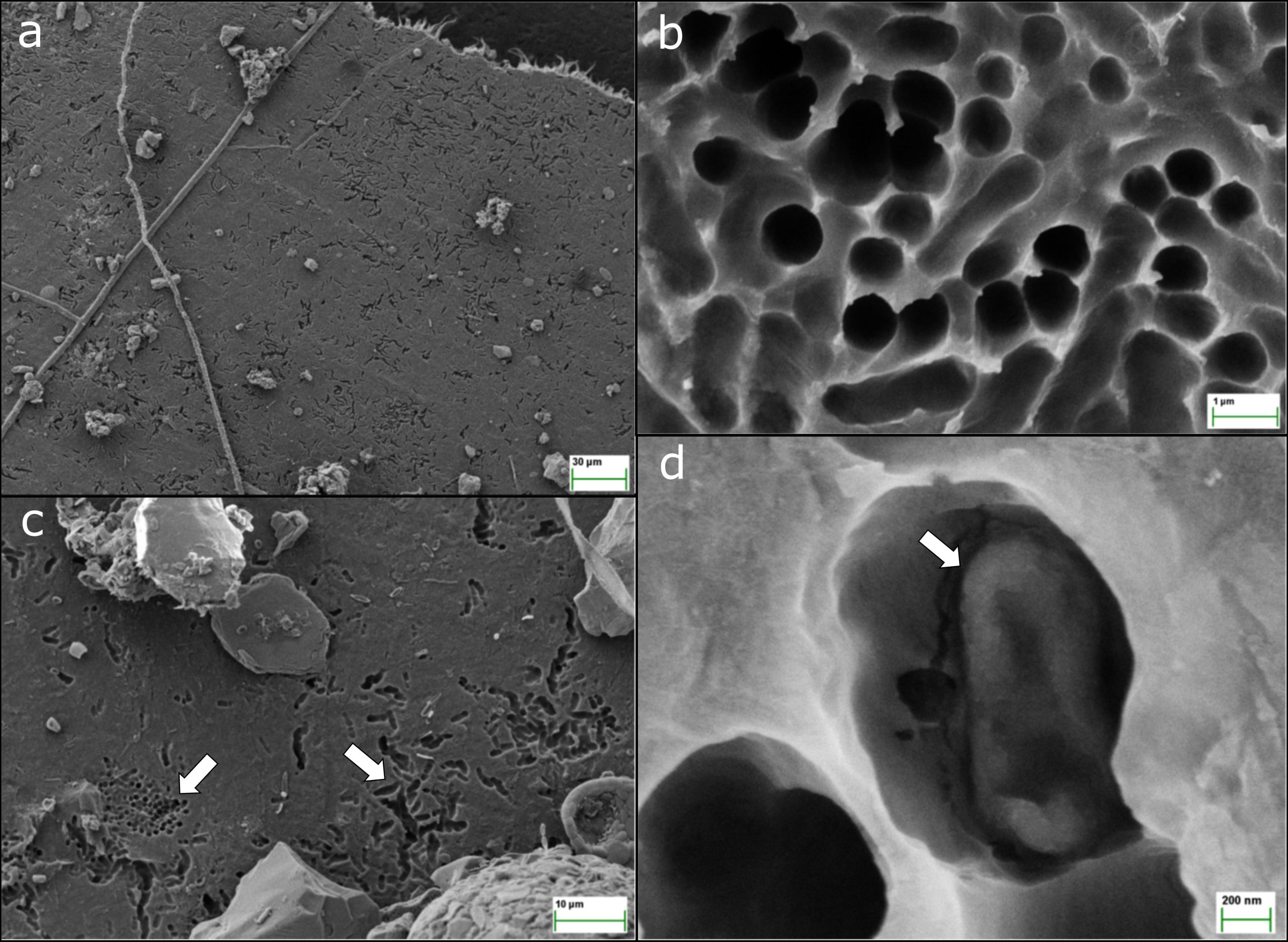
When the researchers recovered the buried LCAP films from the forest, electron microscopy revealed tiny holes in the material. Each opening matched the size and shape of a single bacterial cell.
“We hypothesized that bacteria are coated with plastic-depolymerases anchored to their cell surfaces. This would enable them to digest their way into the material and become embedded within the film, leaving behind microscopic holes of exactly this type,” explains Lerner.
The team searched for the responsible enzyme by extracting and sequencing all the DNA in the soil’s microbial community. Lerner then analyzed this metagenome to determine which microbes and genes had become more abundant during LCAP degradation.
One gene was highly enriched only in the forest soil containing LCAP. It encoded an esterase with a secretion signal that directs the enzyme out of the bacterial cell and a membrane-bound lipid anchor that holds it firmly against the cell surface. That arrangement would allow a bacterium to carry the enzyme directly into contact with the plastic as it feeds.
One enzyme attacks polyesters and penicillin
“Its structure resembles that of esterases, but also that of beta-lactamases, which are bacterial enzymes that are capable of cleaving the beta-lactam ring of certain antibiotics, such as penicillin, thereby making bacteria resistant to antibiotics,” says Lerner.
In laboratory experiments, the enzyme broke polyesters into monomers, their individual molecular building blocks, and also cleaved penicillin. Those results confirmed its dual biochemical function, suggesting a possible role in antibiotic resistance alongside plastic degradation.
Plastics with bonds microbes can break
“The plastisphere is a new habitat in our environment,” explains Schleheck. “Humans have only been introducing plastic into the environment in significant quantities for around 50 to 75 years. Since then, it has theoretically been available to microbial communities – such as bacteria, yeasts and fungi – as an additional source of carbon and energy for their growth. By ‘theoretically’, I mean that they would certainly like to use the plastic as a growth substrate – but they cannot, because the materials are actually indigestible to microbial metabolism and are therefore hardly degraded.
The Pac-Man enzyme suggests that certain microorganisms may be able to specialize in breaking down polyester plastics. Accelerating environmental degradation, however, would require using biodegradable plastics wherever possible, rather than relying on microbes to digest persistent synthetic materials.
“I find this encouraging, because it seems that bacteria can adapt to breaking down polyester plastics more quickly than we expected. To tackle the environmental problem of plastic pollution, we humans need to work with the capabilities of microbes. Ideally, this would involve using only polymers with biochemical breaking points, such as the hydrolyzable ester bonds in polyesters like LCAP or other types of bioplastics,” concludes Schleheck.
Reference: “Bacterial family-VIII esterase displays dual activities: hydrolysis of polyester bioplastics and β-lactam antibiotics” by Harry Lerner, Diego Casaburi, Nele Charlott Meier, Léa Bernabeu, Marcel Eck, Stefan Mecking and David Schleheck, 2 September 2026, The ISME Journal.
DOI: 10.1093/ismejo/wrag203
Never miss a breakthrough: Join the SciTechDaily newsletter.
Follow us on Google and Google News.