
Close Menu
    Facebook X (Twitter) Instagram
    SciTechDaily
    • Biology
    • Chemistry
    • Earth
    • Health
    • Physics
    • Science
    • Space
    • Technology
    Facebook X (Twitter) Pinterest YouTube RSS
    SciTechDaily
    Home»Biology»Trip to Rainforest Yields Organisms Capable of Degrading Polyurethane
    Biology

    Trip to Rainforest Yields Organisms Capable of Degrading Polyurethane

    By Yale UniversityFebruary 9, 2012No Comments3 Mins Read
    Facebook Twitter Pinterest Telegram LinkedIn WhatsApp Email Reddit
    Share
    Facebook Twitter LinkedIn Pinterest Telegram Email Reddit
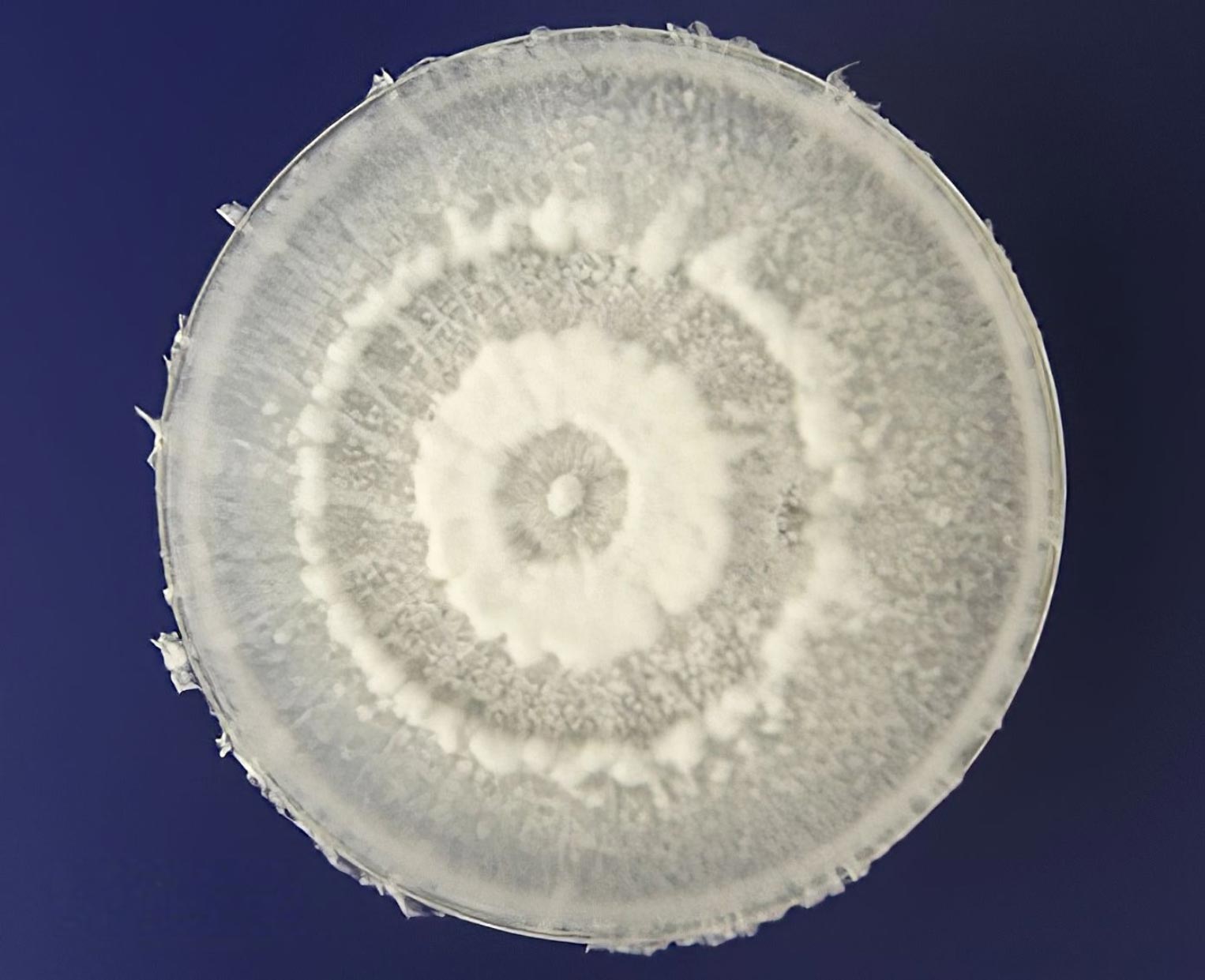
    Organism Within Fungi Rainforest Plant
    Organism within fungi in a rainforest plant shows evidence of bioactivity when exposed to polyurethane. Credit: Yale University

    Yale undergraduates participating in Yale’s Rainforest Expedition and Laboratory course had their findings on organisms capable of degrading polyurethane published in the journal Applied and Environmental Microbiology. By collecting organisms called endophytes and then testing them for biological activity, a student discovered that there was promise for bioremediation and identified the enzyme that most efficiently broke down polyurethane.

    Organisms discovered by Yale undergraduates growing within fungi in the Amazon Rainforest can degrade polyurethane, a finding that may lead to innovative ways to reduce waste in the world’s landfills.

    The paper, accepted for publication in July by the journal Applied and Environmental Microbiology, is the work of undergraduates who participated in Yale’s Rainforest Expedition and Laboratory course, funded by the Howard Hughes Medical Institute.

    “This shows amazing things can happen when you let undergraduates be creative,” said Kaury Kucera, postdoctoral researcher in the Department of Molecular Biophysics and Biochemistry and co-instructor of the course.
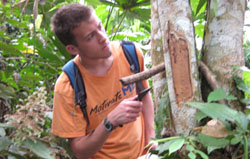
    Amazon Rainforest plants which can degrade plastics
    Yale undergrads, including Jon Russell, Class of 2011, discovered organisms with Amazon Rainforest plants that can degrade plastics. The undergrads’ discovery is featured in the journal Applied and Environmental Microbiology. Credit: Yale University

    Students taking the course search for and collect organisms called endophytes found in rainforest plants and then take them back to New Haven to test them for biological activity. Students analyze the endophytes that show biological activity to see whether they might have other medical or social uses.

    On the 2008 trip to Ecuador, student Pria Anand, Class of 2010, decided to see if the endophytes she collected could be used in bioremediation. In a rudimentary test, Anand showed a chemical reaction did take place when an endophyte she found was introduced to plastic.

    A second undergraduate of the same class, Jeffrey Huang, analyzed endophytes collected by other students on the 2008 trip to find those that broke down chemical bonds most efficiently.

    Jonathan R. Russell, Class of 2011 then discovered that one family of endophytes identified by Huang showed the most promise for bioremediation. Russell went on to identify the enzyme that most efficiently broke down polyurethane.

    While other agents can degrade polyurethane, the enzyme identified by Yale students holds particular promise because it also degrades plastic in the absence of oxygen — a prerequisite for the bioremediation of buried trash.

    Also, a new group of undergraduates are analyzing newly discovered endophytes collected during recent rainforest trips to see if they can also degrade more intractable plastics such as polystyrene.

    Reference: “Biodegradation of Polyester Polyurethane by Endophytic Fungi” by Jonathan R. Russell, Jeffrey Huang, Pria Anand, Kaury Kucera, Amanda G. Sandoval, Kathleen W. Dantzler, DaShawn Hickman, Justin Jee, Farrah M. Kimovec, David Koppstein, Daniel H. Marks, Paul A. Mittermiller, Salvador Joel Núñez, Marina Santiago, Maria A. Townes, Michael Vishnevetsky, Neely E. Williams, Mario Percy Núñez Vargas, Lori-Ann Boulanger, Carol Bascom-Slack and Scott A. Strobel, 24 August 2011, Applied and Environmental Microbiology.
    DOI: 10.1128/AEM.00521-11

    Anand, Huang, and Russell are the lead authors on the paper. Other authors are Kucera, Amanda G. Sandoval, Kathleen W. Dantzler, DaShawn Hickman, Justin Jee, Farrah M. Kimovec, David Koppstein, Daniel H. Marks, Paul A. Mittermiller, Salvador Joel Núñez Gastélum, Marina Santiago, Maria A. Townes, Michael Vishnevetsky, Neely E. Williams, Percy Núñez Vargas, Lori-Ann Boulanger, Carol Bascom-Slack and Scott A. Strobel.

    Never miss a breakthrough: Join the SciTechDaily newsletter.
    Follow us on Google and Google News.

    Amazon Endophytes Green Technology Howard Hughes Medical Institute Microbiology Organism Plastic Polyurethane Rainforest Yale University
    Share. Facebook Twitter Pinterest LinkedIn Email Reddit

    Related Articles

    Topical Antibiotic Triggers Resistance to Viral Infections

    Scientists Create a More Precise Technique to Edit Genomes of Living Organisms

    New Research Details Why Typhoid Toxin Targets Only Humans

    Scientists Pinpoint Lowest Temperature Limit for Life on Earth

    Yale Researchers Engineer a System to Deliver a Safer Vaccine

    Searching for Better Methods of Making Biofuels from Cellulosic Biomass

    Understanding the Internal Process That Makes Salmonella Dangerous

    Altered Microbes that Cause Obesity & Chronic Liver Disease May be Infectious

    Ecuador Rainforest Fungus Survives on Polyurethane without Oxygen

    Leave A Reply Cancel Reply

    • Facebook
    • Twitter
    • Pinterest
    • YouTube

    Don't Miss a Discovery

    Subscribe for the Latest in Science & Tech!

    Trending News

    The Universe Is Expanding Too Fast and Scientists Can’t Explain Why

    “Like Liquid Metal”: Scientists Create Strange Shape-Shifting Material

    Early Warning Signals of Esophageal Cancer May Be Hiding in Plain Sight

    Common Blood Pressure Drug Shows Surprising Power Against Deadly Antibiotic-Resistant Superbug

    Scientists Uncover Dangerous Connection Between Serotonin and Heart Valve Disease

    Scientists Discover a “Protector” Protein That Could Help Reverse Hair Loss

    Bone-Strengthening Discovery Could Reverse Osteoporosis

    Scientists Uncover Hidden Trigger Behind Stem Cell Aging

    Follow SciTechDaily
    • Facebook
    • Twitter
    • YouTube
    • Pinterest
    • Newsletter
    • RSS
    SciTech News
    • Biology News
    • Chemistry News
    • Earth News
    • Health News
    • Physics News
    • Science News
    • Space News
    • Technology News
    Recent Posts
    • Scientists Crack Alfalfa’s Chromosome Mystery After Decades of Debate
    • Ancient Ant-Plant Alliance Collapses As Predatory Wasps Move In
    • Scientists Discover Tiny New Spider That Hunts Prey 6x Its Size
    • Natural Component From Licorice Shows Promise for Treating Inflammatory Bowel Disease
    • New Research Finds Shocking Link Between Chili Peppers and Cancer
    Copyright © 1998 - 2026 SciTechDaily. All Rights Reserved.
    • Science News
    • About
    • Contact
    • Editorial Board
    • Privacy Policy
    • Terms of Use

    Type above and press Enter to search. Press Esc to cancel.