
Close Menu
    Facebook X (Twitter) Instagram
    SciTechDaily
    • Biology
    • Chemistry
    • Earth
    • Health
    • Physics
    • Science
    • Space
    • Technology
    Facebook X (Twitter) Pinterest YouTube RSS
    SciTechDaily
    Home»Biology»Yale Researchers Engineer a System to Deliver a Safer Vaccine
    Biology

    Yale Researchers Engineer a System to Deliver a Safer Vaccine

    By Bill Hathaway, Yale UniversityMarch 13, 2013No Comments2 Mins Read
    Facebook Twitter Pinterest Telegram LinkedIn WhatsApp Email Reddit
    Share
    Facebook Twitter LinkedIn Pinterest Telegram Email Reddit
    Molecular Machine That Helps Bacteria Infect Cells
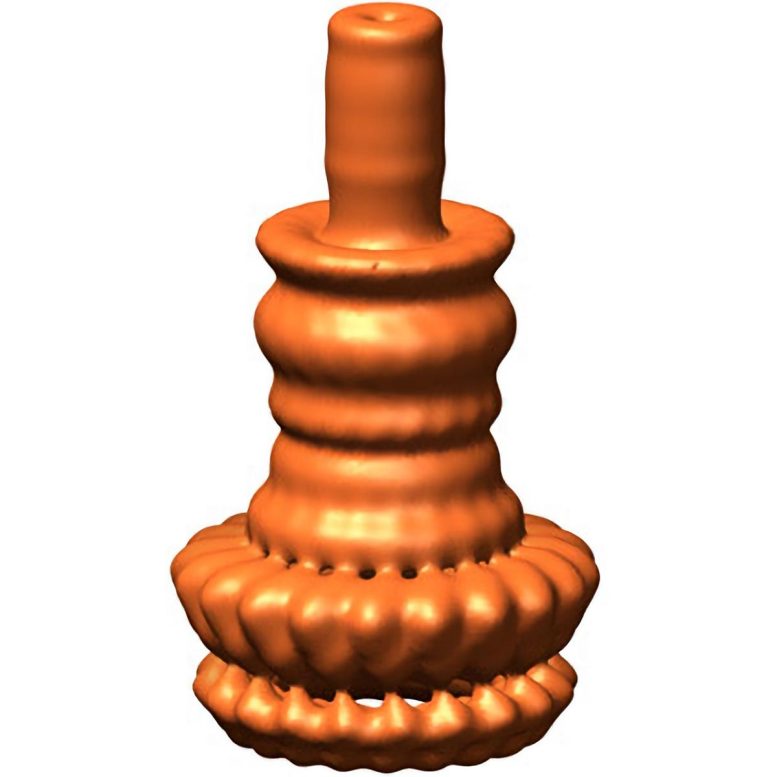
    This rendering is of the molecular machine that helps bacteria infect cells. Yale researchers have learned how to use it to trigger immune responses. Credit: Yale University

    In a newly published study, Yale University researchers detail how they engineered a system that tricks bacteria to deliver a safer vaccine, which could be used to combat cancer as well as a wide variety of infectious diseases.

    Vaccines that employ weakened but live pathogens to trigger immune responses have inherent safety issues but Yale researchers have developed a new trick to circumvent the problem — using bacteria’s own cellular mistakes to deliver a safe vaccine.

    The findings, published online on March 12 in Nature Communications, suggest new ways to create novel vaccines that effectively combat disease but can be tolerated by children, the elderly, and the immune-compromised who might be harmed by live vaccines.

    “We have managed to assemble a functional protein-injection machine within bacterial mini-cells, and the amazing thing is that it works,” said Jorge Galan, senior author of the paper and the Lucille P. Markey Professor of Microbial Pathogenesis and chair of the Section of Microbial Pathogenesis at Yale.

    Galan’s team has assembled the molecular machine used by Salmonella to cause food poisoning or typhoid fever. Scientists have been successful in modifying this protein injection machine to trigger a protective immune response against a variety of infectious diseases. However, it has been necessary to use modified or virulence-attenuated bacteria that carry this machine.

    The new trick exploits a mutation that causes bacteria to create “mini-cells” when they improperly divide. Mini-cells contain no DNA and, therefore, are not pathogenic and extremely safe. Galan’s team was able to assemble the protein-injection machines within these bacterial cells, which when administered to mice, deliver antigens that trigger an immune response without causing an infection.

    The system could be used to combat cancer as well as a wide variety of infectious diseases, Galan said.

    Reference: “Engineering the type III secretion system in non-replicating bacterial minicells for antigen delivery” by Heather A. Carleton, María Lara-Tejero, Xiaoyun Liu and Jorge E. Galán, 12 March 2013, Nature Communications.
    DOI: 10.1038/ncomms2594

    Heather A. Carleton is lead author of the paper. Other Yale authors include Maria Lara-Tejero and Xiaoyun Liu.

    The research was funded by the National Institutes of Health.

    Never miss a breakthrough: Join the SciTechDaily newsletter.
    Follow us on Google and Google News.

    Biological Sciences Biotechnology Immunology Immunotherapy Microbiology Yale University
    Share. Facebook Twitter Pinterest LinkedIn Email Reddit

    Related Articles

    Revolutionizing Clean Energy? Yale Scientists Discover How Bacteria “Breathe” Minerals

    Researchers Convert Human Stem Cells to Functional Lung Cells

    UCLA Researchers Show Link Between Diet, Genetics and Obesity

    Study Shows that Vorinostat can Dislodge the Dormant HIV Virus in Patients

    Understanding the Internal Process That Makes Salmonella Dangerous

    Increasing Th17 Cells in the Gut May Improve the Control of HIV Growth

    Researchers Use Body’s Immune System to Fight Cancer

    Trip to Rainforest Yields Organisms Capable of Degrading Polyurethane

    Ecuador Rainforest Fungus Survives on Polyurethane without Oxygen

    Leave A Reply Cancel Reply

    • Facebook
    • Twitter
    • Pinterest
    • YouTube

    Don't Miss a Discovery

    Subscribe for the Latest in Science & Tech!

    Trending News

    Scientists Say This Hellish “Day-Night” Planet May Support Life

    Historians Got It Wrong: New Findings Rewrite the Story of the Battle of Hastings

    Scientists Just Broke the Solar Power Limit Everyone Thought Was Absolute

    Scientists Discover Protein That Turns Brown Fat Into a Calorie-Burning Machine

    Scientists Call for a Complete Rethink of Alzheimer’s Treatment

    Scientists Identify Molecular Switch That Lets Exercise Reverse Muscle Aging

    Why Your Most Vivid Dreams Might Be the Key to Deep, Restful Sleep

    A Bright Star Hid a Massive Secret for 50 Years: Mystery of Gamma Cassiopeiae Finally Solved

    Follow SciTechDaily
    • Facebook
    • Twitter
    • YouTube
    • Pinterest
    • Newsletter
    • RSS
    SciTech News
    • Biology News
    • Chemistry News
    • Earth News
    • Health News
    • Physics News
    • Science News
    • Space News
    • Technology News
    Recent Posts
    • These Unusual Glaciers Don’t Behave Like Others – and Scientists Say They Are Incredibly Dangerous
    • Scientists Just Discovered a Hidden Freshwater World Beneath the Great Salt Lake
    • Why Your Daily Shower Could Be Worsening the Water Crisis
    • Scientists Find Surprising Way To Protect Hedgehogs From Roads
    • Penguins in Zoos Age Faster Than Their Wild Counterparts
    Copyright © 1998 - 2026 SciTechDaily. All Rights Reserved.
    • Science News
    • About
    • Contact
    • Editorial Board
    • Privacy Policy
    • Terms of Use

    Type above and press Enter to search. Press Esc to cancel.