
Close Menu
    Facebook X (Twitter) Instagram
    SciTechDaily
    • Biology
    • Chemistry
    • Earth
    • Health
    • Physics
    • Science
    • Space
    • Technology
    Facebook X (Twitter) Pinterest YouTube RSS
    SciTechDaily
    Home»Biology»Elephants Are More Likely to Die at the Hands of Humans Than From Natural Causes
    Biology

    Elephants Are More Likely to Die at the Hands of Humans Than From Natural Causes

    By SciTechDailyJanuary 17, 20131 Comment2 Mins Read
    Facebook Twitter Pinterest Telegram LinkedIn WhatsApp Email Reddit
    Share
    Facebook Twitter LinkedIn Pinterest Telegram Email Reddit
    Elephants-in-Kenya's-Samburu-region
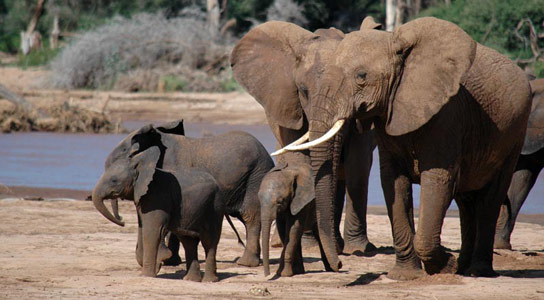
    Elephants in Kenya’s Samburu region have been giving birth more often following years of heavy poaching. Credit: George Wittemyer

    According to a 14-year study, adult elephants in northern Kenya are more likely to die at the hands of humans than from natural causes.

    George Wittemyer, a wildlife biologist at Colorado State University, Fort Collins, and lead author of the study, published the findings in the journal PLOS ONE. The Scientists began the study in 1997 to better understand elephant behavior in two national reserves, Samburu and Buffalo Springs, and focused on 934 elephants. However after seeing a major shift in poaching, they shifted their study in 2009 to look at the effects the poaching was having on the elephants they knew.

    In 2000, the researchers noted that there were 38 male elephants over the age of 30 in the population they were studying.  By 2011 that number dropped to 12, seven of which matured to that age group over that 11-year time span. Adult females also suffered substantial losses, with almost half of those 30 years old dying between 2006 and 2011.

    The researchers concluded that by 2011, 56% of the elephants that were found dead had been poached and that the poaching spree is also altering the elephants’ social organization.  Male elephants that once made up 42% of the population were down to 32% and 10 of the 50 elephant groups from the initial study were effectively wiped out.

    Wittemyer adds that, “Some elephants died from a bad drought that hit the region between 2009 and 2010” and that their data shows that the Samburu elephants have responded to the pressure from poaching with a big jump in births in 2012.

    Reference: “Comparative Demography of an At-Risk African Elephant Population” by George Wittemyer, David Daballen and Iain Douglas-Hamilton, 16 January 2013, PLOS ONE.
    DOI: 10.1371/journal.pone.0053726

    Never miss a breakthrough: Join the SciTechDaily newsletter.
    Follow us on Google and Google News.

    Conservation Elephants Popular Wildlife Zoology
    Share. Facebook Twitter Pinterest LinkedIn Email Reddit

    Related Articles

    New Zealand’s Endangered Birds Find Refuge in Ancient Moa Habitats

    Unexpected Dietary Habits of Elephants: Surprising Variation in Meals, Similar to Humans

    Scent Trails of Dung and Urine Could Boost Elephant Conservation

    African Forest Elephants Are Now Critically Endangered – Here’s How to Count Them

    Ivory Coast Without Ivory? Massive Extinction of African Forest Elephants in Côte d’Ivoire

    Are Bats to Blame for the Coronavirus Crisis? Q&A With Wildlife Biologist

    Air Conditioning Is Failing for Glacier National Park’s Iconic Mountain Goats

    Kitti’s Hog-Nosed Bat Is World’s Smallest Mammal

    A Fifth of All Invertebrates on Earth Threatened by Extinction

    1 Comment

    1. Madanagopal.V.C on January 21, 2013 4:34 am

      Pachyderms are the largest mammals found today on earth which are herbivorous.
      They take a long descent line of larger animals. If the man made disaster wipes them out it is a sorry affair and it should be prevented. Thank You.

      Reply
    Leave A Reply Cancel Reply

    • Facebook
    • Twitter
    • Pinterest
    • YouTube

    Don't Miss a Discovery

    Subscribe for the Latest in Science & Tech!

    Trending News

    Popular Sugar-Free Sweetener Linked to Liver Disease, Study Warns

    What Is Hantavirus? The Deadly Disease Raising Alarm Worldwide

    Scientists Just Discovered How the Universe Builds Monster Black Holes

    Scientists Unveil New Treatment Strategy That Could Outsmart Cancer

    A Simple Vitamin May Hold the Key to Treating Rare Genetic Diseases

    Scientists Think the Real Fountain of Youth May Be Hiding in Your Gut

    Ravens Don’t Follow Wolves, They Predict Them

    This Common Knee Surgery May Be Doing More Harm Than Good

    Follow SciTechDaily
    • Facebook
    • Twitter
    • YouTube
    • Pinterest
    • Newsletter
    • RSS
    SciTech News
    • Biology News
    • Chemistry News
    • Earth News
    • Health News
    • Physics News
    • Science News
    • Space News
    • Technology News
    Recent Posts
    • Why Are So Many New Fathers Dying? Scientists Say the U.S. Has a Dangerous Blind Spot
    • Scientists Identify Simple Supplement That Greatly Reduces Alzheimer’s Damage
    • You May Have a Dangerous Type of Cholesterol Even if Your Tests Look Normal
    • Study Reveals Dangerous Flaw in AI Symptom Checkers
    • New MRI Breakthrough Captures Stunningly Clear Images of the Eye and Brain
    Copyright © 1998 - 2026 SciTechDaily. All Rights Reserved.
    • Science News
    • About
    • Contact
    • Editorial Board
    • Privacy Policy
    • Terms of Use

    Type above and press Enter to search. Press Esc to cancel.