
Close Menu
    Facebook X (Twitter) Instagram
    SciTechDaily
    • Biology
    • Chemistry
    • Earth
    • Health
    • Physics
    • Science
    • Space
    • Technology
    Facebook X (Twitter) Pinterest YouTube RSS
    SciTechDaily
    Home»Earth»Startling ‘Flammable Ice’ Discovery Offers Up Clue to Life on Other Planets
    Earth

    Startling ‘Flammable Ice’ Discovery Offers Up Clue to Life on Other Planets

    By University of AberdeenFebruary 7, 2020No Comments3 Mins Read
    Facebook Twitter Pinterest Telegram LinkedIn WhatsApp Email Reddit
    Share
    Facebook Twitter LinkedIn Pinterest Telegram Email Reddit
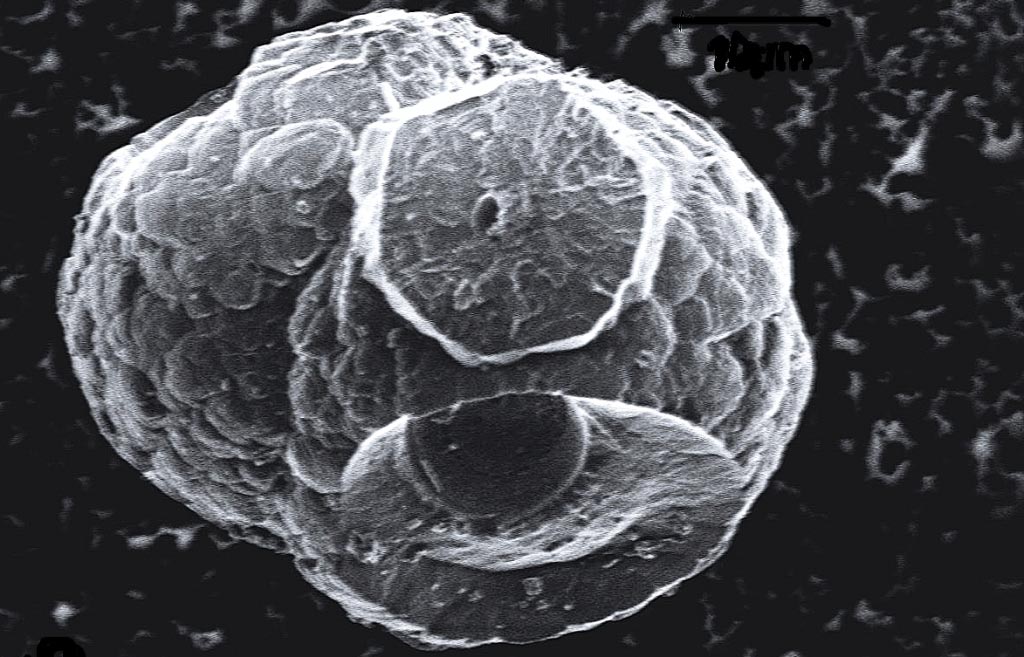
    Death Star Microhabitat
    Scientists have dubbed this image of a microhabitat that grew in methane hydrate the ‘Death Star’ — it grew from microbial activity at near-freezing temperatures, deep underwater, in one of the countless isolated pockets of saltwater and oil found within methane hydrate. Credit: University of Aberdeen

    Scientists studying so-called ‘flammable ice’ in the Sea of Japan have made a startling discovery — the existence of life within microscopic bubbles.

    The microhabitats are grown by microbes within tiny bubbles of oil and water found in sheets of frozen gas and ice, and offer a tantalizing clue as to the potential for life on other planets.

    The tiny bubbles are scattered within large underwater rafts of hydrate, known as ‘flammable ice’ or methane hydrate, which forms when ice traps methane within its molecular structure.

    The discovery of the microhabitats is revealed in a paper published in the journal Scientific Reports, a Nature publication. It stemmed from a larger project led by Professor Ryo Matsumoto from Meiji University in Japan, which was investigating methane hydrate as an energy source that emits less waste-carbon than traditional fossil fuels.

    “Providing they have ice and a little heat, all those frigid cold planets at the edge of every planetary system could host tiny microhabitats with microbes making their own tiny atmospheres and ecosystems, just as we discovered here.” Dr. Stephen Bowden

    Dr. Glen T. Snyder, lead author of the study, was melting hydrate to study methane gas when he noticed an unusual powder consisting of microscopic spheroids with mysterious dark cores. He then set about collecting a group of like-minded scientists to investigate further.

    Using analytical techniques pioneered at the University of Aberdeen and suited to small sample quantities, Dr. Stephen Bowden from the University’s School of Geosciences was able to show that oil was being degraded in the microenvironments within the methane hydrate.

    “In combination with the other evidence collected by my colleagues, my results showed that even under near-freezing temperatures, at extremely high pressures, with only heavy oil and saltwater for food sources, life was flourishing and leaving its mark,” Dr. Bowden said.

    Dr. Snyder continued: “The methane in ‘methane hydrate’ is known to form as microbes degrade organic matter on the seafloor.

    “But what we never expected to find was microbes continuing to grow and produce these spheroids, all of the time while isolated in tiny cold dark pockets of saltwater and oil.

    “It certainly gives a positive spin to cold dark places, and opens up a tantalizing clue as to the existence of life on other planets.

    Dr. Bowden added: “It certainly changes how I think about things. Providing they have ice and a little heat, all those frigid cold planets at the edge of every planetary system could host tiny microhabitats with microbes building their own ‘death stars’ and making their own tiny little atmospheres and ecosystems, just as we discovered here.”

    Reference: “Evidence in the Japan Sea of microdolomite mineralization within gas hydrate microbiomes” by Glen T. Snyder, Ryo Matsumoto, Yohey Suzuki, Mariko Kouduka, Yoshihiro Kakizaki, Naizhong Zhang, Hitoshi Tomaru, Yuji Sano, Naoto Takahata, Kentaro Tanaka, Stephen A. Bowden and Takumi Imajo, 5 February 2020, Scientific Reports.
    DOI: 10.1038/s41598-020-58723-y

    Never miss a breakthrough: Join the SciTechDaily newsletter.
    Follow us on Google and Google News.

    Astrobiology Popular University of Aberdeen
    Share. Facebook Twitter Pinterest LinkedIn Email Reddit

    Related Articles

    New Research Suggests Earth’s First Oceans Weren’t Blue: They Were Green

    Yale Study Unveils Asteroid Strikes As Possible Trigger for Earth’s Ice Ages

    Earth’s Oldest Stromatolites and New Prospects for the Search for Life on Mars

    Diverse Origins of Earth’s Minerals: Helping Find New Minerals, Habitable Planets, and Extraterrestrial Life

    Confessions of a Former Fireball: How Earth Transformed Itself From a Fiery Ball to a Habitable Planet

    Remarkable Connection Discovered Between Supernovae and Life on Earth

    New Research Reveals More Hostile Conditions on Earth As Life Evolved

    Lightning Strikes – Perhaps 1,000,000,000,000,000,000 of Them – May Have Sparked Life on Earth

    Could Life on Earth Have Originated from Somewhere Else?

    Leave A Reply Cancel Reply

    • Facebook
    • Twitter
    • Pinterest
    • YouTube

    Don't Miss a Discovery

    Subscribe for the Latest in Science & Tech!

    Trending News

    Popular Sugar-Free Sweetener Linked to Liver Disease, Study Warns

    What Is Hantavirus? The Deadly Disease Raising Alarm Worldwide

    Scientists Just Discovered How the Universe Builds Monster Black Holes

    Scientists Unveil New Treatment Strategy That Could Outsmart Cancer

    A Simple Vitamin May Hold the Key to Treating Rare Genetic Diseases

    Scientists Think the Real Fountain of Youth May Be Hiding in Your Gut

    Ravens Don’t Follow Wolves, They Predict Them

    This Common Knee Surgery May Be Doing More Harm Than Good

    Follow SciTechDaily
    • Facebook
    • Twitter
    • YouTube
    • Pinterest
    • Newsletter
    • RSS
    SciTech News
    • Biology News
    • Chemistry News
    • Earth News
    • Health News
    • Physics News
    • Science News
    • Space News
    • Technology News
    Recent Posts
    • You May Have a Dangerous Type of Cholesterol Even if Your Tests Look Normal
    • Study Reveals Dangerous Flaw in AI Symptom Checkers
    • New MRI Breakthrough Captures Stunningly Clear Images of the Eye and Brain
    • Scientists Warn Sitting Too Much Can Harm Your Body in Surprising Ways
    • Your Blood Pressure Reading Could Be Wrong Because of One Simple Mistake
    Copyright © 1998 - 2026 SciTechDaily. All Rights Reserved.
    • Science News
    • About
    • Contact
    • Editorial Board
    • Privacy Policy
    • Terms of Use

    Type above and press Enter to search. Press Esc to cancel.