
Close Menu
    Facebook X (Twitter) Instagram
    SciTechDaily
    • Biology
    • Chemistry
    • Earth
    • Health
    • Physics
    • Science
    • Space
    • Technology
    Facebook X (Twitter) Pinterest YouTube RSS
    SciTechDaily
    Home»Biology»Snakefly Mystery Deepens After Surprising Fossil Discovery
    Biology

    Snakefly Mystery Deepens After Surprising Fossil Discovery

    By Simon Fraser UniversityApril 6, 20211 Comment3 Mins Read
    Facebook Twitter Pinterest Telegram LinkedIn WhatsApp Email Reddit
    Share
    Facebook Twitter LinkedIn Pinterest Telegram Email Reddit
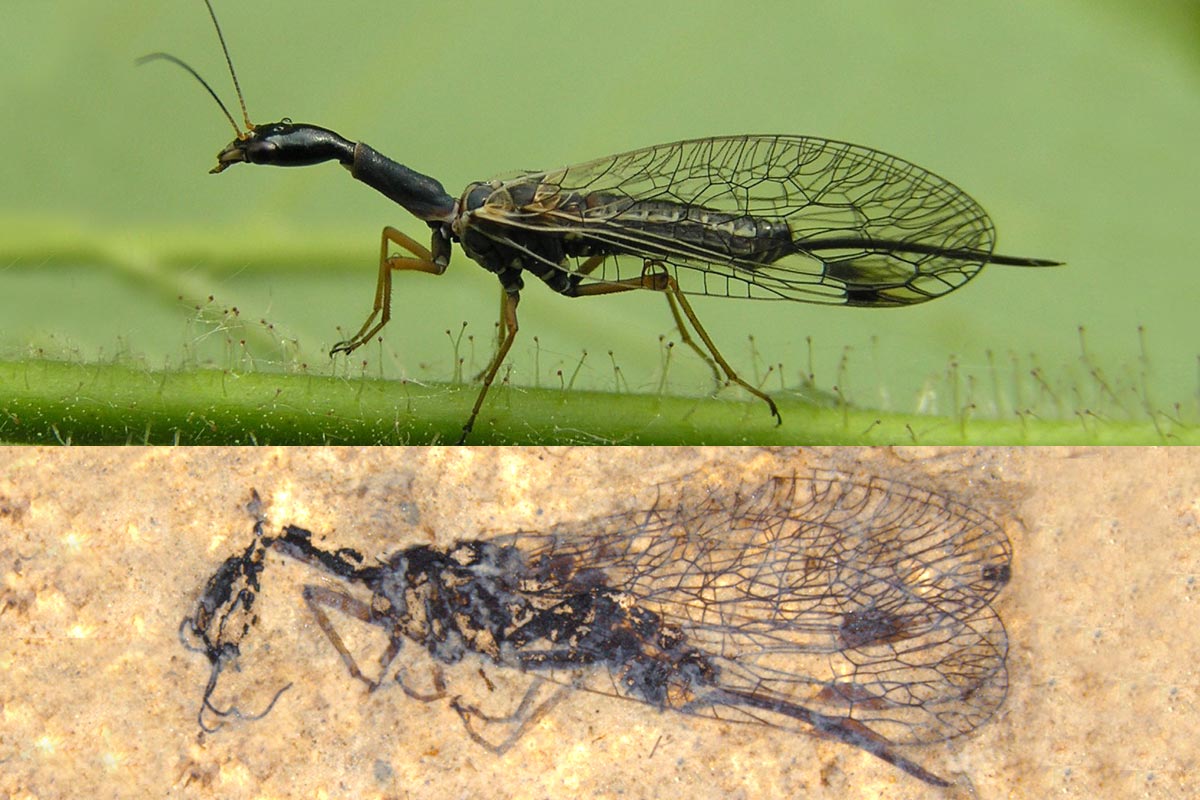
    Modern Snakefly Fossil Comparison
    Modern snakefly pictured above Fifty-two-million-year-old fossil snakefly from Driftwood Canyon in British Columbia. Credit: Fossil image copyright Zootaxa

    Ancient Predatory Insects Discovered in Region Once Thought Uninhabitable

    Fossil discoveries often help answer long-standing questions about how our modern world came to be. However, sometimes they only deepen the mystery—as a recent discovery of four new species of ancient insects in British Columbia and Washington state is proving.

    The fossil species, recently discovered by paleontologists Bruce Archibald of Simon Fraser University and Vladimir Makarkin of the Russian Academy of Sciences, are from a group of insects known as snakeflies, now shown to have lived in the region some 50 million years ago. The findings, published in Zootaxa, raise more questions about the evolutionary history of the distinctly elongated insects and why they live where they do today.

    Bruce Archibald Driftwood Canyon Provincial Park
    Archibald at Driftwood Canyon Provincial Park. Credit: Bruce Archibald

    Snakeflies are slender, predatory insects that are native to the Northern Hemisphere and noticeably absent from tropical regions. Scientists have traditionally believed that they require cold winters to trigger development into adults, restricting them almost exclusively to regions that experience winter frost days or colder. However, the fossil sites where the ancient species were found experienced a climate that doesn’t fit with this explanation.

    “The average yearly climate was moderate like Vancouver or Seattle today, but importantly, with very mild winters of few or no frost days,” says Archibald. “We can see this by the presence of frost intolerant plants like palms living in these forests along with more northerly plants like spruce.”

    The fossil sites where the ancient species were discovered span 1,000 kilometers (620 miles)of an ancient upland from Driftwood Canyon in northwest B.C. to the McAbee fossil site in southern B.C., and all the way to the city of Republic in northern Washington.
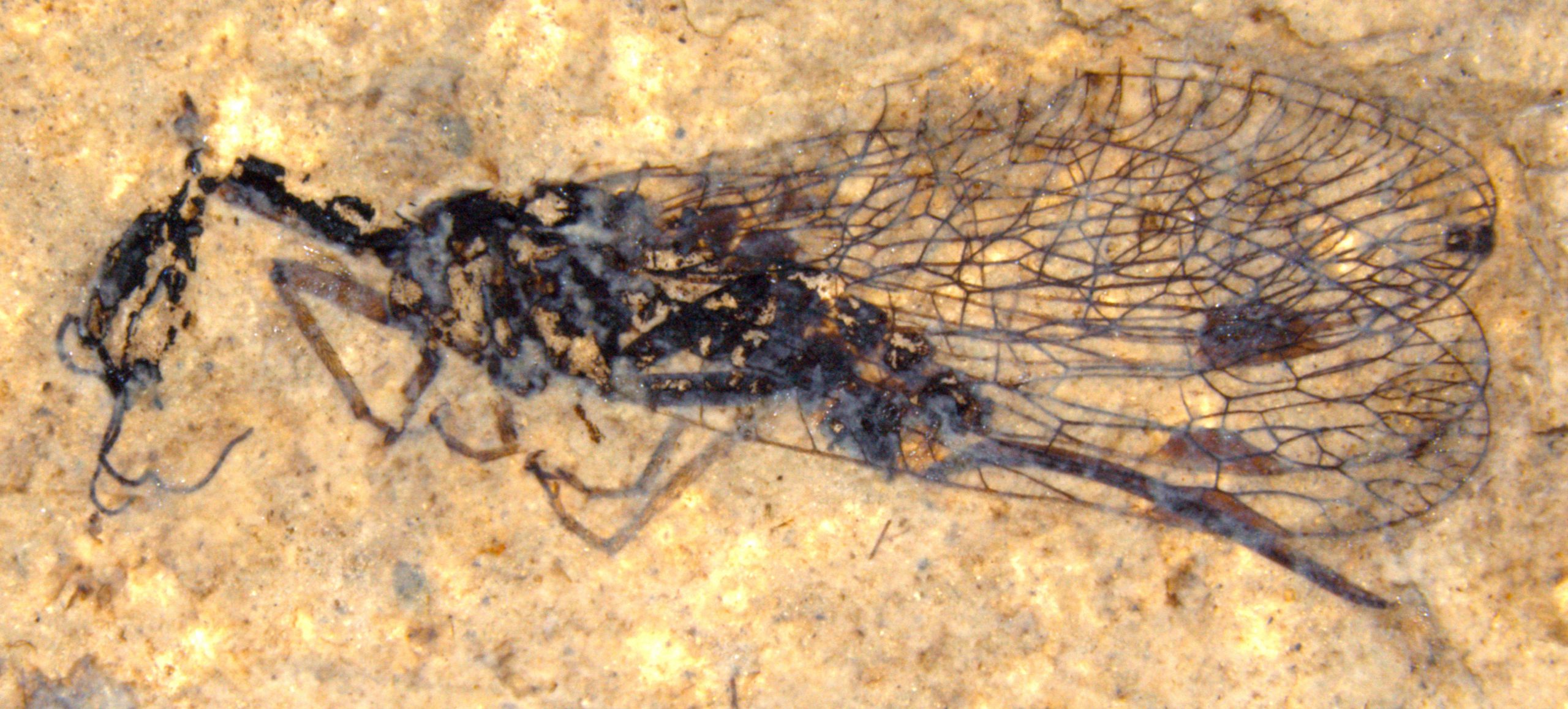
    Snakefly Fossil Driftwood Canyon
    Fifty-two-million-year-old fossil snakefly from Driftwood Canyon in British Columbia. Credit: Copyright Zootaxa

    Rewriting Snakefly Evolutionary History

    According to Archibald, the paleontologists found species of two families of snakeflies in these fossil sites, both of which had previously been thought to require cold winters to survive. Each family appears to have independently adapted to cold winters after these fossil species lived.

    “Now we know that earlier in their evolutionary history, snakeflies were living in climates with very mild winters and so the question becomes why didn’t they keep their ability to live in such regions? Why aren’t snakeflies found in the tropics today?”  

    Previous fossil insect discoveries in these sites have shown connections with Europe, Pacific coastal Russia, and even Australia.

    Archibald emphasizes that understanding how life adapts to climate by looking deep into the past helps explain why species are distributed across the globe today, and can perhaps help foresee how further change in climate may affect that pattern.

    “Such discoveries are coming out of these fossil sites all the time,” says Archibald. “They’re an important part of our heritage.”

    Reference: “Early Eocene snakeflies (Raphidioptera) of western North America from the Okanagan Highlands and Green River Formation” by S. Bruce Archibald and Vladimir N. Makarkin, 1 April 2021, Zootaxa.
    DOI: 10.11646/zootaxa.4951.1.2

    Never miss a breakthrough: Join the SciTechDaily newsletter.
    Follow us on Google and Google News.

    Entomology Evolution New Species Paleontology Popular Simon Fraser University
    Share. Facebook Twitter Pinterest LinkedIn Email Reddit

    Related Articles

    52-Million-Year-Old Bat Skeleton Unveils New Species and Clues to Evolution of Flying Mammals

    Tyrannosaurus Skeletal Remains Reveal T. rex May Have Been 3 Distinct Species

    New Species of Beetle Discovered in Dinosaur Ancestor’s 230 Million-Year-Old Poop

    New Species of Humongous Prehistoric Crocodile “River Boss” Discovered in Australia

    New Species of Bizarre, Extinct Lizard – So Strange It Was Misidentified as a Hummingbird-Sized Dinosaur

    Paleontologists Discover Two Unusual New Species of Ancient, Burrowing Mammal Ancestors

    Pioneering Pollinator Research Reveals Genetic Clues to Darwin’s “Abominable Mystery”

    Paleontologists Solve 150-Year-Old Mystery – And Discover New Insect Group

    Discovery of New Seal Species Rewrites Evolutionary History

    1 Comment

    1. Kalamity kate on December 29, 2025 4:49 pm

      As far as the Snake Fly goes, my grandmother born in 1884 always called Dragon Flies, Snake Doctors . Maybe she was on to something? As kids we were all afraid of them, thinking they were going to bite us and poison us with their bite.

      Reply
    Leave A Reply Cancel Reply

    • Facebook
    • Twitter
    • Pinterest
    • YouTube

    Don't Miss a Discovery

    Subscribe for the Latest in Science & Tech!

    Trending News

    Scientists Discover How Coffee Impacts Memory, Mood, and Gut Health

    Why Did the Neanderthals Disappear? Scientists Reveal Humans Had a Hidden Advantage

    Physicists Propose Strange Experiment Where Time Goes Quantum

    Magnesium Magic: New Drug Melts Fat Even on a High-Fat, High-Sugar Diet

    Weight-Loss Drugs Like Ozempic May Come With an Unexpected Cost

    Mezcal “Worm” in a Bottle Mystery: DNA Testing Reveals a Surprise

    New Research Reveals That Your Morning Coffee Activates an Ancient Longevity Switch

    This Is What Makes You Irresistible to Mosquitoes

    Follow SciTechDaily
    • Facebook
    • Twitter
    • YouTube
    • Pinterest
    • Newsletter
    • RSS
    SciTech News
    • Biology News
    • Chemistry News
    • Earth News
    • Health News
    • Physics News
    • Science News
    • Space News
    • Technology News
    Recent Posts
    • Harvard Scientists Reveal Secret Structure Behind How You Smell
    • Scientists Just Discovered the Hidden Trick That Keeps Your Cells Alive
    • This Simple Movement Could Be Secretly Cleaning Your Brain
    • Male Birth Control Breakthrough: Scientists Find Way To Turn Sperm Production Off and Back On
    • A Common Vitamin Could Hold the Key to Treating Fatty Liver Disease
    Copyright © 1998 - 2026 SciTechDaily. All Rights Reserved.
    • Science News
    • About
    • Contact
    • Editorial Board
    • Privacy Policy
    • Terms of Use

    Type above and press Enter to search. Press Esc to cancel.