
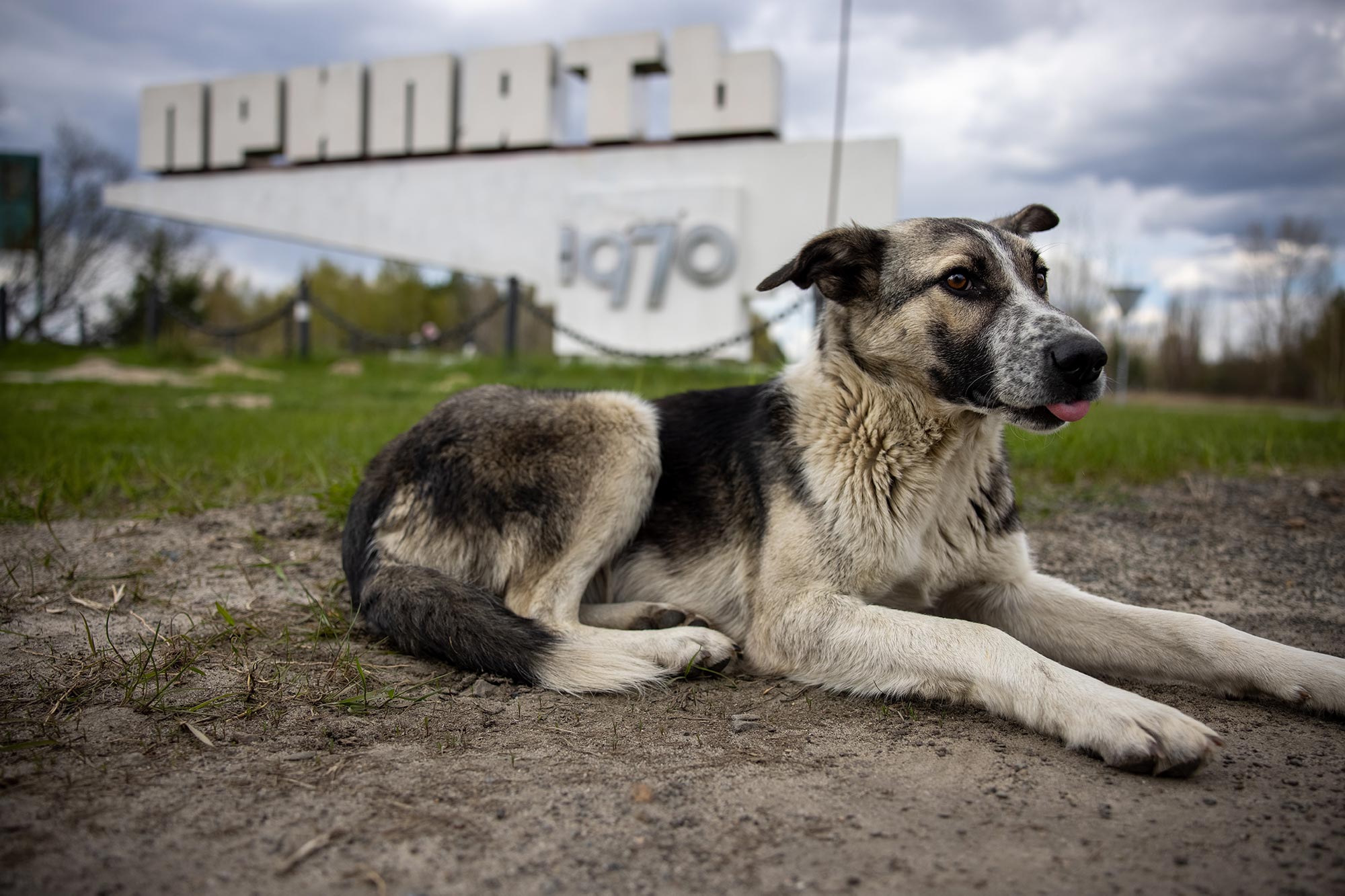
Scientists studying wild dogs near the Chernobyl Nuclear Power Plant have uncovered unusual genetic differences that may reflect natural selection rather than radiation-induced mutations.
Dogs living near the Chornobyl (previously called Chernobyl) Nuclear Power Plant carry genetic differences that may reflect natural selection rather than mutations caused by radiation exposure. A new genomic analysis identified more than 100 locations in their DNA showing signs of directional selection, including regions associated with DNA repair, cancer development, and immune function.
The findings suggest that environmental pressures may have favored certain inherited genetic variants, potentially helping some dogs survive in a contaminated environment. However, researchers have not established whether radiation or other environmental hazards directly caused these patterns.
A Surprising Genetic Divide Between Nearby Dog Populations
Earlier research revealed substantial genetic differences between dogs living at the nuclear power plant and those in Chornobyl City, just 10 miles away. City dogs closely resembled populations from Russia, Poland, and surrounding regions, while dogs near the plant had distinctive genetic features, particularly in areas associated with DNA repair.
“This work ties up some of the loose ends from our previous work, where in characterizing the population’s genetic structure we found that while these two dog groups are geographically very close, they have a very high degree of genetic difference, and those differences aren’t due to mutation,” said Megan Dillon, postdoctoral research scholar at North Carolina State University’s College of Veterinary Medicine.
“With this work, we wanted to explore two additional larger-scale evolutionary drivers – are the genetic differences due to selection, or are they due to genetic drift over time in an isolated population?”
Natural Selection or Random Genetic Change?
Natural selection occurs when inherited traits that improve survival or reproduction become more common across generations. Directional selection is a form of this process in which particular traits become increasingly favored, often in response to environmental conditions. Genetic drift, by contrast, involves random changes in the frequency of genetic variants. It can have especially strong effects in small, isolated populations and may reduce genetic diversity over time.
To distinguish between these processes, researchers compared the two Chornobyl dog populations with free-breeding dogs from Eastern Europe and an isolated population from the Galápagos Islands. This allowed them to examine whether geographic isolation alone could explain the unusual genetic patterns near the nuclear plant.
Although the plant dogs had a small effective population size, a measure of how many individuals contribute genetically to future generations, it was not significantly different from that of the city dogs. The plant population also lacked the reduction in genetic diversity expected from substantial genetic drift. Moreover, its genetic makeup differed markedly from other isolated populations, including the Galápagos dogs. Surprisingly, the Chornobyl City dogs were genetically more similar to the Galápagos population than to the dogs living at the nearby nuclear facility.
Genetic Signatures Linked to Cellular Protection
The researchers found evidence consistent with directional selection in genomic regions containing genes involved in DNA replication and repair, cell cycle regulation, cancer-related processes, and immune responses. These biological functions could influence how animals respond to harmful environmental exposures, although the analysis cannot determine whether particular variants actually improve survival.
“While we can’t say for certain whether what we’ve found can be directly confirmed as selection, we do find these genomic signatures suggestive of selection,” Dillon said.
“When we dig deeper into those genomic regions, we find that these genes are involved in biologically relevant pathways that could allow them to overcome the effects of being exposed to toxicants in this environment.”
Did Chornobyl Favor Dogs Already Equipped to Survive?
The genetic differences do not necessarily mean that dogs developed new adaptations after exposure to radioactive contamination. Another possibility is that individuals carrying advantageous genetic variants were more likely to survive earlier environmental pressures, allowing those variants to become more prevalent in subsequent generations.
“When we consider the toxic environment around Chornobyl, I can see why most people would think, ‘Surely there’s got to have been some consequence of living in that environment,’” said Matthew Breen, Oscar J. Fletcher Distinguished Professor of Comparative Oncology Genetics at NC State’s College of Veterinary Medicine and corresponding author of the study.
“But what we’re saying is the consequence may not have gone as far as changing the dogs’ genome in order to adapt, it could be the ones that were able to survive the initial exposures had this level of underlying genetic diversity and variants to offer a higher degree of fitness,” Breen added. “Obviously that’s speculation, and we don’t know exactly what’s happened. But it is fair to say that we used a very robust analysis and found signatures of selection in biologically relevant regions.”
Reference: “Evidence of Selective Response in the Free-Breeding Dog Population in Chornobyl” by Megan N. Dillon, Reade B. Roberts, Jennifer A. Betz, Timothy A. Mousseau, Norman J. Kleiman and Matthew Breen, 26 September 2026, Genes.
DOI: 10.3390/genes17101195
Never miss a breakthrough: Join the SciTechDaily newsletter.
Follow us on Google and Google News.