
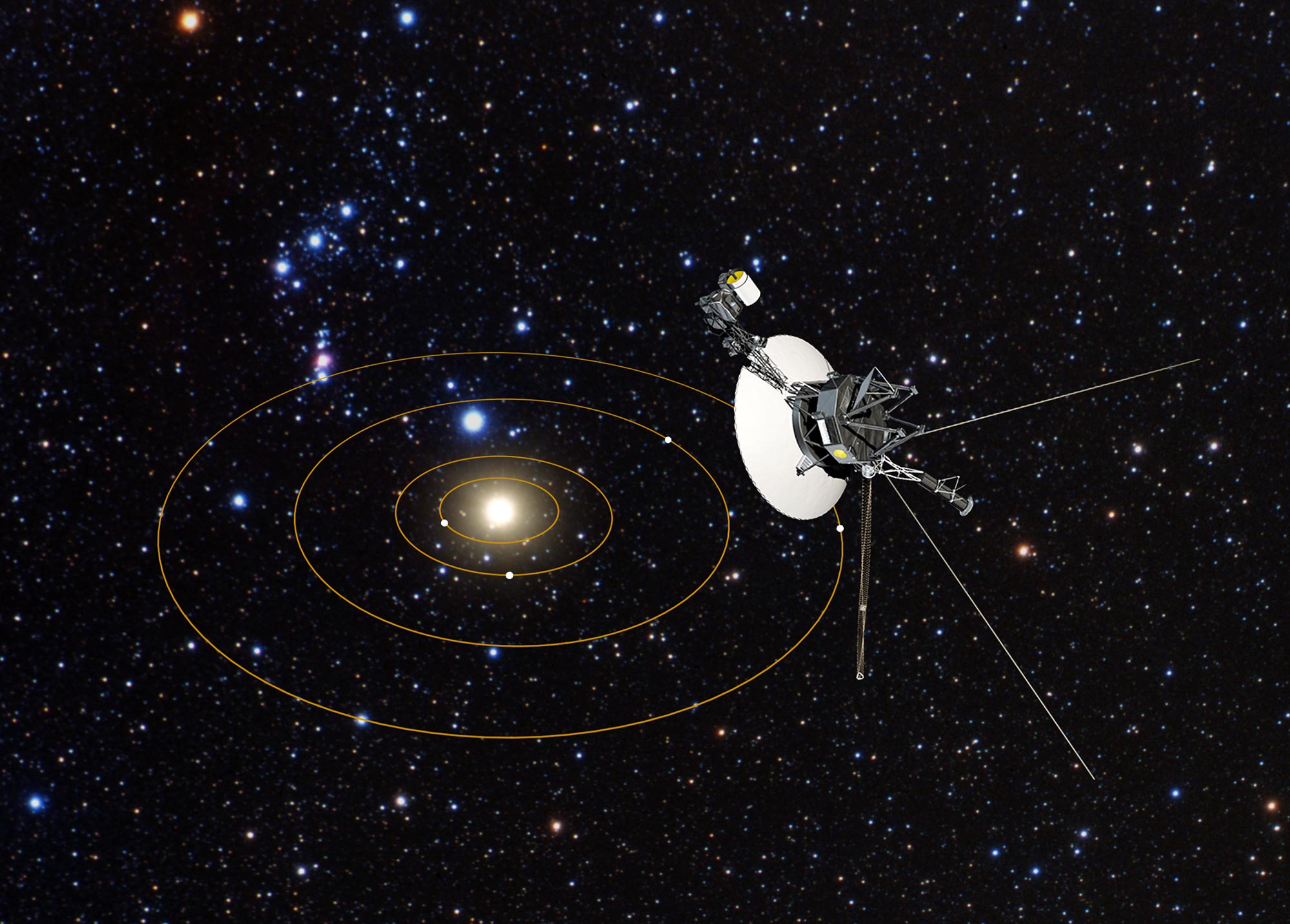
Voyager 1 is nearing a distance from Earth that light takes a full day to cross, while NASA engineers stretch its dwindling power to keep it exploring.
NASA’s Voyager 1, humanity’s most distant spacecraft, was about 16 billion miles (25.75 billion kilometers) from Earth when its radio signal disappeared in October. NASA’s Deep Space Network, which uses large antennas at three facilities around the globe to communicate with spacecraft at the Moon and beyond, could not detect the probe during two scheduled contacts on October 18 and 19, 24 hours apart.
The signal returned on October 20, ending the 48-hour interruption before engineers had sent commands to troubleshoot the problem. The team has remained in contact with Voyager 1 since then.
Engineers are still investigating what caused the communication loss. They have determined that one group of thrusters went offline and its backups switched on. Thrusters are small rocket engines used to control a spacecraft’s movement or orientation. Voyager 1 is programmed to make the switch automatically if its computers detect something wrong with the active thrusters. This response, called fault protection, puts the spacecraft into a safe, stable configuration and pauses normal operations, giving engineers time to diagnose the problem and act.
“This is the first time we’ve seen the spacecraft do something like this, but we are also at a point in the mission where we have to expect the unexpected,” said Kareem Badaruddin, Voyager mission manager at NASA’s Jet Propulsion Laboratory (JPL) in Southern California. “We’re relieved to be back in contact with Voyager 1 and are eager to understand what happened.”
Interstellar science on a shrinking power supply
Voyager 1 and Voyager 2 are the only spacecraft ever to study interstellar space directly. Both now travel beyond the heliosphere, the bubble of particles and magnetic fields created by the Sun. Keeping their instruments running preserves access to measurements that no other spacecraft can provide.
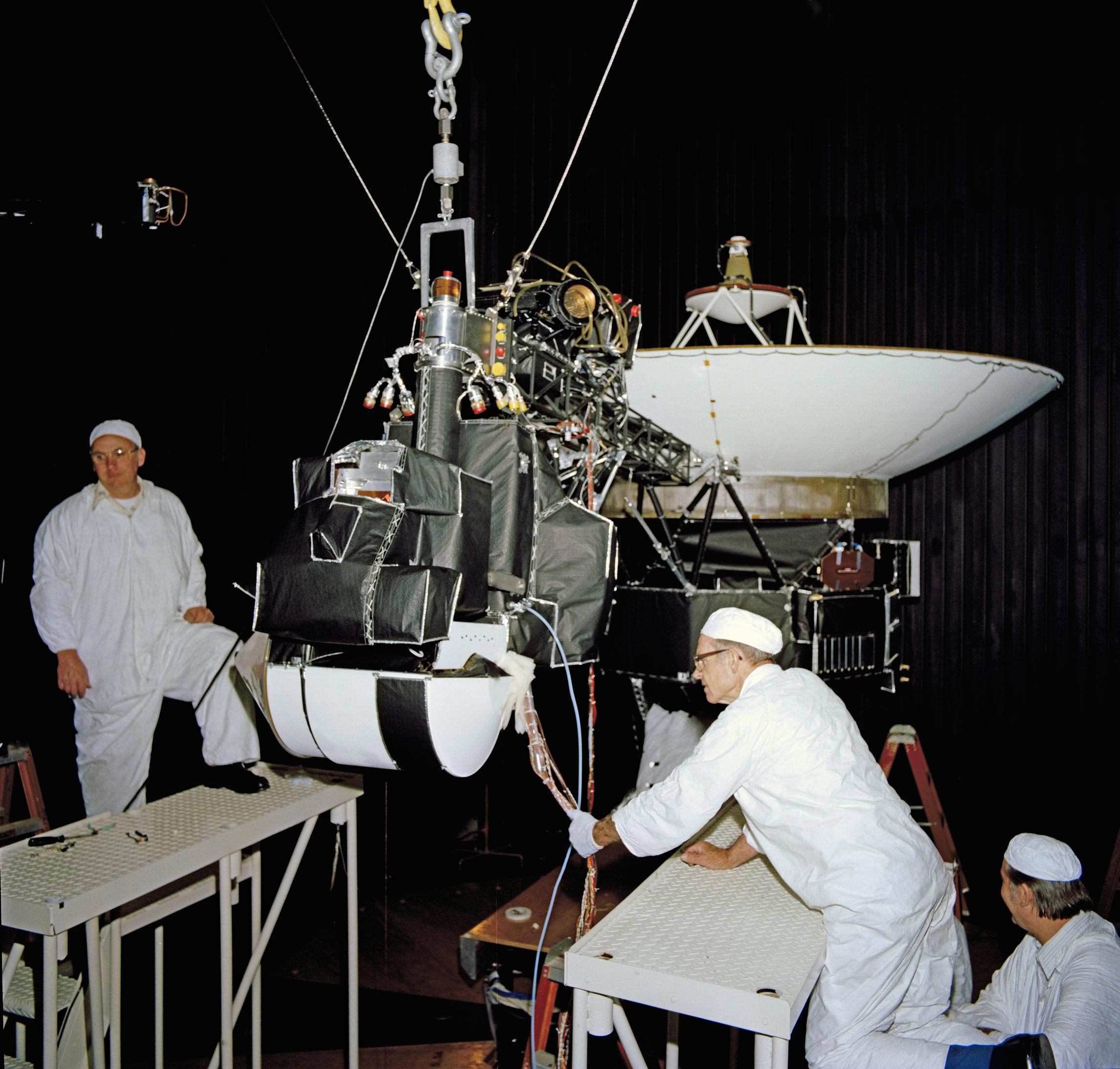
Both probes draw electricity from radioisotope thermoelectric generators, which convert heat from decaying plutonium into electrical power. As that fuel supply diminishes, each spacecraft loses about 4 watts of power a year. Nearly half a century after the mission’s 1977 launch, little spare power remains, and engineers have been shutting down nonessential devices and systems to conserve energy.
The mission began with 10 dedicated science instruments. Some were shut down after the spacecraft completed their planetary encounters, while others stayed on to study the heliosphere’s outer region. In recent years, dwindling power has forced the team to turn off two science instruments.
Three simultaneous swaps extend Voyager’s science mission
Saving electricity also requires keeping the spacecraft warm enough to work. In early September, engineers completed a months-long effort to turn off three devices aboard Voyager 1 and replace their functions with three lower-power alternatives. The operation, nicknamed the “Big Bang,” came about six weeks after the team performed the same swap on Voyager 2.
All six devices involved help keep the spacecraft warm in the cold of space. To reduce electricity use while maintaining the proper distribution of heat, engineers had to make all three swaps simultaneously. The successful operation will allow Voyager 1’s remaining science instruments to work longer than previously anticipated. Without it, the team would have needed to shut down another instrument as early as summer 2027.
A two-day wait for Voyager’s reply
Voyager 1 is traveling at 38,000 mph (61,155 kph) toward another milestone. On November 18, it will be 16.09 billion miles (25.89 billion kilometers) from Earth. That distance equals one light-day, the distance light travels in a day. A radio message from Earth will take 24 hours to reach Voyager 1, and its reply will need another 24 hours to travel back.
Crossing that threshold will cause no change in the spacecraft’s surroundings or anything aboard it. The milestone marks the reach and endurance of humanity’s most distant explorer.
“If you want to say ‘hello’ to Voyager, you send your message and then you go home and you wait two days before you finally get a response,” said Suzanne Dodd, Voyager project manager at JPL.
Never miss a breakthrough: Join the SciTechDaily newsletter.
Follow us on Google and Google News.