

What remains in the brain after a psychedelic wears off could matter for future medicines, as rat scans revealed distinct activity patterns a week after three different drugs were given.
Psychedelic drugs are attracting growing interest as possible treatments for depression, anxiety, and addiction. Yet new research suggests that drugs often grouped together under the same label may affect the brain in very different ways, potentially influencing how scientists investigate their medical uses.
Researchers at the University of Southern Denmark compared three psychedelic drugs, LSD, psilocybin, and the synthetic compound 2C-B, using brain scans in rats. They examined changes in brain activity while the drugs were active and again one week later, after their immediate effects had worn off.
Unlike earlier studies that largely examined one psychedelic at a time, the direct comparison revealed distinct patterns for each drug. Only a few changes were shared across all three.
“Psychedelic drugs are often discussed as if they work in the same way. But when we look at the brain, the differences are clear. Each drug appears to affect its own networks, and that is new knowledge,” says Mikael Palner, Associate Professor at the Department of Clinical Research at the University of Southern Denmark and senior author of the study.
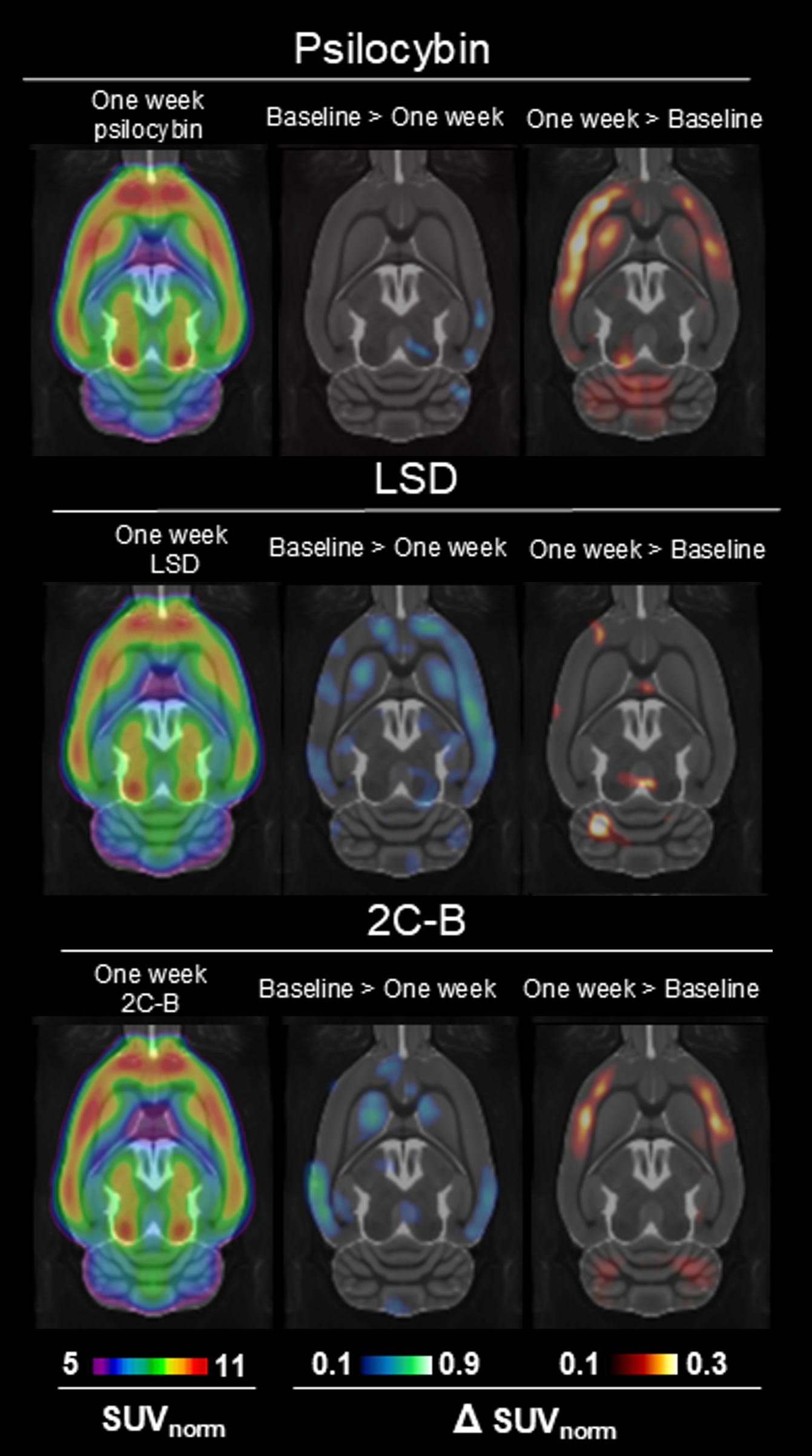
Different brain patterns one week later
While the drugs were active, LSD and 2C-B produced the greatest number of changes in brain activity. The researchers also identified different patterns one week later, suggesting that the effects of these substances may extend beyond their immediate action in the brain.
“What is interesting is that the differences do not only appear while the drugs are active. We can also see different traces in the brain afterwards. 2C-B mainly affected areas linked to reward, LSD affected areas linked to habits and motivation, while psilocybin stood out by primarily affecting areas involved in emotions,” says Frederik Gudmundsen, first author of the study.
Gudmundsen completed his PhD at the University of Southern Denmark and is now a postdoc at the Department of Clinical Medicine, Translational Neuropsychiatry Unit, Aarhus University.
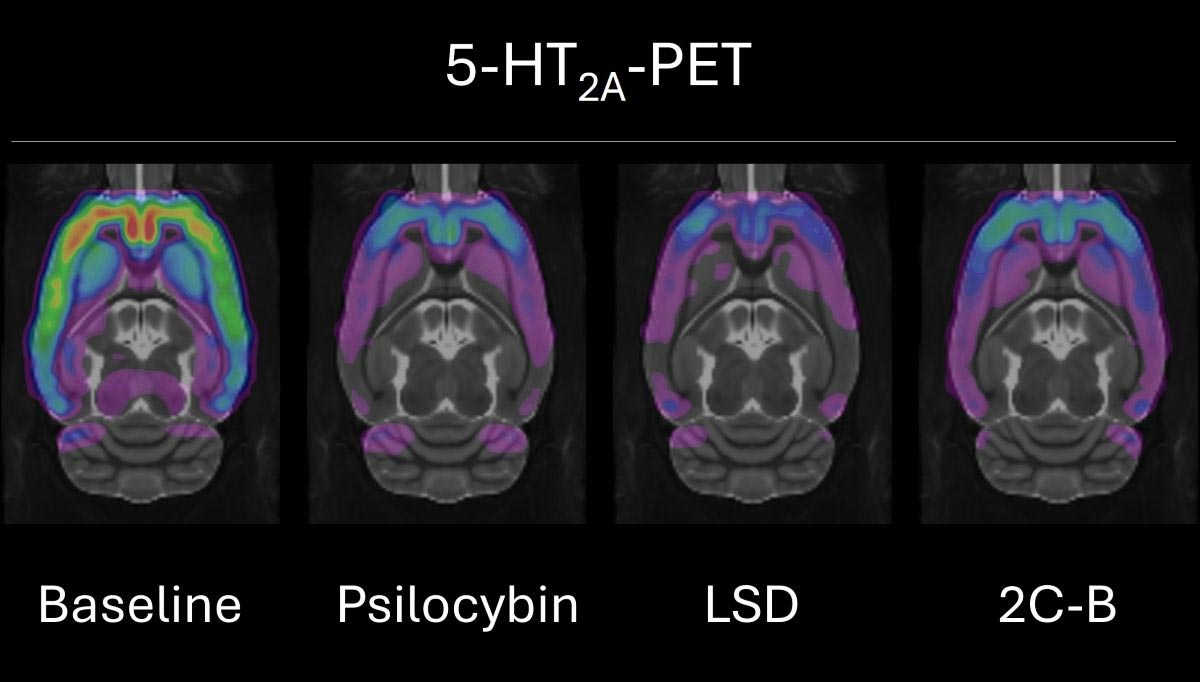
Brain differences may influence future treatments
These differences could help researchers investigate whether certain psychedelics are better suited to treating particular conditions. However, the brain activity patterns alone cannot establish which drug, if any, would be more effective for a specific disorder.
“If the drugs affect the brain differently, it is also possible that they may eventually prove better suited to different disorders. We do not know that yet, but our study provides a biological starting point for investigating it,” explains Palner.
Several psychedelic drugs are already being investigated in clinical trials for conditions including depression, post-traumatic stress disorder (PTSD), and addiction. Understanding how individual substances affect different brain networks could eventually help scientists develop more targeted approaches to treatment.
For now, the findings remain limited to experiments in rats and do not show whether the drugs are effective in patients. Further research in humans will be needed to determine whether the same differences occur in the human brain and whether they can help guide future psychedelic treatments.
Reference: “Serotonergic psychedelics induce distinct patterns of metabolic activity and covariance within biologically informed rat brain networks” by Frederik Gudmundsen, Julia Czurylo, Daniel R. Rijsketic, Camilla Trang Vo, Janika Fortunato, Naja S. Jessen, Sophie Woodruff, Christina Baun, Matthias M. Herth, Vladimir Shalgunov, Boris D. Heifets, Patrick M. Fisher and Mikael Palner, 3 August 2026, Nature Communications.
DOI: 10.1038/s41467-026-75890-0
The study was supported by the Independent Research Fund Denmark, the Novo Nordisk Foundation, the Lundbeck Foundation, Neuroscience Academy Denmark and the US National Institutes of Health (NIH).
Disclosure: The authors have also disclosed relevant potential conflicts of interest. Mikael Palner holds shares in Compass Pathways and AtaiBeckley. He has previously been involved in research collaborations with Compass Pathways, A7imuth, TetraKit, Arla, Cymap and Bright Minds Bio and is an adviser to BrandarisTx. None of these companies or relationships had any influence on the study.
Never miss a breakthrough: Join the SciTechDaily newsletter.
Follow us on Google and Google News.