
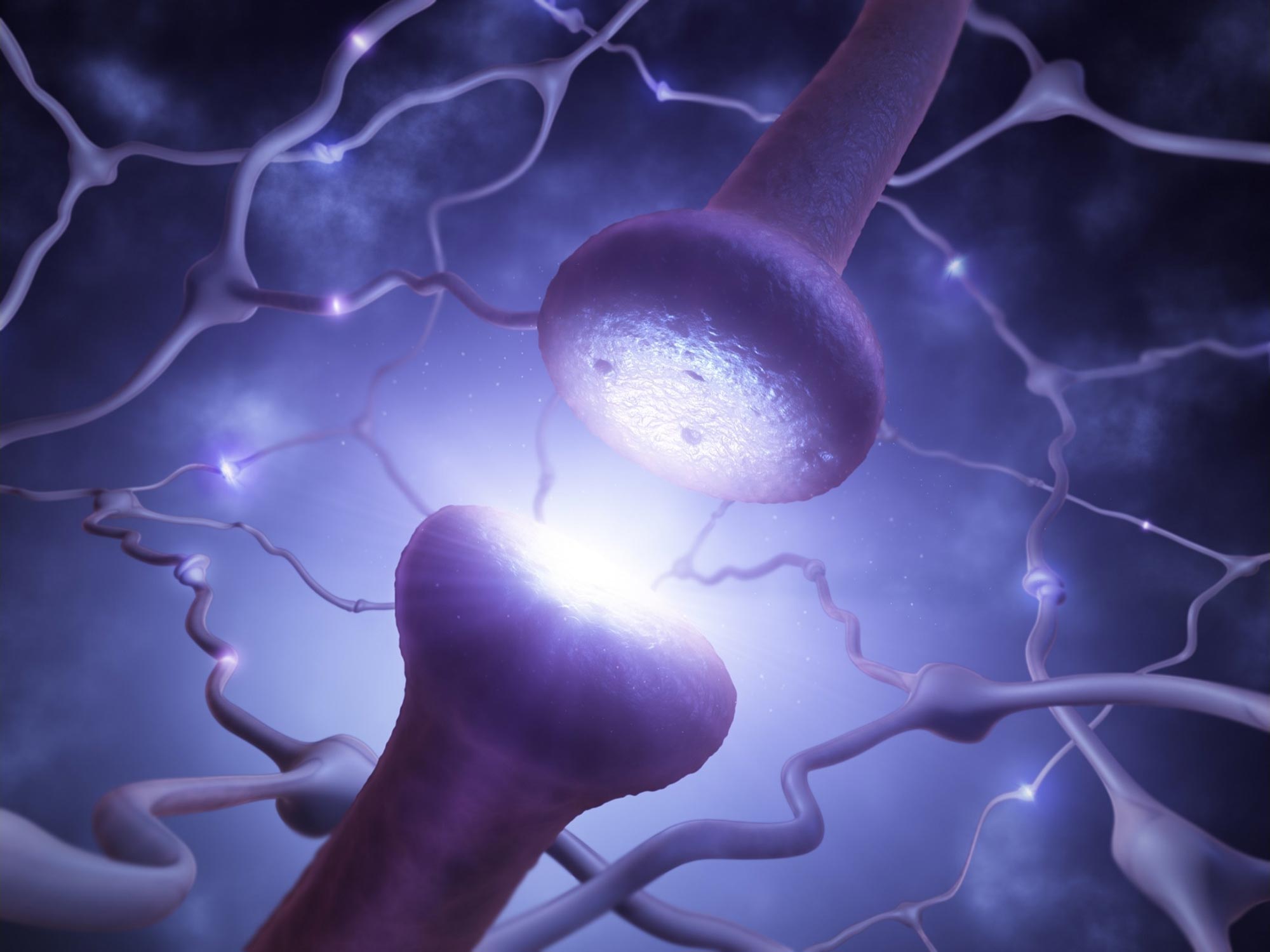
A familiar song can pull you back decades in an instant, and the chemistry behind that rush of memory may hold clues to what separates human minds from AI.
How does the brain turn a collection of memories into thoughts, emotions, and the experience of being conscious? Scientists have spent decades studying how neurons communicate through electrical and chemical signals, yet the physical processes that allow us to recall experiences, attach feelings to them, and give them meaning remain incompletely understood.
A new scientific review suggests that part of the answer may lie in the complex chemistry surrounding brain cells. Rather than viewing memory primarily as a product of neuronal activity, the researchers propose that interactions among neurons, supporting brain cells, and molecules in their surrounding environment could play a fundamental role in shaping thought and conscious experience.
Dr. Gerard Marx of MX Biotech Ltd. and Prof. Chaim Gilon of the Hebrew University of Jerusalem’s Department of Chemistry present their theory in Consciousness, Memory, and Intelligence: A Mechanistic Perspective. Building on earlier research into how experiences might be physically stored in the brain, they examine whether the chemistry of memory could help explain the origins of thought and consciousness.
Their proposal also raises a question about artificial intelligence: If human memory and emotion depend on the chemistry of living cells, can computers ever develop consciousness simply by becoming more powerful?
Could Memories Be Stored in Chemistry?
Scientists have long studied how neurons communicate to form and retrieve memories. But Marx and Gilon suggest that important parts of this process may also occur in the molecular environment surrounding brain cells.
Their model, called the Tripartite Mechanism of Memory, involves three interacting components: brain cells, particularly neurons and astrocytes; the molecular material surrounding those cells; and chemicals such as metal ions, neurotransmitters, and gliotransmitters.
According to the theory, these components could allow the brain to chemically encode and retrieve information. Rather than serving only as a support structure, the environment surrounding brain cells may actively participate in memory storage.
Astrocytes, star-shaped cells that interact closely with neurons, play a central role in the proposed mechanism. The researchers suggest that coordinated activity among these cells, neurons, and surrounding molecules could contribute to how memories are formed and processed.
Why Memories Carry Emotions
A familiar song can bring back memories from decades ago, complete with feelings that seemed long forgotten. Such experiences show that remembering involves more than retrieving information.
Marx and Gilon propose that the emotional content of memories may be linked to their chemical encoding. In their model, signaling molecules, including neurotransmitters and gliotransmitters, help connect stored information with the feelings associated with an experience.
The researchers also suggest that retrieving and interpreting these chemically stored memories may contribute to the emergence of thought. In this view, memory is not simply a record of past events but an active process through which the brain assigns meaning to experience.
What Does This Mean for Artificial Intelligence?
Computers and brains both store and process information, but the underlying mechanisms differ. While computers rely on electronic hardware, biological memory involves living cells and complex chemical interactions.
Marx and Gilon argue that this distinction could matter for consciousness. AI systems can perform increasingly sophisticated intellectual tasks, but their ability to process information does not establish that they experience thoughts or emotions.
For example, an AI system can identify a familiar song and describe the memories or feelings it might evoke in a person. Whether such a system could actually experience nostalgia is a different question.
The researchers suggest that if consciousness depends partly on the biochemical processes involved in human memory, greater computational power alone may not be sufficient to reproduce it.
An Unanswered Question About Consciousness
The proposed model offers a possible connection between memory, emotion, and thought, but it does not establish how physical processes in the brain produce conscious experience.
The authors acknowledge that consciousness remains poorly understood and do not claim to have demonstrated that AI cannot become conscious.
Instead, their work suggests that investigating the chemical mechanisms of memory could help explain how stored experiences acquire emotional meaning and contribute to thought. Whether those processes are essential for consciousness remains an open question.
Reference: “Consciousness, Memory and Intelligence: A Mechanistic Perspective” by Gerard Marx and Chaim Gilon, 4 August 2026, International Journal of Psychiatry Research.
DOI: 10.33425/2641-4317.1251
Never miss a breakthrough: Join the SciTechDaily newsletter.
Follow us on Google and Google News.