
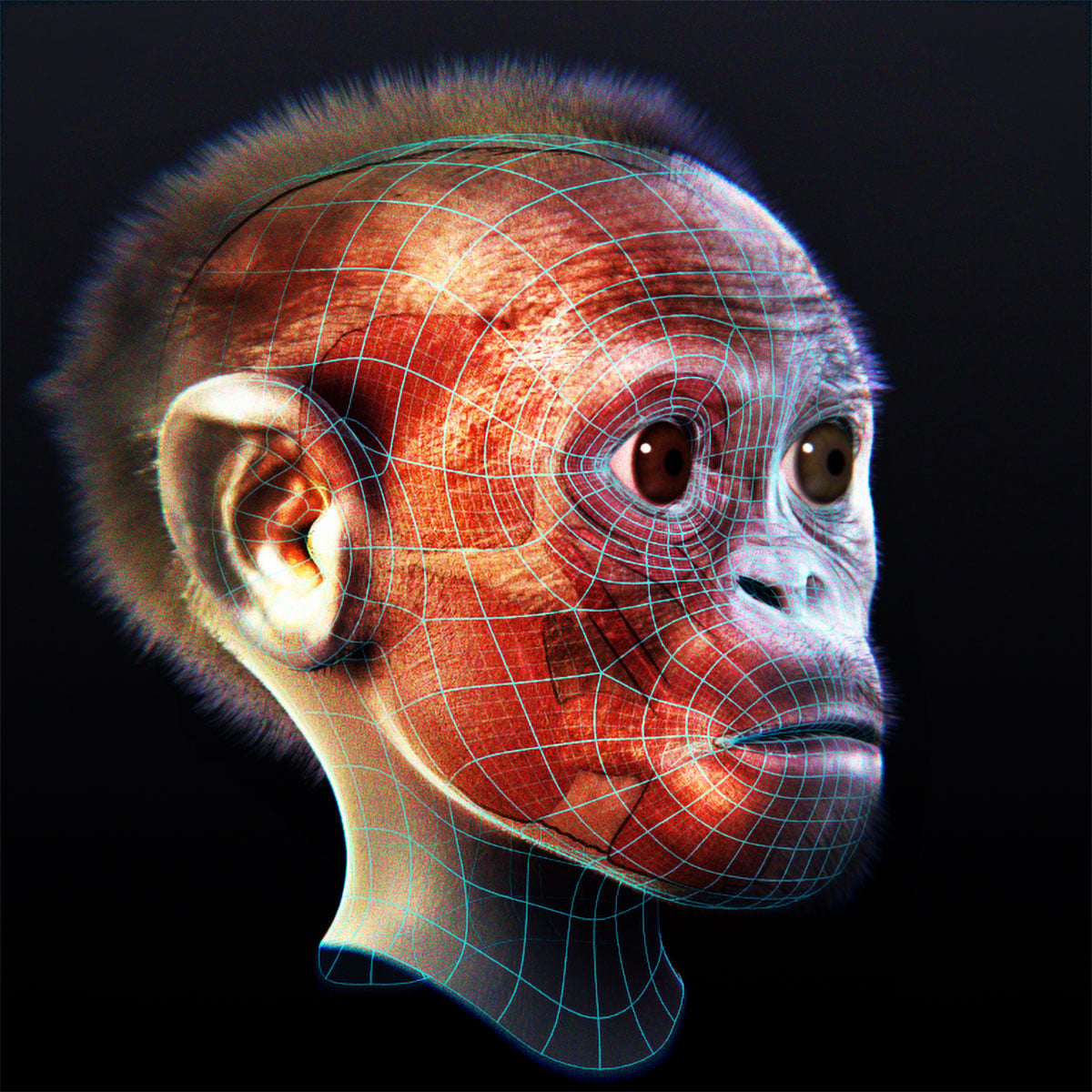
Nearly 3 million years after the Taung Child lived, its fossil is challenging long-held assumptions about humanity’s origins, suggesting our ancient family tree was far more diverse than scientists once believed.
A century ago, a child’s fossil helped establish Africa as the birthplace of humanity. Now, that same discovery is raising another question about our origins: How many early human species have scientists been treating as one?
Discovered in South Africa in 1924, the Taung Child became the defining fossil, or “type specimen,” of Australopithecus africanus. It provided the first concrete evidence of human origins in Africa. Yet because no definitive criteria were established for classifying later discoveries, the Taung Child remains the only fossil conclusively assigned to the species.
A new study published in Nature dates the fossil to between 2.96 and 3.03 million years ago and suggests that several supposed members of its species may have belonged to different branches of the human family tree.
Brain development points to multiple species
Led by Professor Gabriele Macho of the Archaeology, Environmental Changes and Geo-Chemistry (AMGC) research group at Vrije Universiteit Brussel (VUB), an international team examined tooth structure and patterns of brain and dental development during growth.
Several adult fossils traditionally classified as Australopithecus africanus did not match the Taung Child’s developmental trajectory. Differences in brain development were particularly revealing, suggesting that multiple hominin species may have occupied South Africa’s Sterkfontein region, either alongside one another or at different times.
“For over 100 years, we assumed the Taung Child was just one of many similar fossils from the era,” says Professor Gabriele Macho. “Our findings turn that on its head. The human family tree wasn’t a neat, straight trunk—it was a chaotic, tangled bush driven by climate shifts.”
Climate shifts separated ancient human populations
The environment in which these ancient human relatives lived may help explain their diversity. Fossilized pollen indicates that the Taung Child inhabited a much wetter, more forested landscape than modern South Africa. Some of the trees growing there are now found hundreds of kilometers to the northeast.
Over millions of years, alternating wet and dry periods repeatedly transformed the region. As forests and other habitats expanded or contracted, hominin populations may have become isolated, evolved separately, and later encountered one another again. The researchers suggest these shifting conditions encouraged interbreeding and adaptations to different predators and pathogens.
Southern Africa’s position between tropical and temperate ecosystems made it a potential meeting ground for populations that had followed different evolutionary paths.
Rather than a straightforward progression from one ancestor to the next, the findings suggest that the emergence of our genus, Homo, involved a complex network of ancient populations repeatedly separated and reunited by a changing climate.
Reference: “The Taung child and the biogeographic and palaeoclimatic drivers of southern African hominin diversity” by Gabriele A. Macho, Simon Neubauer, Clement Zanolli, Pieter Vermeesch, Kevin L. Kuykendall, Andreas Koutsodendris, Laurin S. Kolb and Thibaut Caley, 5 November 2026, npj Palaeoecosystems.
DOI: 10.1038/s44513-026-00008-2
Never miss a breakthrough: Join the SciTechDaily newsletter.
Follow us on Google and Google News.