
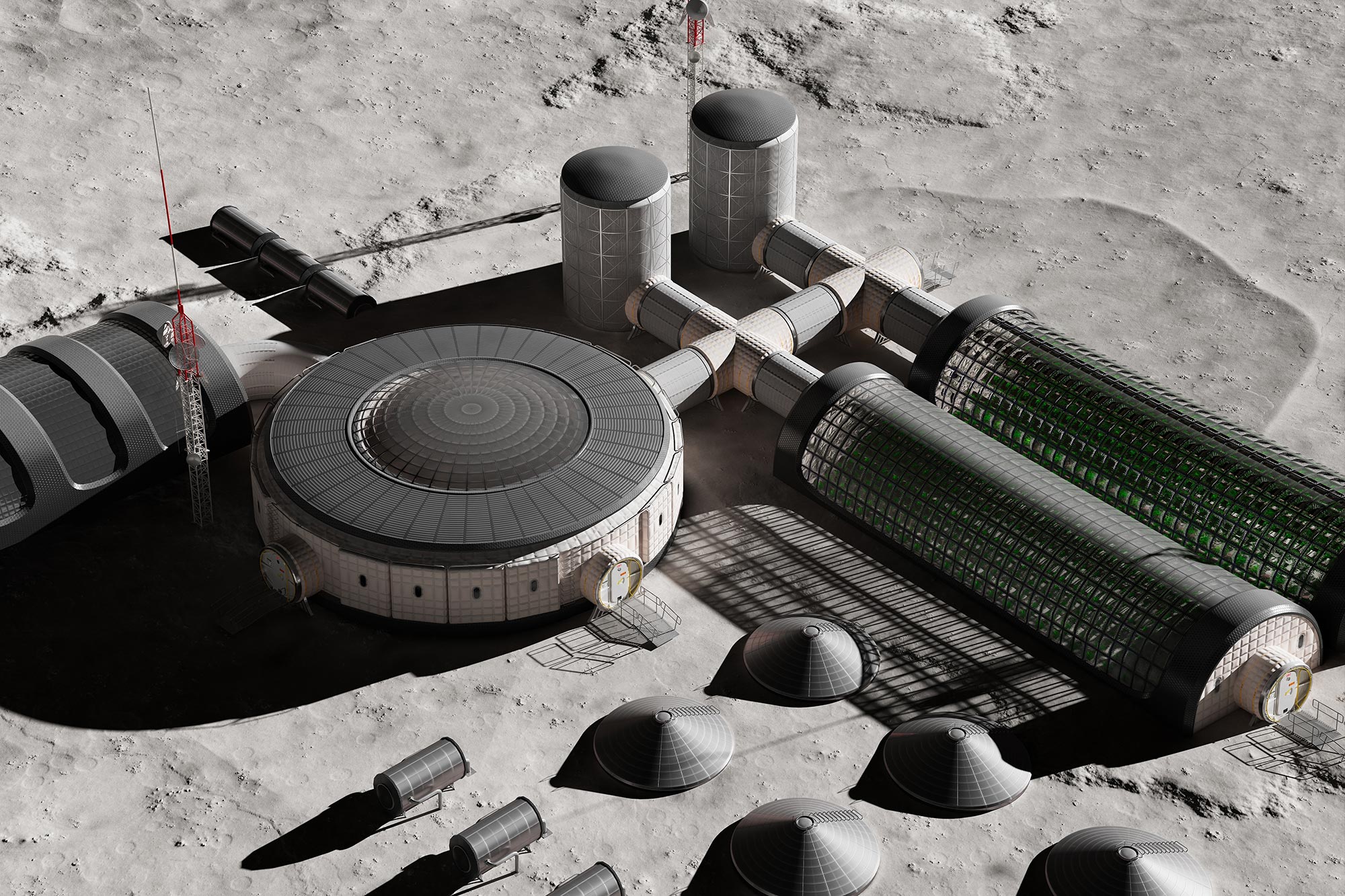
The same plastic that keeps marathon runners warm could help future moon bases withstand extreme temperatures and years of rough treatment.
Engineers at the University of Pennsylvania have developed an insulating material by stacking hundreds of thin sheets of Mylar. In laboratory tests, the stacks combined effective insulation in a vacuum with flexibility and resistance to repeated compression, qualities that could make them useful for long-term lunar construction.
Their study, published in ACS Applied Materials & Interfaces, calls the material hybrid layered insulating film stacks (HyLIFS). The approach addresses a persistent engineering problem: materials that resist heat flow often struggle to withstand physical damage.
“These stacks of Mylar can bend, withstand substantial compression, and maintain their insulating performance,” says senior author Igor Bargatin, an associate professor in Mechanical Engineering and Applied Mechanics (MEAM), “potentially allowing them to be packed, transported, and survive rough treatment over many years of use.”
Why Lunar Insulation Needs To Be Tough
On the moon, insulation must protect against temperatures ranging from hundreds of degrees below zero to the boiling point of water. But surviving those extremes is only part of the job. Materials must also endure transportation, installation, maintenance, and accidental impacts.
Some leading insulators are poorly suited to that treatment. Aerogels contain mostly empty space, making them lightweight and effective at slowing heat transfer in applications from industrial pipelines to NASA’s Mars rovers. Their porous structure, however, can also leave them susceptible to mechanical damage.
Multilayer insulation, widely used in space, takes another approach: reflective sheets separated by insulating spacers reduce heat transfer by radiation. These assemblies work well thermally, but they are not built to carry substantial loads and can tear during handling.
Making an insulator stronger can compromise its thermal performance. “For lunar infrastructure, we would ideally like both,” says Bargatin. “The ideal material is both resistant to damage and to the loss of heat.”
A Familiar Plastic In A New Arrangement
Mylar offered the researchers an accessible starting material. Formally known as biaxially oriented polyethylene terephthalate, or BoPET, the plastic already appears in food packaging and aerospace equipment. Combined with aluminum, it reflects infrared radiation, which is how shiny emergency blankets help marathon runners retain body heat.
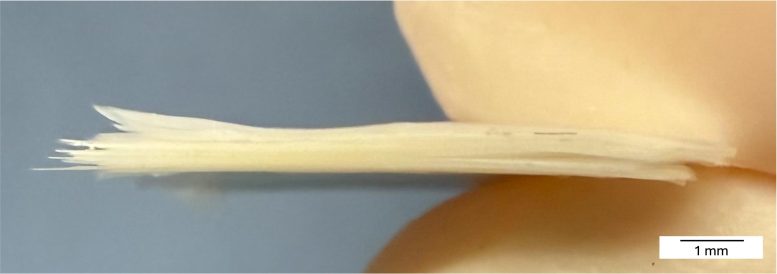
The team tested several film thicknesses and coated some sheets with an extremely thin layer of aluminum oxide, also called alumina, to increase stiffness. Researchers then assembled the films individually into stacks.
“At the moment, the process is very time-consuming,” says first author Danielle R. Levin, a recent Penn chemistry doctoral graduate who also earned a master’s in MEAM. “We use two pairs of tweezers and small weights to handle and stack the delicate films. Even breathing near the stack can send the layers flying.”
Once assembled, however, the films were far tougher than their delicate handling suggested. Under vacuum conditions and compression representative of a lunar habitat with indoor air at atmospheric pressure, the best stacks matched the thermal conductivity of other high-performance vacuum insulation technologies while remaining flexible.
Insulation That Survived Repeated Squeezing
In separate mechanical tests, the coated stacks retained their insulating performance at the highest compressive stresses the laboratory equipment could produce. Researchers repeatedly squeezed samples to approximately 20 megapascals (about 2,900 pounds per square inch), roughly equivalent to concentrating 200 pounds onto an area the size of a fingertip.
“We were concerned about the material failing under such high compressive stress,” recalls Levin. “But the stacks didn’t survive just one high-stress cycle—they survived 10 in a row.”
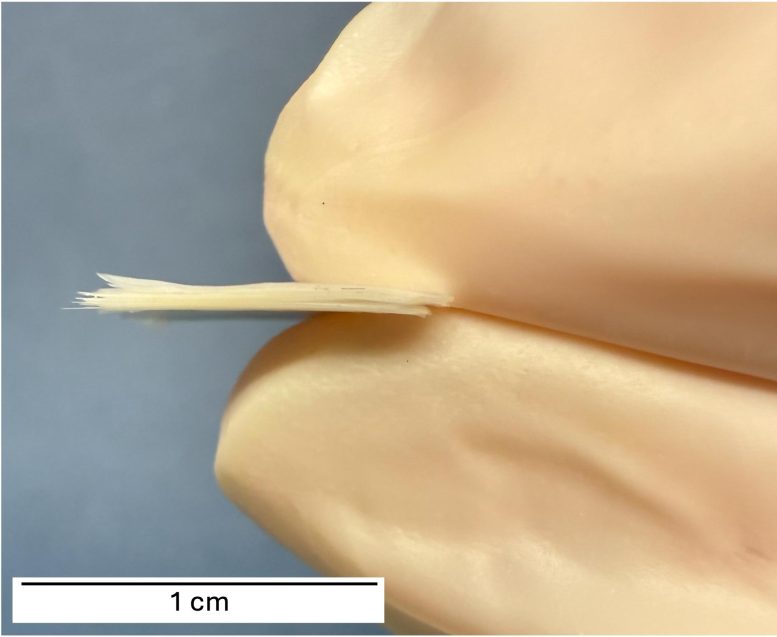
That durability could make the material easier to transport and reuse, as well as more forgiving once installed. “You could use these stacks to insulate a lunar habitation, but astronauts will inevitably have little accidents where they bump into them,” says Bargatin. “When we’re talking about long-term habitation on the moon, it’s really important to have tough materials that can last long enough.”
“The combination of thermal and mechanical robustness is critical for long-term use on the moon,” says Levin. “This material could open a pathway to inexpensive, durable, and reusable lunar insulation.”
Tiny Particles Shape How Heat Moves
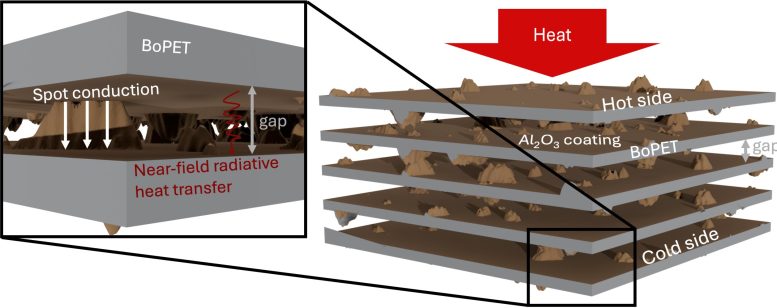
The study also identified an overlooked feature of commercial Mylar that could help explain its performance: microscopic particles added to keep the plastic from sticking to itself. These “antiblocking” particles protrude slightly from the surface, separating neighboring sheets and making thin films easier to manufacture and handle.
Their industrial purpose was already understood, but their influence on heat flow through stacked films had received little attention, according to the researchers. Because conventional multilayer insulation primarily targets radiation, there had been less reason to investigate how these particles affect heat conducted directly between sheets.
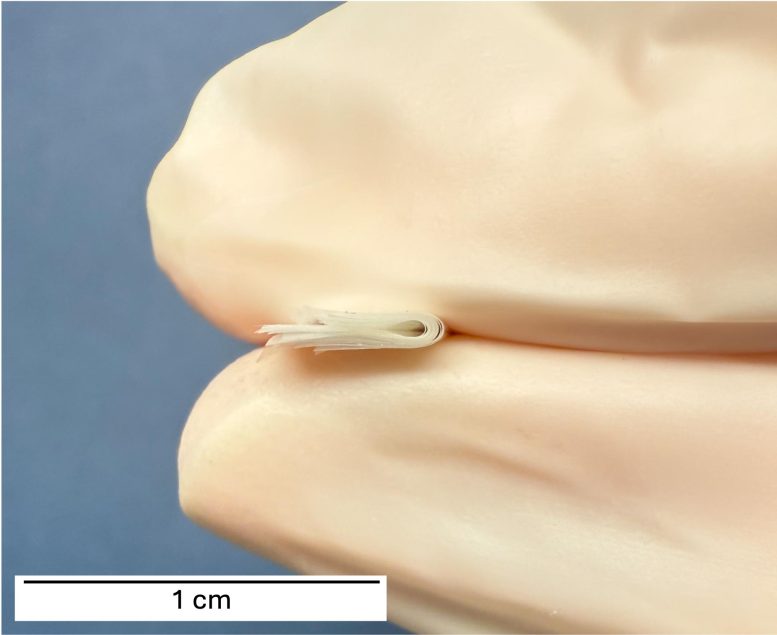
The researchers built models of heat transfer across the interfaces between layers and compared their predictions with experimental measurements. The results suggest that, in a vacuum, heat passes between sheets mainly at the tiny contact points where antiblocking particles touch neighboring films.
Those contacts could become a design tool. Instead of working around whatever particles commercial Mylar happens to contain, future insulation could use carefully selected particle sizes, numbers, and distributions to regulate heat transfer.
Why Thinner Films Were Not Better
The particles also helped explain a result that contradicted the team’s initial expectations. Thinner sheets should allow more layers to fit into a given space, creating more interfaces that impede heat transfer. The researchers therefore expected their thinnest films to provide the strongest insulation.
Instead, the thinnest films they successfully characterized performed similarly to medium-thickness films when both received an alumina coating. The team suspects that particles in the thinner films create additional contact between neighboring layers, opening more pathways for heat to flow.
“As you compress the layers, the contact landscape changes,” says Levin. “It’s not just a matter of minimizing the film thickness or the number of particles; we must also account for how the contacts change and the films deform as pressure increases.”
Improving the material will therefore require balancing film thickness, stiffness, and particle distribution. Simply making each sheet thinner may provide little benefit if the resulting contacts allow more heat through.
From Tiny Samples to Moon Bases
The current samples cover only about one square centimeter (0.16 square inches), and manually cutting and stacking them takes hours. Producing practical insulation at the scale of a meter (about 3.3 feet) will require a much faster assembly method.
The researchers see potential in manufacturing techniques such as continuously coating large rolls of Mylar. Eventually, film thickness, coatings, and particle distribution might be adjusted before the material is wound into large stacks.
Larger versions still need testing, including whether they can withstand repeated bending, bumps, and scuffs. If the laboratory results carry over to practical production, HyLIFS could provide flexible insulation for lunar habitats, spacesuits, rovers, electronics, and other equipment that must operate for years in space.
For Levin, the findings show how much remains to be discovered in familiar materials. “The simplest configuration ended up being the best one,” she says.
Reference: “Robust Layered Thermal Insulator Film Stacks for Vacuum Applications” by D. R. Levin, M. F. Campbell, G. Aldan, O. H. Omodior and I. Bargatin, 1 September 2026, ACS Applied Materials & Interfaces.
DOI: 10.1021/acsami.6c09126
This work was supported by the National Science Foundation Division of Chemical, Bioengineering, Environmental and Transport Systems (grant number 1845933) and Penn Engineering.
Never miss a breakthrough: Join the SciTechDaily newsletter.
Follow us on Google and Google News.